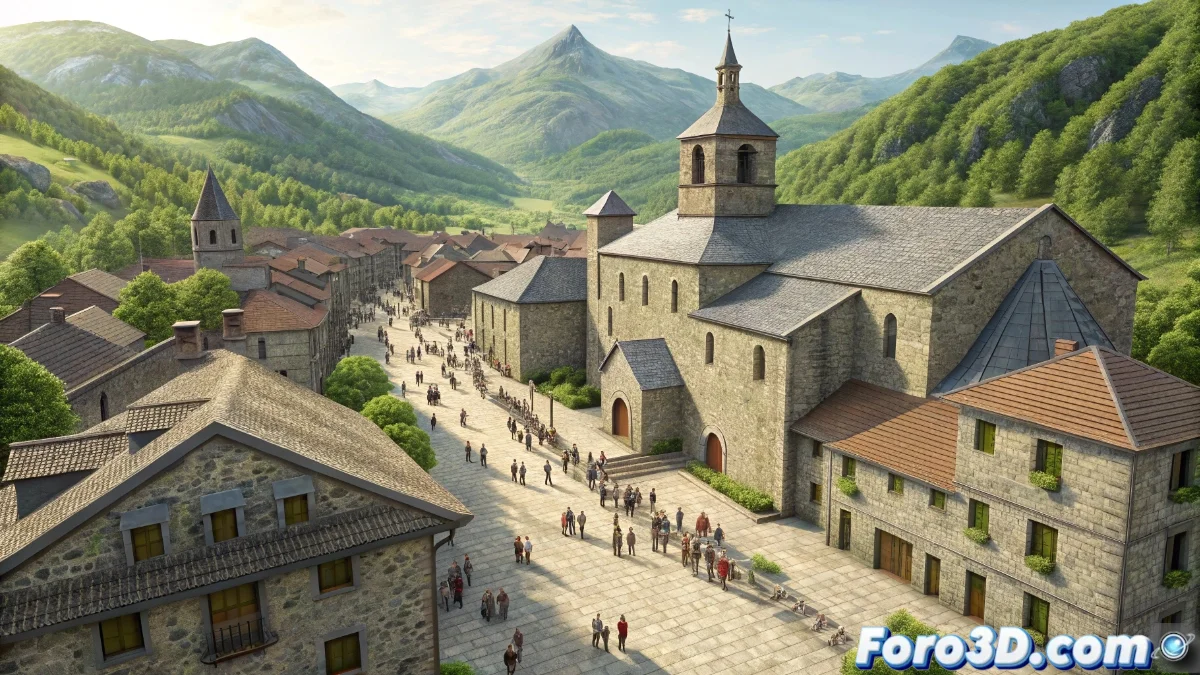
Roncesvalles: the challenge of mass tourism on the Camino de Santiago
The Navarrese locality of Roncesvalles records a striking ratio of 149 tourists per permanent resident, positioning itself as one of the epicenters with the highest tourism pressure in Spanish territory. This emblematic point on the Camino de Santiago receives an annual human avalanche that radically transforms the municipality's reality, generating significant economic opportunities but also complex environmental and social sustainability challenges. 🏔️
Radical transformation of daily life
Mass tourism completely alters the social and functional dynamics of Roncesvalles, where essential services such as water supply, waste collection, and access to commercial establishments face extraordinary demands. Local residents must reorganize their daily routines around the schedules and needs of visitors, while municipal authorities seek to balance the preservation of heritage with the growing economic activity linked to the tourism phenomenon.
Direct impacts on the community:- Saturation of basic services such as pharmacy, supermarket, and medical care
- Forced adaptation of commercial hours and daily activities
- Pressure on historic infrastructure not designed for such volumes
While pilgrims seek the authentic Camino experience, Roncesvalles residents live the authentic experience of queuing for bread behind one hundred fifty people equipped with backpacks and hiking poles.
Innovative strategies for sustainable tourism
Facing this reality, the local government and Navarrese institutions have developed a comprehensive plan of measures to mitigate the negative effects of mass tourism. These strategic initiatives include regulation of access during peak seasons, promotion of responsible practices among visitors, and significant investments in infrastructure capable of supporting large flows of people without compromising residents' quality of life or the valuable cultural heritage.
Implemented measures:- Capacity control during periods of maximum pilgrim influx
- Educational campaigns on responsible tourism and respect for the environment
- Improvements in water, sanitation, and waste management systems
Balance between opportunity and conservation
The case of Roncesvalles represents the contemporary paradigm of mass cultural tourism, where economic benefits must be reconciled with the preservation of local identity and environmental sustainability. Intelligent visitor management has become an absolute priority to ensure that this historic enclave on the Camino de Santiago can continue to welcome pilgrims without sacrificing the well-being of its permanent residents or the unique character that defines it. ⚖️