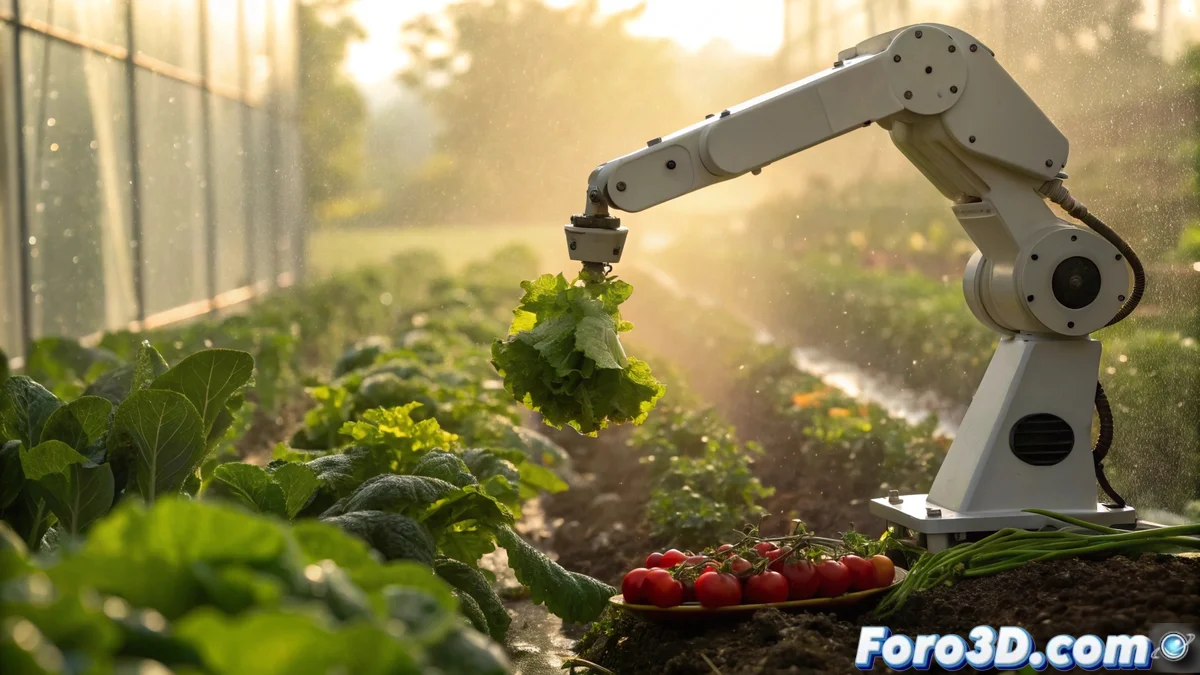
Robots Learning to Work in a Permaculture Garden
A team from the Federal Polytechnic School of Zurich (ETH Zurich) is training robots to perform essential tasks in permaculture environments. This project aims to automate key processes such as planting seeds, harvesting vegetables, and organizing the harvest, using artificial intelligence and algorithms that learn from experience. 🤖
Autonomy through Perception and Learning
The robotic systems perceive their environment through cameras and various sensors. This information is processed in real time, allowing the machine to act independently and with great precision among the crops, without the need for constant guidance.
Key capabilities of the robotic system:- A versatile robotic arm that swaps tools, such as a shovel for planting or a gripper for harvesting.
- Algorithms that improve their performance with each completed task, progressively increasing efficiency.
- The ability to adapt to changes in the terrain and the growth state of each plant.
Perhaps the greatest challenge is not for the robot to distinguish a weed from a seedling, but to learn the patience required to watch what it sows grow.
Objective: Collaborate, Not Replace
This technology does not intend to replace farmers, but to assist them. By automating repetitive and physically demanding tasks, labor shortages in the field can be mitigated.
Project pillars:- Focus on permaculture, an agricultural method that emulates natural ecosystems to be sustainable.
- Create a framework for collaboration where humans and machines work together.
- Care for the land more efficiently and respectfully toward the environment.
The Future of Assisted Agriculture
This development marks a path toward precision and sustainable agriculture. The combination of robotics and machine learning not only optimizes tasks but also enables more detailed and careful crop management, supporting the ecological principles of permaculture. The ultimate goal is to achieve a technological symbiosis that benefits both the producer and the planet. 🌱