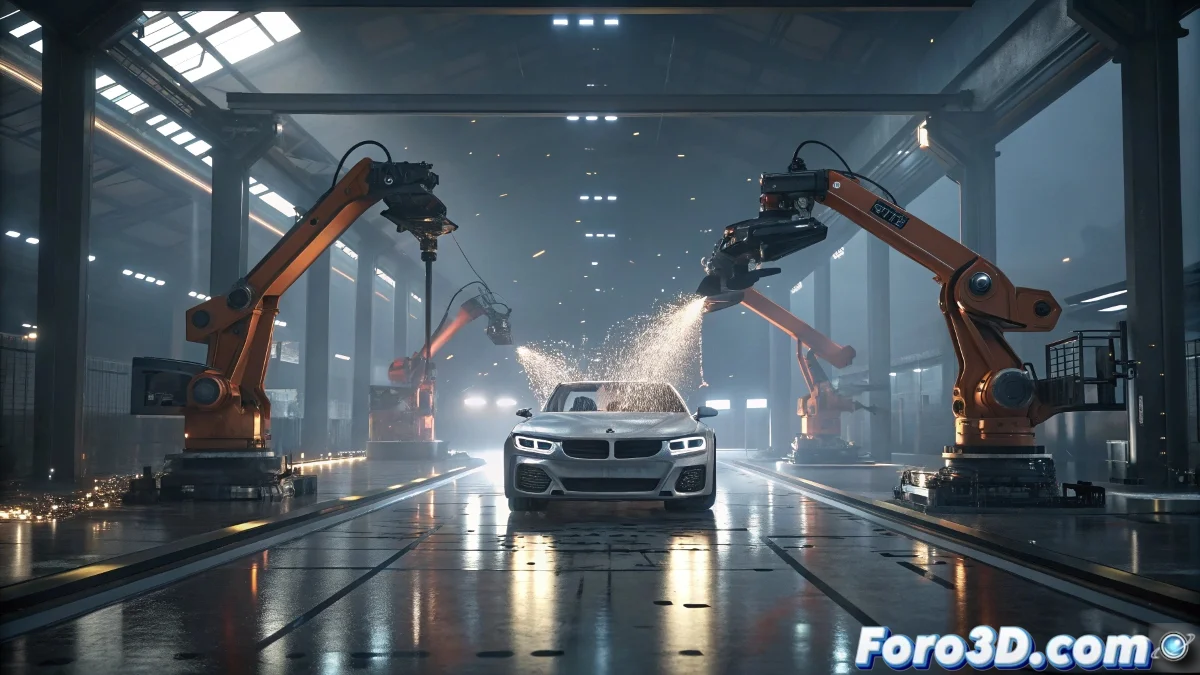
When Robots Learn to Waltz 🤖💃
The BMW Octowaltz commercial by Untold Studios is a masterclass in how to turn industrial machines into ballet figures. Between robotic arms that pliés like prima ballerinas and sparks that follow the beat, this breakdown reveals how 3D animation can give poetry to engineering.
From Factory to Stage
The creative process combined:
- Motion capture of human dancers for the motion bases
- Custom rigs in Maya that maintain the robotic essence
- Hybrid physics - realistic mechanics but with choreographic grace
Key fact: "We applied traditional animation principles (anticipation, follow-through) to industrial movements," explains the Untold team.
Techniques That Give Rhythm to Metal
Procedural Animation
- Speed curves adjusted to the musical tempo
- Constraints to limit realistic motion ranges
- Layers of micro-movements (industrial vibrations)
Seamless Integration
- 3D tracking of BMW's real factory
- HDRi lighting for perfect matching
- PBR shaders in Arnold with realistic imperfections
Magic Touches
- Houdini simulations for rhythmic sparks
- Atmospheric fog that "dances" with the robots
- Musically synchronized motion blur
How to Replicate It in 3ds Max?
Alternative workflow for foro3d:
- Animation controllers - Use helpers and constraints for precise movements
- TyFlow - For sparks and rhythmic particles
- V-Ray/Arnold - Metallic materials with micro-imperfections
- Skin modifier - For organic deformations in industrial rigs
Tip: Record reference of real dancers and apply it with Motion Mixer.
The Irony of the Industrial Animator
As the breakdown aptly summarizes: "We spent days tweaking the perfect 'plié' of a robotic arm... only for the client to say 'Can it be 2% more elegant?'". But when you see the final result and those gears seem to thrill with Strauss, every frame of tweaking was worth it. 🎻
"In VFX waltzing, robots never step on their partner's toes... unless the render crashes." - Anonymous Untold animator.