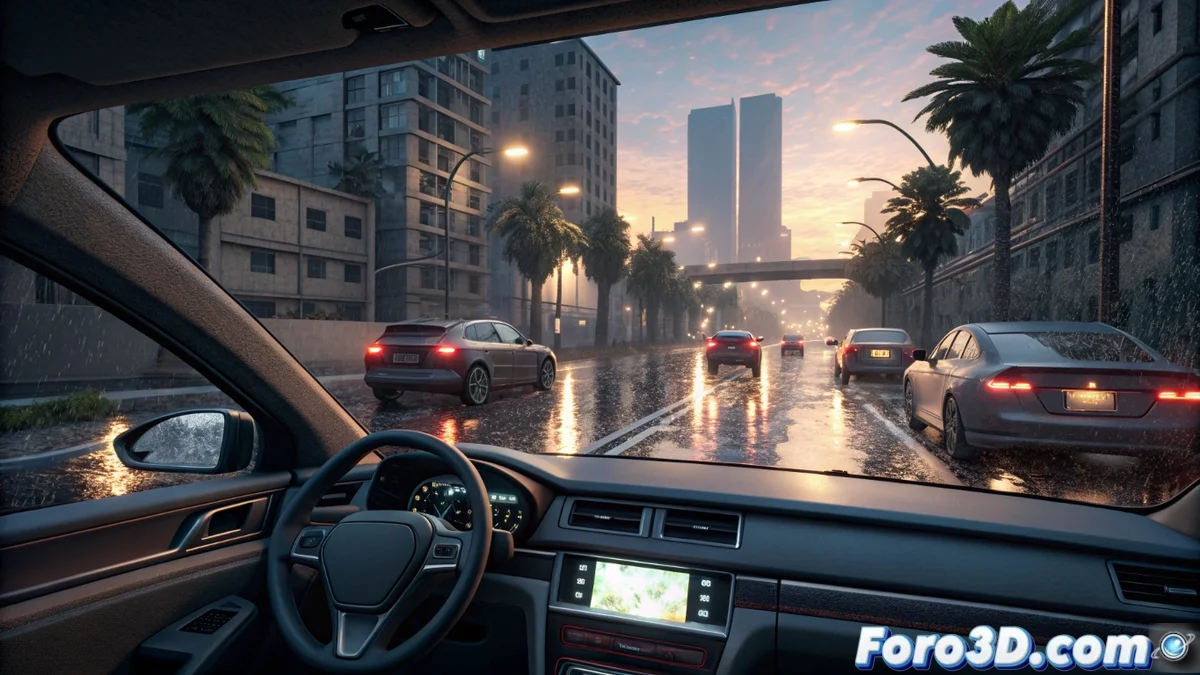
RoaD Trains Autonomous Driving Policies in Closed Loop
A new approach, called RoaD, addresses a fundamental problem when training artificial intelligence agents for complex tasks like driving. Instead of relying solely on static human demonstrations, this method actively generates training data from the model's own executions, thus correcting the covariate shift that typically degrades behavior cloning in closed loop. 🚗
Overcoming the Limitations of Supervised Fine-Tuning
Previous supervised fine-tuning techniques in closed loop had significant restrictions. RoaD avoids them by producing data actively and, crucially, guided by an expert. This process allows the system to explore and recover from states that original human demonstrations do not access, building a more general and error-resilient control policy that accumulates during simulation.
Key Advantages of the RoaD Approach:- Active Data Generation: Creates new training examples from the model's own rollouts.
- Integrated Expert Guidance: Ensures generated trajectories are realistic and high-quality.
- Improved Robustness: Allows the policy to adapt stably without the high computational costs of reinforcement learning.
RoaD offers an efficient pathway to train autonomous agents within complex simulators, which is essential for developing and testing systems before deploying them in the real world.
Positive Results in Simulation Environments
Evaluations conducted in advanced simulators like WOSAC and AlpaSim demonstrate the method's effectiveness. RoaD achieves improved overall driving scores and significantly reduces the number of collisions. This validates its utility as a practical framework for training in virtual 3D environments.
Achievements in Tests:- Improvement in Driving Score: Superior quantitative results in standard metrics.
- Reduction in Collisions: Fewer incidents during autonomous execution in simulation.
- Efficient Adaptation: The agent learns from its own mistakes without constant human supervision at each step.
The Future of Autonomous Training
This method represents a significant advance, as it brings closer the possibility of an autonomous vehicle learning and refining from its experience in a simulated environment, without requiring a human to correct every action. By combining data generation with expert supervision, RoaD establishes a viable path to develop robust and generalizable control policies for autonomous driving and other complex 3D tasks. 🔄