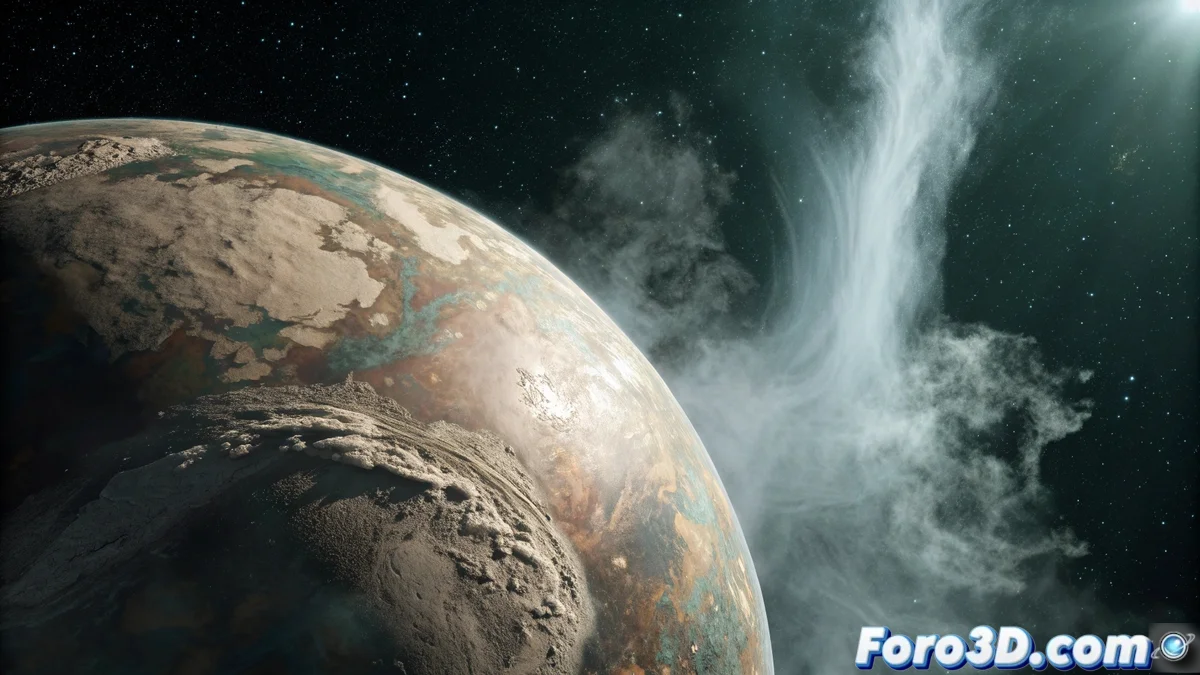
Revolutionary Discovery: Planets That Generate Their Own Water Internally
The water synthesis capacity in certain celestial bodies is completely redefining established paradigms about the origin of water in the universe. While the traditional theory postulated that this resource arrived exclusively through impacts from comets and asteroids, recent evidence demonstrates that numerous worlds possess internal mechanisms to produce this essential liquid autonomously 🌍.
Geochemical Mechanisms of Water Production
Endogenous water generation processes operate mainly through complex chemical reactions between atmospheric hydrogen and various mineral oxides present in the planetary crust. On planets with significant geothermal activity, internal heat acts as a fundamental catalyst for these transformations, releasing water vapor that subsequently undergoes condensation processes.
Main mechanisms identified:- Serpentinization: geological process where water is formed through the interaction between ultramafic rocks and fluids in the presence of moderate heat, particularly efficient on worlds rich in olivine
- Redox reactions: chemical transformations that occur in subduction zones or active tectonic faults, generating water as a byproduct of oxidation-reduction reactions
- Magmatic degassing: release of hydrated compounds during volcanic eruptions or hydrothermal activity in the planetary subsurface
Nature once again demonstrates its incredible ability to create habitable conditions where we least expect them, challenging our most fundamental assumptions about life in the cosmos.
Implications for the Search for Habitable Worlds
This paradigm shift has profound implications for astrobiology and space exploration, as it exponentially expands the catalog of potentially habitable candidates. Exoplanets orbiting in stellar habitability zones and possessing these internal production systems could maintain stable water reservoirs over geological timescales, regardless of external inputs.
Main consequences of the discovery:- Expansion of habitable zones: worlds considered marginal now emerge as viable candidates for hosting microbial ecosystems
- Long-term sustainability: planetary oceans can remain stable for billions of years through continuous replenishment
- Redefinition of biospheres: underground or deep-sea ecosystems could develop on planets that appear arid on the surface
Future Perspectives and Final Reflections
It is particularly fascinating to contemplate how, while on Earth we face challenges related to water scarcity, various worlds considered barren are actively producing this vital resource in their depths. This capacity for autonomous water generation not only transforms our criteria for searching for extraterrestrial life but also teaches us valuable lessons about the resilience and adaptability of planetary systems in the cosmos 🌌.