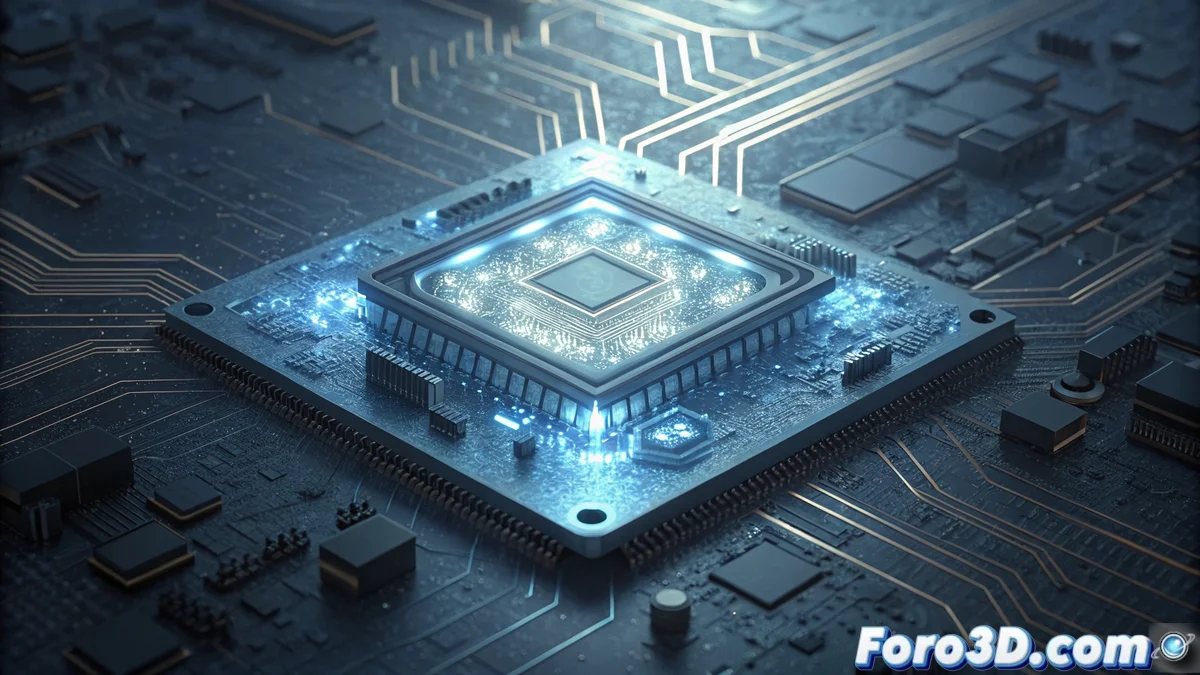
Revolutionary Breakthrough: Superconducting Germanium for Conventional Chips
A group of researchers has succeeded in developing a germanium semiconductor that exhibits extraordinary superconducting properties using standard integrated circuit manufacturing techniques. This discovery marks a historic turning point in the incorporation of superconductivity into conventional electronics, enabling the production of superconducting devices through already established and massively implemented industrial processes. 🚀
Total Compatibility with Existing Infrastructures
The perfect adaptability with current production chains eliminates any need for costly modifications or specialized technologies, paving the way for immediate commercial implementations. This manufacturing synergy represents a monumental competitive advantage over previous approaches that required specialized environments and extreme operating conditions.
Key Features of the Prototype:- Demonstrated capacity to manage millions of charge carriers simultaneously
- Complete absence of electrical resistance even under high current densities
- Charge transport with perfect quantum efficiency under operational temperature conditions
The ability to handle millions of carriers without any resistance represents a quantum leap in semiconductor materials physics
Exceptional Performance in Charge Transport
The experimentally validated prototype demonstrates outstanding aptitude for conducting enormous quantities of electrical carriers without exhibiting resistive losses, a phenomenon that was previously unattainable in traditional semiconductor materials. This unique property allows electric current to flow with maximum efficiency, opening up unprecedented perspectives for the design of electronic components that operate with negligible energy losses.
Immediate Applications in Energy Efficiency:- Electronic devices with radically reduced energy consumption
- Systems that generate minimal residual heat during continuous operation
- Components with extended lifespan thanks to lower thermal dissipation
Transformative Impact on Computing and Processing
This innovative material lays the foundation for the development of considerably more efficient processors, nanometric precision quantum sensors, and essential elements for scalable quantum computing. In the realm of conventional processors, it could enable higher processing speeds accompanied by drastically lower energy requirements, while in quantum computing it would facilitate the construction of more stable qubits and ultrasensitive detection systems.
Revolution in Everyday Devices:- Personal computers that dispense with noisy cooling systems
- Gaming equipment that maintains stable temperatures even in ultra configurations
- Data infrastructures with reduced operating costs in cooling
Immediate Future of Superconducting Electronics
The direct integration of superconductivity into conventional chips could exponentially accelerate the arrival of practical and economically accessible quantum technologies. This breakthrough suggests that we will soon have silent computers that do not require intrusive fans, although they will likely still experience controlled thermal increases during extremely demanding executions such as next-generation gaming in maximum configurations. 🔥