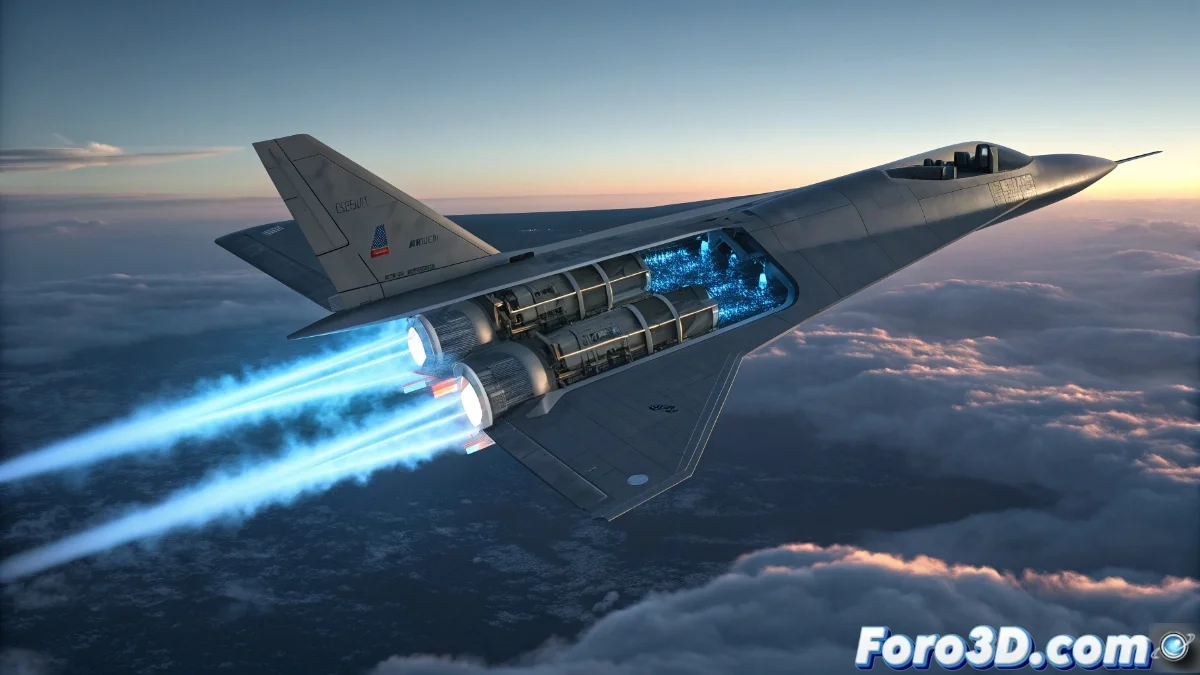
Revolutionary Breakthrough in Hypersonic Aviation with 3D-Printed Hydrogen Engine
The United States Air Force has unveiled a transformative project in the aerospace field through an experimental aircraft that exceeds Mach 12 using hydrogen as the main propellant. This innovation combines cutting-edge technologies with digital manufacturing processes that redefine the limits of aeronautical engineering 🚀.
Sustainable Propulsion through Additive Manufacturing
The propulsion system forms the core of this aircraft, employing liquid hydrogen that generates only water vapor as residue. 3D printing has enabled the production of engine components with intricate geometries that optimize thermal and structural performance under extreme hypersonic flight conditions.
Key Technical Features:- Engine entirely manufactured using additive technology with specialized alloys
- Cryogenic hydrogen fuel that eliminates polluting emissions
- Structural design that withstands extreme temperatures and high atmospheric pressures
This development represents a paradigm shift in aerospace propulsion, where sustainability combines with unprecedented performance
Operational Applications and Future Challenges
The ability to fly at twelve times the speed of sound enables transoceanic trajectories in minutes, opening possibilities for strategic missions and ultra-fast commercial transport. However, significant challenges remain in fuel supply infrastructure and safety certification.
Potential Implementations:- Military reconnaissance with immediate response and extended global coverage
- Civil transport systems that drastically reduce international flight times
- Platforms for scientific research for atmospheric studies and technology testing
Development and Implementation Perspectives
Engineering teams continue to optimize operational parameters while addressing fuel logistics and certification protocols. This breakthrough lays the foundation for a new era in aviation where speed and efficiency limits are constantly redefined ✈️.