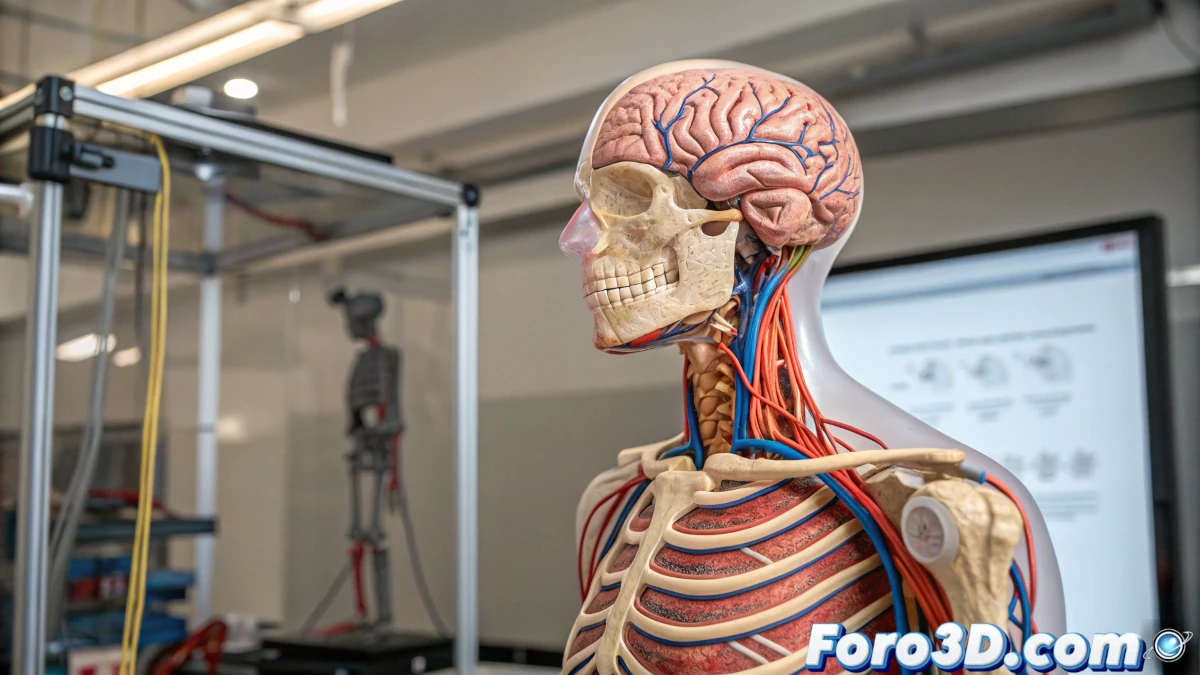
3D printing technology is transforming medicine, and a standout example is the collaboration between Stratasys and Siemens Healthineers. Together, they have developed high-precision 3D anatomical models, known as phantoms, used to calibrate diagnostic equipment such as MRI scanners and CT scans. These advances not only improve diagnostic accuracy but also offer new opportunities in medical education and research.
What are Phantoms and Why are They Important?
Phantoms are artificial replicas of the human body used to simulate its behavior during medical examinations. Traditionally, these models were simplistic and did not reflect the complexity of the real body. However, with 3D printing, it is now possible to create phantoms that faithfully replicate the anatomical and pathological characteristics of patients, significantly improving accuracy in diagnostics and surgical procedure planning.
"3D phantoms are a revolutionary tool that allows doctors to practice and diagnose with unprecedented precision."
Advantages of 3D Phantoms
- Precision: They replicate human anatomy with millimeter-level details.
- Customization: They include specific pathological variations for each patient.
- Versatility: Used in MRI scanners, CT scans, and more.
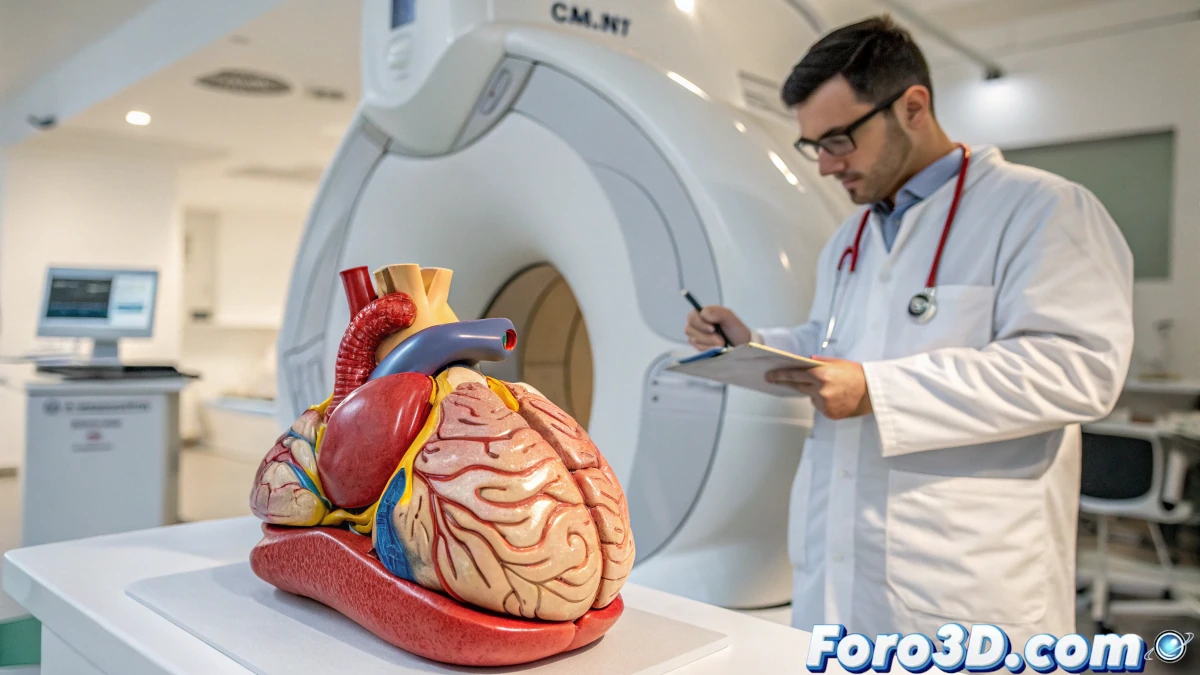
Improving Diagnostic Precision
Thanks to the collaboration between Stratasys and Siemens Healthineers, the new 3D phantoms are designed to enhance the calibration of diagnostic equipment. Using advanced materials like Stratasys's RadioMatrix and Siemens' algorithms, these models are much more accurate than traditional ones. The differences between the printed models and real human bodies can be as minimal as one Hounsfield unit in critical areas, which is crucial for obtaining high-quality medical images.
Impact on Medicine
- Clearer images: Improves diagnostic quality.
- Error reduction: Greater accuracy in results.
- Continuous innovation: Development of new diagnostic algorithms.
An Ethical Alternative in Medical Education
In addition to their use in diagnostics, 3D phantoms offer an ethical alternative to the use of cadavers in medical teaching. Students can practice procedures without resorting to real cadavers, which is not only more respectful but also more accessible. This innovation is changing the way future doctors learn and prepare to face clinical challenges.
Benefits in Education
- Accessibility: Facilitates the practice of medical procedures.
- Ethics: Reduces dependence on human cadavers.
- Innovation: Allows simulation of complex cases.
The Future of Medicine: Details that Make the Difference
What makes this advancement truly revolutionary is its focus on details. By faithfully replicating human anatomy, including specific pathological variations, 3D phantoms provide a powerful tool for developing new diagnostic algorithms. This not only improves image quality but also facilitates the creation of more efficient and accurate systems, reducing medical errors and improving patient outcomes.
Towards Personalized Medicine
- Customization: Models adapted to each patient's needs.
- Innovation: Development of more advanced technologies.
- Results: Improvement in the quality of medical treatments.
"The medicine of the future will focus on the finest details of human anatomy, and 3D phantoms are a crucial step in that direction."
With this collaboration, Stratasys and Siemens Healthineers are paving the way for more precise, ethical, and patient-centered medicine. 3D phantoms are not only a tool for the present but also a window into the future of medicine.