Reverse Vertex Order to Control Culling in 3D Triangles
In 3D modeling and rendering, the direction in which the vertices of a triangle are defined determines which side is the front face. This principle, called winding order, is key. By default, graphics engines apply back-face culling, discarding triangles whose front face does not face the camera to optimize and avoid processing what is not visible. However, manipulating this order can be used as a powerful creative tool. 🎨
Manipulate Visibility Without Damaging the Mesh
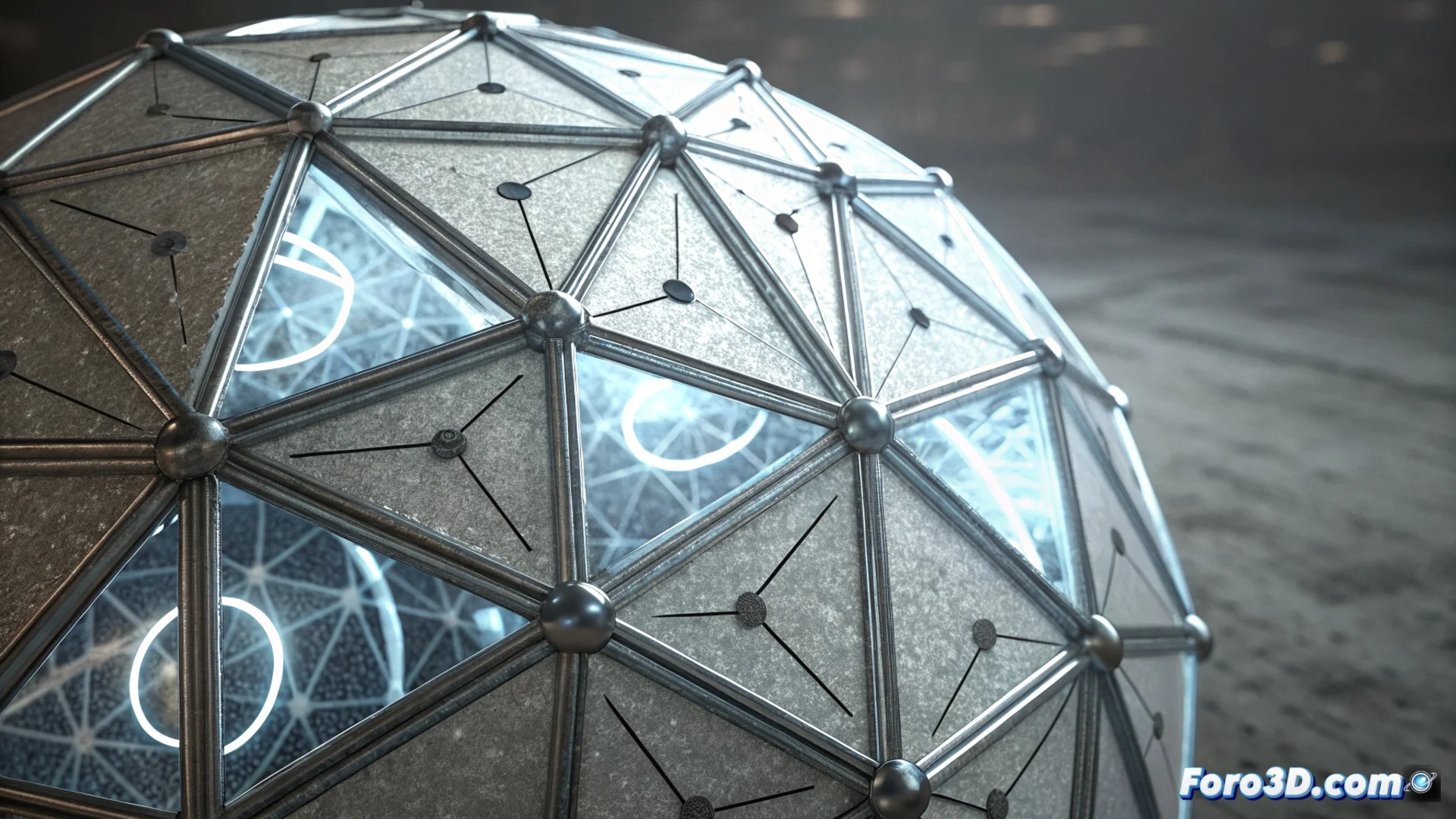
By intentionally reversing the winding order in a set of triangles, the engine is tricked into not drawing them. This generates a void in the object without needing to delete vertices or use transparency maps. The base geometry remains intact, making the process a completely non-destructive technique. This same method serves to simulate a dissolution: by reversing the order of more polygons in successive frames, the object can appear to fade progressively and controllably.
Practical applications of this technique:- Create perforations and windows in models without altering the original topology, useful for rapid prototyping.
- Generate transition or disintegration effects in real time, where triangles "disappear" in a specific order.
- Hide sections of a model temporarily for debugging or to create optical illusions within the engine.
The perfect trick for when you want your model to disappear... but only if you look at it from the right side.
Factors to Evaluate and Their Limits
This strategy does not work in all systems. Its success depends on back-face culling being active in the material and render settings. It is not the most efficient option for complex hole designs with many small polygons, as the geometric load remains present even if not visible. Additionally, the inner edge of the void will always be defined by the triangle boundaries, resulting in an angular profile.
Key considerations when implementing:- Verify that the target engine strictly respects culling based on vertex order.
- Evaluate the cost: each reversed triangle adds to the total polygon count even if not rendered.
- Understand that the result is visually limited by the mesh tessellation; it does not allow smooth curved edges.
When to Use This Approach
This technique shines in contexts where speed and non-destructiveness take priority over absolute precision. It is ideal for specific visual effects, agile prototyping, or artistic situations where control over polygon visibility offers a creative result. It represents a lateral approach that leverages a render optimization rule to open new possibilities in the 3D workflow. 🛠️