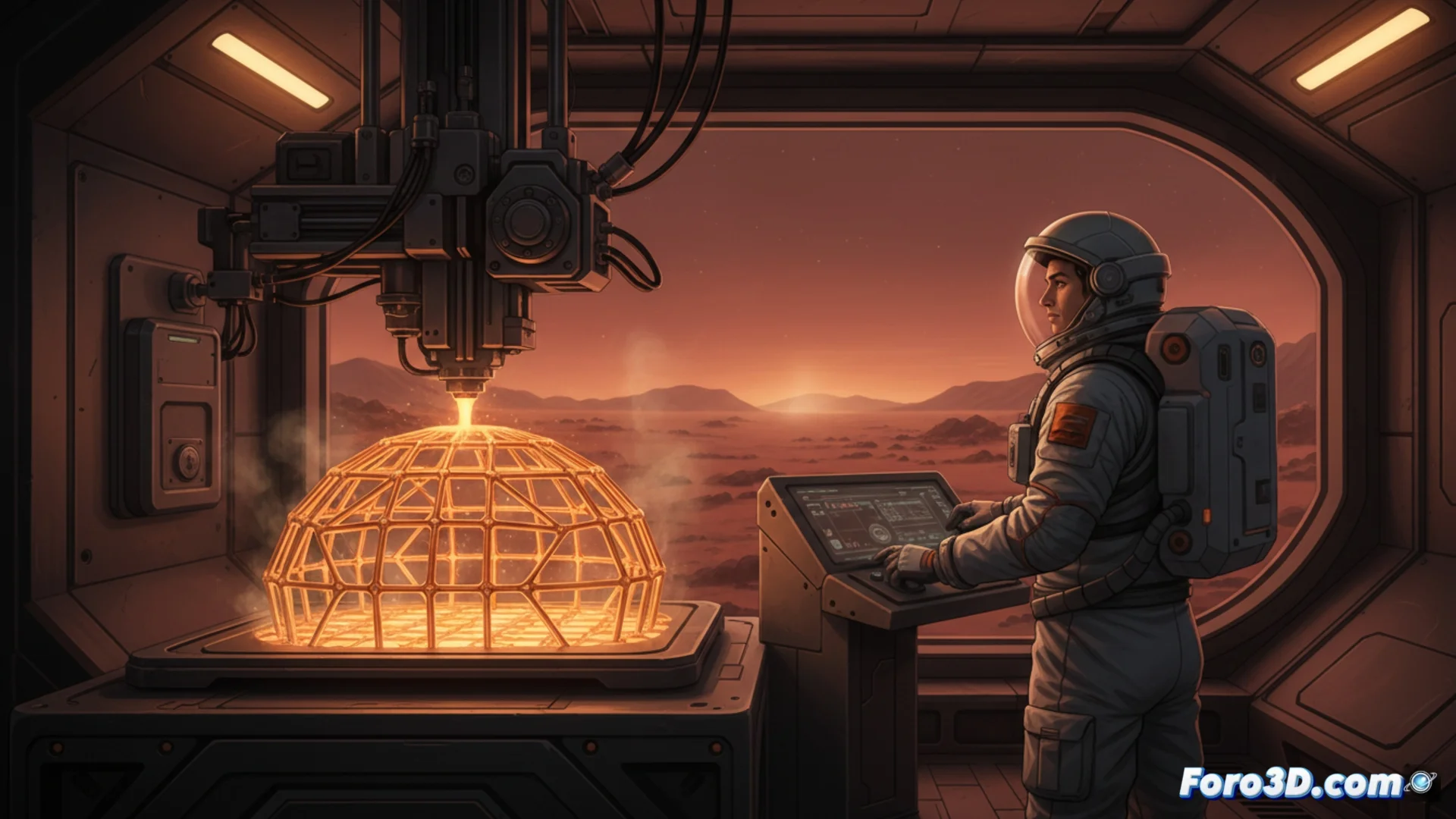
Researchers Propose Using Mars' Atmosphere for 3D Printing
A scientific group is exploring a novel method for manufacturing off our planet. Their work indicates that the abundant carbon dioxide on Mars could replace the expensive inert gases used on Earth in some metal 3D printing methods. This would facilitate and economize building shelters or utensils on the red planet, limiting shipments of supplies from here. 🚀
Replacing Earth's Shielding Gas
On our world, techniques like gas metal arc welding require an inert environment, such as argon, to isolate the molten metal from the air and prevent oxidation. Transporting these gases to another planet involves enormous expense and logistical complexity. The key proposal of the analysis is to leverage Mars' CO₂, processing it to generate an optimal working atmosphere and protect materials during manufacturing.
Key Advantages of the Approach:- Drastically reduces the cost of sending shielding gases from Earth.
- Simplifies mission logistics by using in-situ available resources.
- Protects the molten metal from degrading during the printing process.
Using the Martian environment for manufacturing transforms space exploration, making it more autonomous and less dependent on Earth.
Implications for Space Settlement
This strategy aligns with the principle of using in-situ resources, fundamental for sustaining a prolonged human presence beyond our planet. If proven to work, future inhabitants could obtain and process Martian raw materials, using the planet's environment to produce vital parts. This would alter expedition planning, making them more independent of Earth shipments.
Expected Impacts:- Greater self-sufficiency for planned Martian bases.
- Ability to repair or manufacture equipment directly on-site.
- Significant reduction in the mass and volume of payload launched from Earth.
The Future of Manufacturing on Mars
The practical viability of this concept remains to be proven. Pioneers on Mars, besides overcoming other challenges, may also face familiar technical issues, such as layer errors in printing under reduced gravity. Nevertheless, at least the gas for protecting manufacturing would be local and free. This advance represents a crucial step toward sustainable and economical space exploration. 🔴