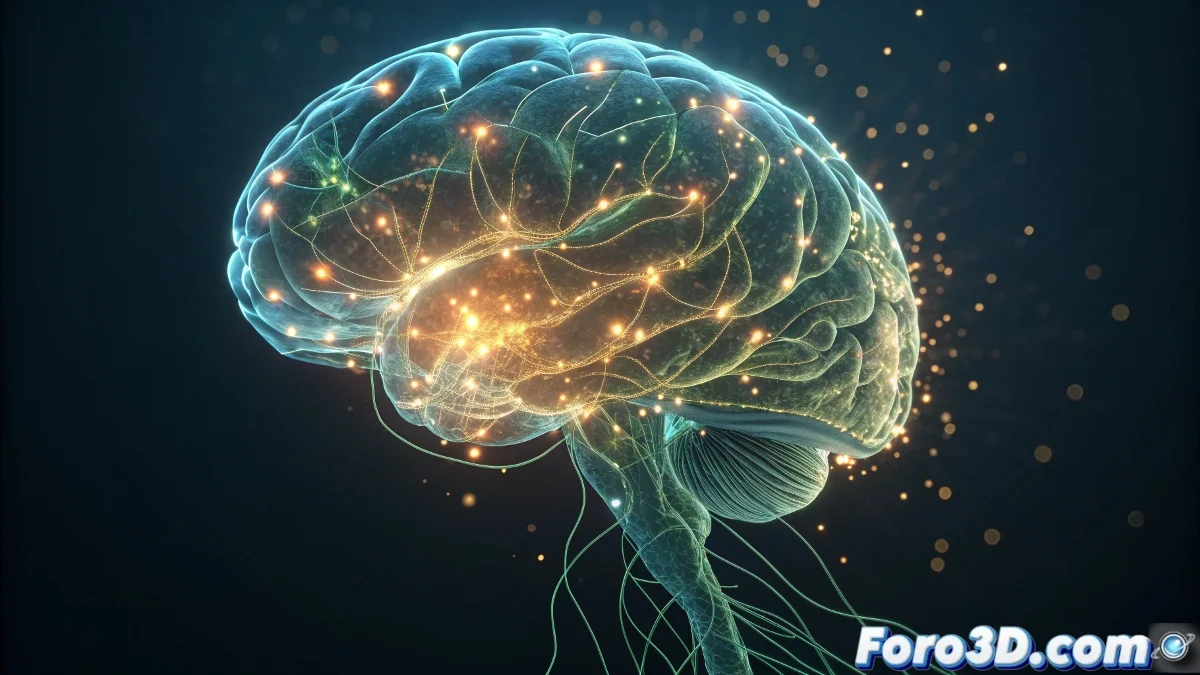
The Duality of Neuroplasticity in 3D Visualization
When addressing the representation of the dark side of neuroplasticity in Blender, you are exploring one of the most fascinating and complex concepts in modern neuroscience. Neuroplasticity is not always a beneficial process - the same brain capacity that allows us to learn languages or recover from injuries can, under pathological circumstances, generate aberrant connections that perpetuate neurological and psychiatric disorders. Your project visualizes this fundamental paradox: how brain adaptation mechanisms that are essential for survival and learning can, when dysregulated, become the ones that sustain conditions like epilepsy, addictions, or mood disorders. This Blender representation serves as a bridge between abstract scientific complexity and intuitive visual understanding.
Neuroscience Research for Anatomical Precision
The credibility of the visualization depends on rigorous research into brain anatomy and neuronal plasticity processes documented in scientific literature.
- Study of tractographies by diffusion magnetic resonance imaging
- Analysis of neuronal circuits involved in specific pathologies
- Research on synaptic changes in disease models
- Documentation of cortical reorganization post-injury
Modeling Strategies for Neural Networks
Modeling in Blender must capture both the beauty and pathological complexity of neural networks when they reorganize dysfunctionally.
Visualizing pathological neuroplasticity is like mapping the brain's invisible scars
- Geometry Nodes for complex networks of neuronal connections
- Curve Modifiers for axons and dendrites with realistic variations
- Sculpt Mode for organic details of brain tissue
- Particle Systems for synaptic vesicles and neurotransmitters
Visual Representation of Pathology
The key to the project lies in clearly differentiating healthy from pathological plasticity through specific visual resources.
Creating precise scientific visualizations in Blender represents the convergence between art and science 🧠. Each neuronal connection you model and each pathological process you visualize not only generates an aesthetically impactful image, but also contributes to public understanding of complex neuroscientific concepts that deeply affect the lives of millions of people with neurological and psychiatric disorders.