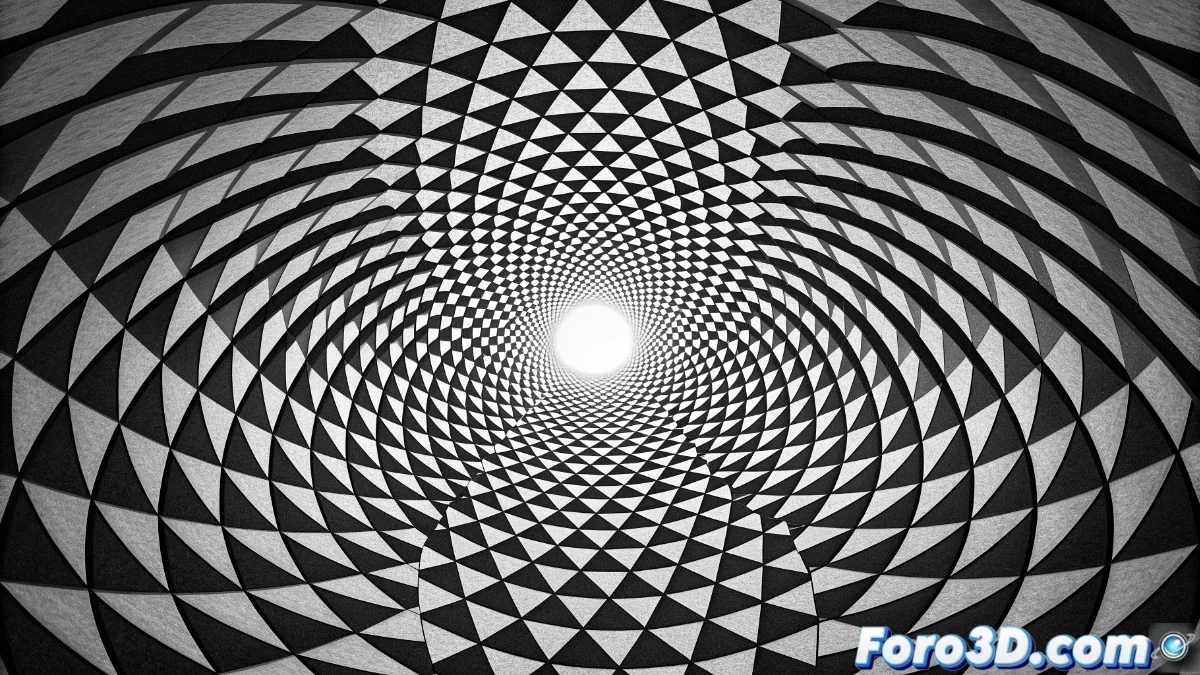
Repetitive Patterns in Visual Design: Effects and Solutions
Prolonged exposure to repetitive patterns can generate from mild discomfort to hypnotic effects in certain people. Our brain constantly processes visual information, but excessive repetition produces a perceptual saturation that affects the user experience. 🌀
Impact of Patterns in Digital Environments
Designs with very close lines, concentric circles, or high-frequency textures become the main culprits of these reactions. In digital environments, high brightness and intense contrasts significantly amplify these negative effects.
Critical Patterns in Graphic Design and Video Games:- Chessboards at reduced scale, which generate visual vibration and make focusing difficult
- Dot grids with insufficient spacing, causing rapid eye fatigue
- Moiré effects in interactive interfaces, where users spend extended periods of time
Developers and artists must prioritize adequate spacing, element variation, and controlled contrast to preserve visual comfort.
Strategies for More Comfortable Designs
The implementation of subtle variations in patterns represents the most effective solution. This includes progressive color transitions, random rotations of components, and the incorporation of visual rest areas that interrupt uniformity.
Recommended Tools and Techniques:- Use of Shader | Compute to create dynamic patterns that avoid exact repetitions
- Implementation of organic textures in static designs to break monotony
- Balance between aesthetics and the viewer's perceptual comfort
Final Reflection on Visual Patterns
Repetitive patterns share similarity with those melodies that repeat mentally: initially captivating, but eventually exhausting. The key lies in designing with perceptual awareness, always considering the user's prolonged experience and seeking that perfect balance between visual appeal and eye well-being. 👁️