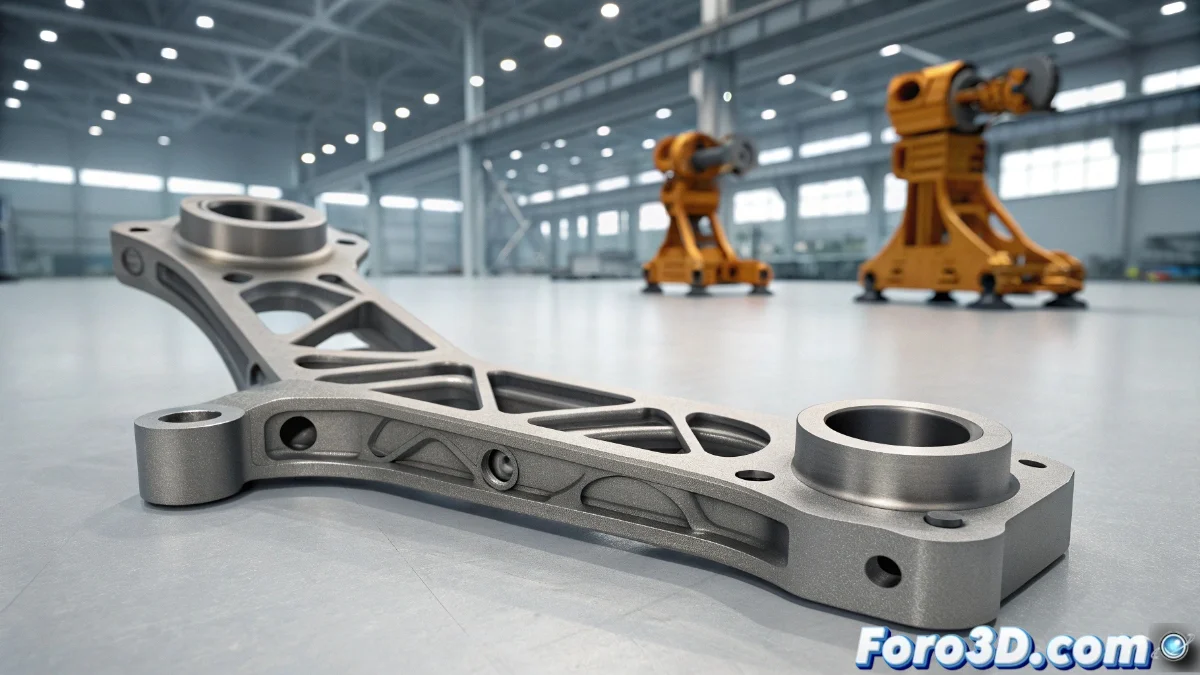
Renault Trucks Implements Metal Additive Manufacturing in Engine Components
The heavy automotive industry is undergoing a radical transformation with the adoption of advanced manufacturing technologies. Renault Trucks joins this pioneering trend, following the path marked by companies like Daimler, by incorporating metal 3D printing into the production of fundamental engine components 🚛.
Revolution in the Design of Critical Components
Additive manufacturing is enabling the creation of parts with geometric configurations that were unthinkable using conventional production methods. Rocker arms and mounting supports can now be designed with optimized internal structures that maximize strength while minimizing total weight. This mass reduction directly translates into significant improvements in efficiency and performance for heavy truck engines 💪.
Key Advantages of Metal 3D Printing:- Complex geometries that enable advanced topological optimization
- Weight reduction without compromising structural integrity
- Use of specialized metal alloys for high strength
Additive manufacturing allows us to redesign components that have gone decades without significant changes, creating lighter and more efficient parts that benefit both the operator and the environment.
Operational and Logistical Impact
The integration of this technology is transforming supply and production processes. The ability to manufacture on-demand and locally produced parts drastically reduces development times and inventory costs. Additionally, it provides unprecedented flexibility to quickly adapt to specific needs of specialized models 📊.
Benefits in the Value Chain:- Logistics simplification through localized production
- Greater resilience to supply disruptions
- Possibility of rapid customization for specific applications
Towards More Sustainable Transportation
This technological evolution significantly contributes to creating a more economical and eco-friendly transportation. The weight reduction of engine components translates into lower fuel consumption and reduced emissions, while the ability to produce optimized parts improves the company's global competitiveness. Trucks now not only transport cargo more efficiently, but do so with a considerably lower environmental impact 🌱.