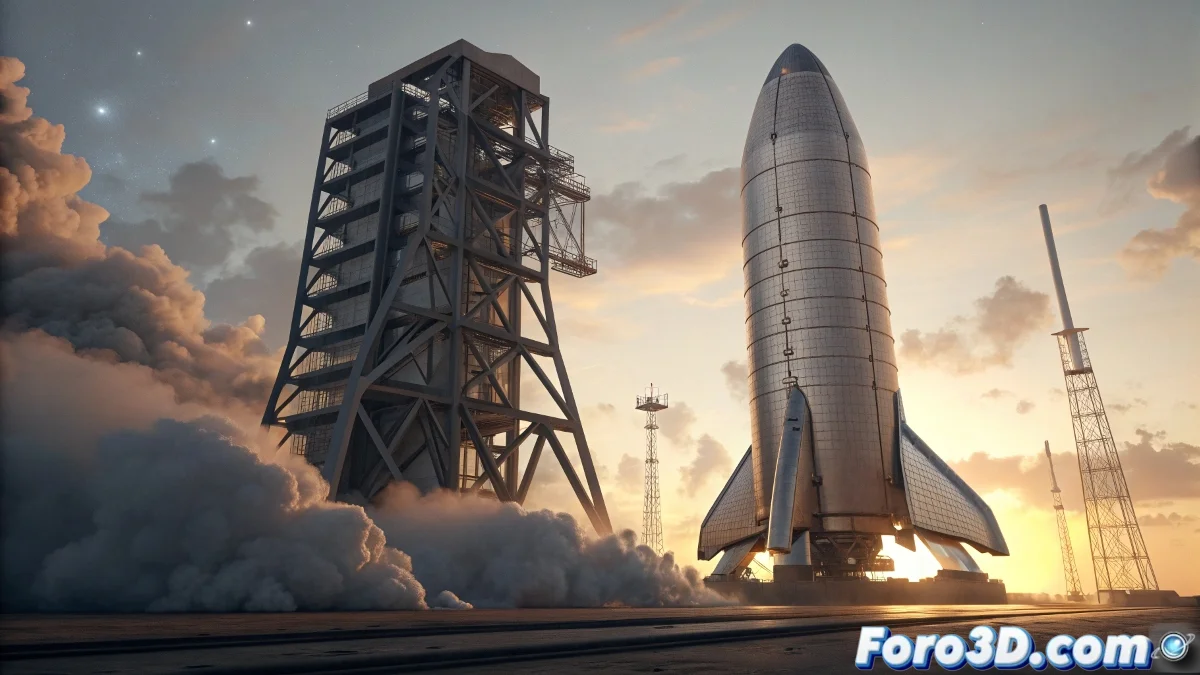
Relativity Space: From Technical Success to Commercial Reassessment in 3D-Printed Rockets
The aerospace startup Relativity Space has marked a historic milestone with the inaugural flight of Terran 1, the first rocket manufactured 85% by 3D printing that successfully surpassed the critical maximum aerodynamic pressure phase. However, the technological celebration comes accompanied by a surprising decision: the permanent retirement of the model just after achieving technical validation, generating deep reflections on the future of additive manufacturing in the space sector. 🚀
A Technological Achievement with an Expiration Date
Terran 1 demonstrated that mostly 3D-printed rockets can withstand the extreme launch conditions, including the dreaded Max-Q or point of maximum dynamic pressure. This validation represents a significant advance for additive manufacturing in aerospace applications, but the company has determined that the model has no commercial future. The paradox is evident: a technically successful project is abandoned for purely economic considerations. 💰
Key details of the validation flight:- Successful overcoming of the Max-Q phase demonstrating structural integrity
- Validation of critical components manufactured via 3D printing
- Collection of fundamental data for future developments
"The market for small launchers like Terran 1 is too limited and competitive" - Relativity Space
Strategic Shift Toward Larger-Scale Vehicles
The company has announced that it will concentrate all its resources on developing Terran R, a fully reusable heavy-lift rocket. This strategic shift suggests that 3D printing finds its true economic value in larger-scale vehicles, where the advantages of additive manufacturing—such as reduction in parts and production times—can significantly impact costs. The message is clear: the technology works, but it must be applied where it generates sustainable competitive advantages. 📈
Potential advantages of Terran R:- Capacity to transport heavier payloads to complex orbits
- Fully reusable design that reduces launch costs
- Greater market potential in the heavy-lift segment
Implications for the Commercial Space Ecosystem
This case illustrates a harsh reality in the new space era: technological validation does not automatically guarantee commercial success. While established companies like Rocket Lab dominate the small satellite niche with traditional methods, 3D printing must demonstrate that it can produce large vehicles more quickly and economically. The true definitive test for additive manufacturing in rockets will come with Terran R, where it will have to compete directly with conventional techniques in terms of scalability and profitability. ⚖️
The Innovation vs. Market Dilemma
Relativity Space's situation reflects a broader pattern in the industry: having a rocket that works perfectly is no longer enough; it now must be the right rocket at the right time. The irony lies in the fact that, while we celebrate technological milestones like Terran 1, the market decides which innovations survive based on purely economic criteria. This case sets an important precedent for other companies exploring additive manufacturing in the space sector, reminding them that commercial viability is as crucial as technical advances. 🔄