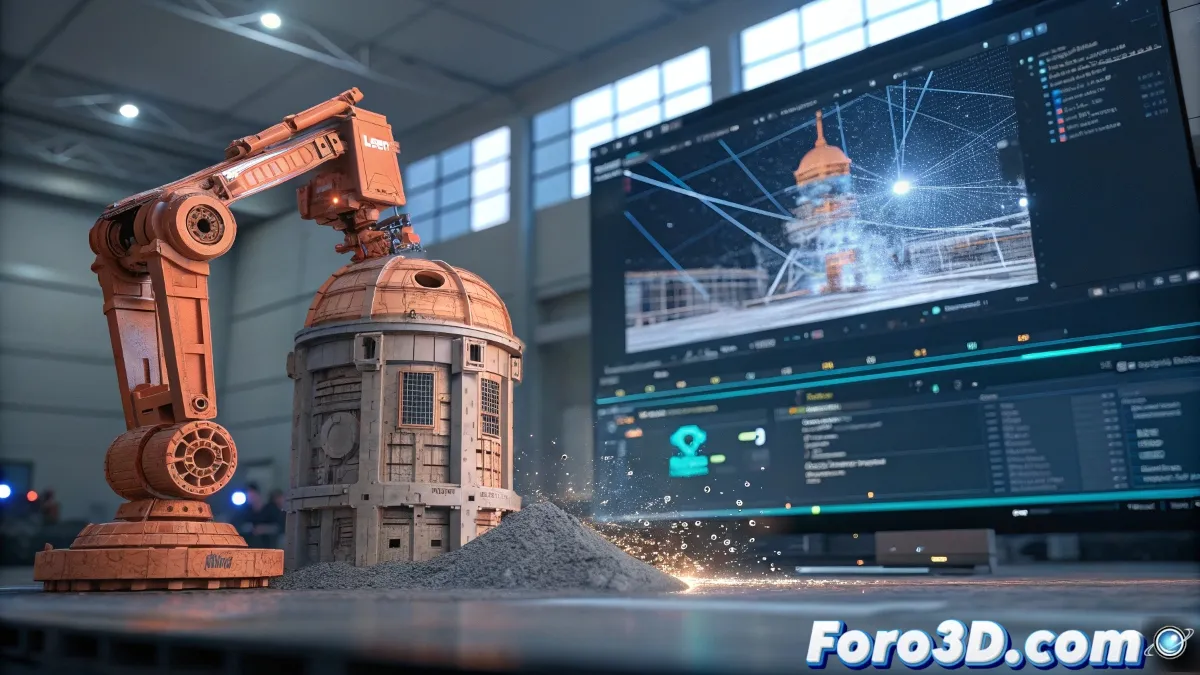
Redshift 2025.4 and the Evolution of GPU Rendering
The latest version of the Redshift rendering engine marks a turning point in the creation of visual effects and motion graphics. This update not only improves performance but also establishes new paradigms in material and surface handling through the adoption of the OpenPBR standard.
"OpenPBR represents a qualitative leap in material standardization, enabling more consistent workflows across different platforms"
Innovations in Surface Treatment
The material system has been completely redesigned, prioritizing realism in microscopic details. The new layer structure, with Fuzz as the main element, offers significant advantages:
- More accurate simulation of fibers and particles
- Intuitive control of wear effects
- Seamless integration with global illumination
Highlighted Technical Optimizations
Among the low-level improvements, two implementations stand out that directly affect the final quality:
The Surface Tangent node provides unprecedented control over directional reflections, while the EON model resolves historical issues in representing rough surfaces. These innovations are complemented by adjustments to the procedural noise system, now with rotation capability.
Software-Specific Customization
Adaptation to different work environments demonstrates the engine's flexibility:
- Automatic material conversion in 3ds Max
- Improved proxy handling in Blender
- Optimized visualization in Cinema 4D
- Extended USD support in Houdini
These platform-specific features significantly reduce production times in complex pipelines, maintaining visual coherence across different stages of the creative process.
The native integration in Maya through the material viewer within Hypershade represents another notable advance, streamlining the fine-tuning process without the need for test renders.