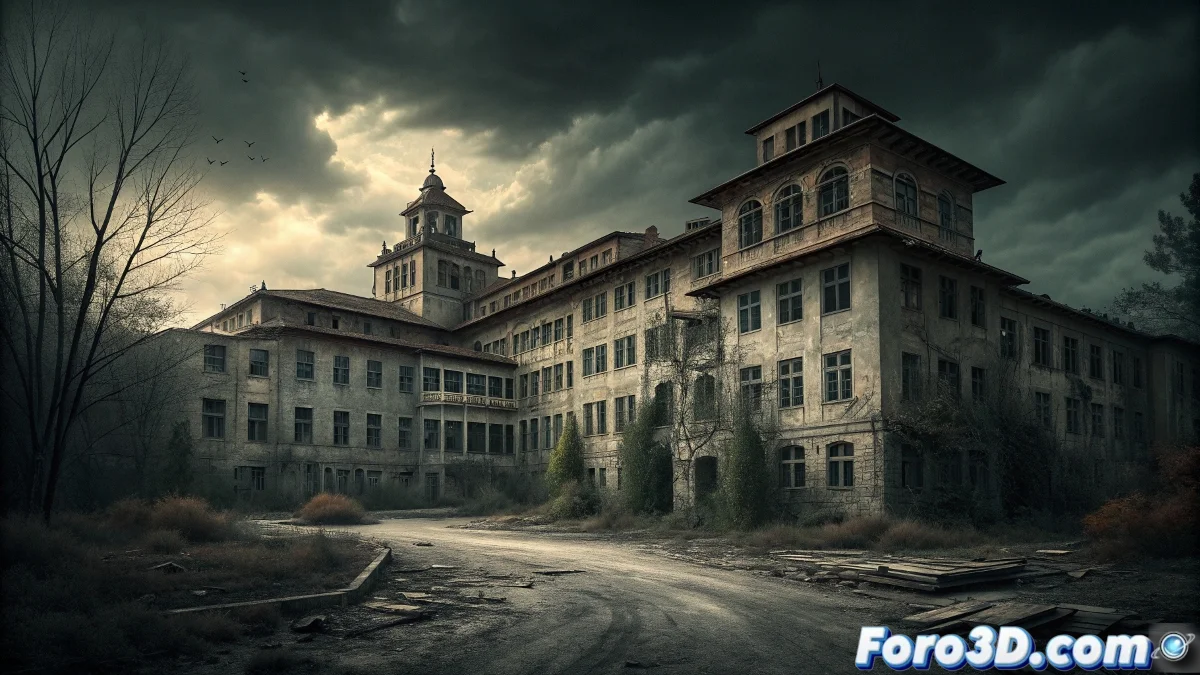
The sanatorium that revives among layers and timelines
The Terrassa Thoracic Hospital represents much more than an abandoned building; it is an icon of collective memory where medical history and urban legends intertwine. Opened in the 1950s as a specialized center for respiratory diseases, its reputation evolved from healthcare vanguard to paranormal stigma. Today, through After Effects, we can visually explore this duality between the clinical past and the haunted present.
Recreating its unique atmosphere requires understanding that effective terror arises from suggestion, not explicitness. Failing lights at crucial moments, peripheral shadows, and ambiguous sounds form the perfect vocabulary to convey the unease that defines the old sanatorium.
The most terrifying places are those where real history surpasses fiction
Fundamentals for building atmosphere
- Historical research with archival material and real testimonies
- 3D composition with cameras that replicate human gazes
- Cold chromatic palette dominated by desaturated blues and greens
- Immersive sound design that plays with the psychology of space
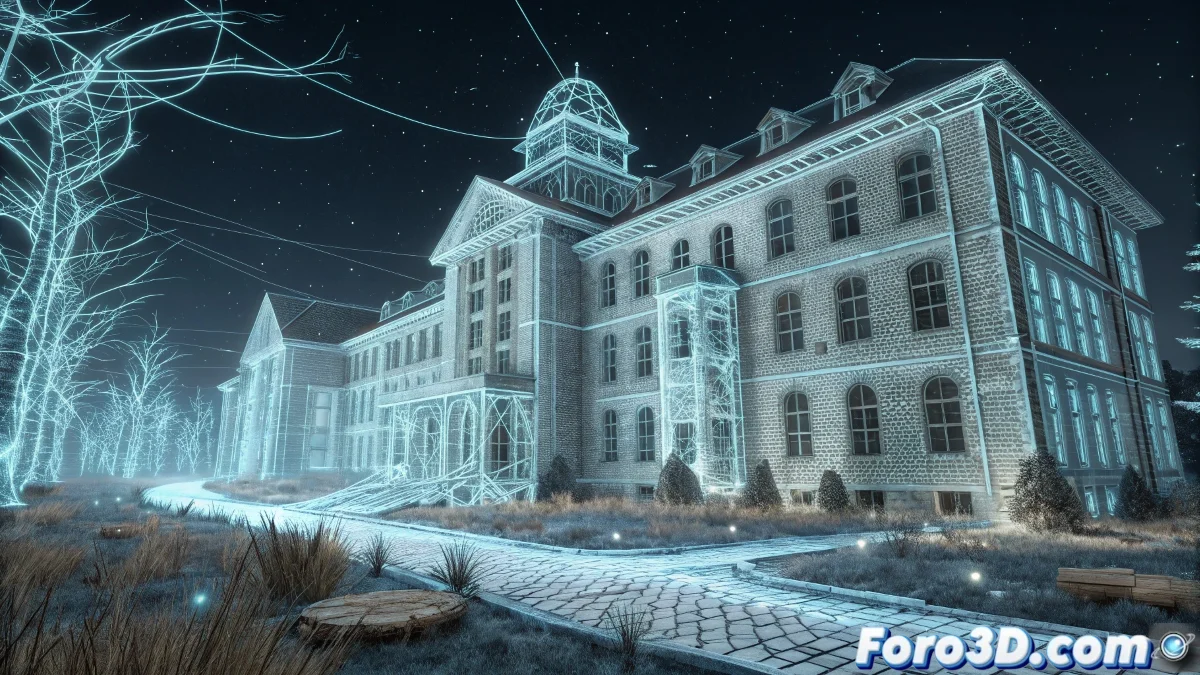
Mastering light and penumbra
The setup of virtual cameras in After Effects allows recreating that sensation of cautious exploration that characterizes abandoned spaces. The use of keyframes with Easy Ease generates organic movements that contrast with architectural rigidity, while depth of field subtly directs attention to significant details. This technical approach creates an implicit visual narrative that guides the viewer without the need for dialogue.
Particle effects and Fractal Noise become indispensable allies for simulating the floating dust and residual fog mentioned by so many witnesses. By meticulously adjusting opacity and blending modes, we achieve that atmospheric texture that transforms empty spaces into sets charged with invisible presence.
Advanced post-production techniques
- Lumetri adjustment layers for non-destructive color correction
- Wiggle expressions for flickering lights and electrical failures
- Nested precompositions to manage complex effects
- Depth maps for realistic integration of 3D elements
Sound design completes the experience through a careful mix of diegetic environments and non-diegetic elements. The creaking of floors, the echo of distant footsteps, and those whispers that seem to emerge from the walls intertwine to create an augmented reality that questions the limits of the perceptible. Millimetric synchronization between visual and auditory stimuli generates that visceral tension that defines well-executed psychological terror.
True horror is not shown, it is suggested between frames
The narrative power of the subtle
Vintage typography and text overlays provide that aura of documentary verisimilitude that anchors the experience in historical reality. Quotes from real testimonies, animated with typewriter effects, emotionally connect the viewer with the voices of the past. These elements transform the technical exercise into an emotional exploration of the space and its collective memory.
For climactic moments, the combination of spectral distortions and sudden chromatic alterations generates tension peaks that linger in the subconscious. It is in these instants where technical knowledge transfigures into art, turning parameters and codes into sensory experiences that transcend the visual medium.
And while you adjust the last fog effect, you can't help but wonder if that movement in the render is a compression artifact... or something that decided to join the composition 👻