When Digital Art Meets Archaeology
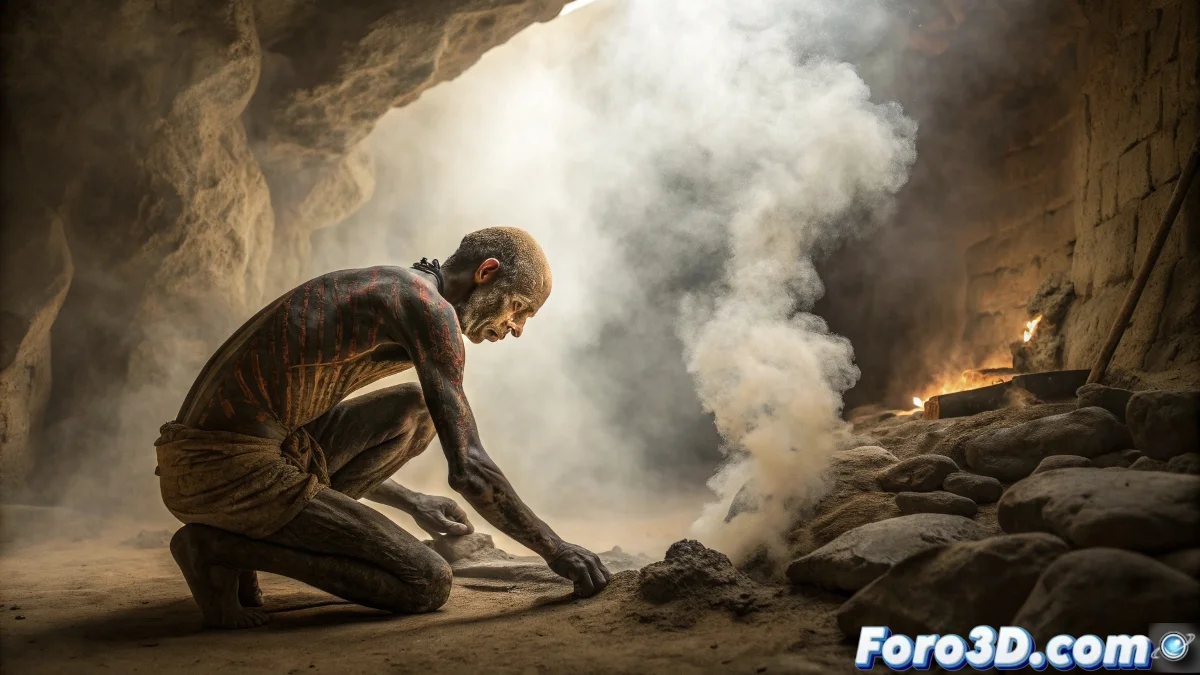
Recent research has revealed that the oldest known human mummies—dating back 14,000 years—were preserved using smoking techniques by communities in Southeast Asia. 🏺🔥 In Corel Painter, we can recreate this ancestral process, capturing not only the physical appearance of these mummies but also the cultural and spiritual significance behind these preservation practices that connected the living with their ancestors.
Historical Project Setup
Upon starting Corel Painter, a new high-resolution document is created to allow for fine details in representing textures and effects. 🎨 Layer organization is essential: Cave_Background, Mummies, Smoke, and Detail_Textures keep the workflow flexible throughout the creative process. Activating rulers and guides ensures a balanced composition that guides the viewer's gaze through the scene.
The recreation of ancient funerary practices through digital illustration not only documents archaeological discoveries; it humanizes our ancestors, allowing us to glimpse their beliefs and mourning rituals.
Illustration Techniques for Mummification
The mummies are drawn in a fetal position—the typical posture found in these remains—using brushes that simulate organic textures. 💀 Warm and earthy color layers (browns, ochres, muted grays) are applied to represent smoke dehydration, with subtle transitions between areas of preserved skin and bone exposure. Details like binding marks and dehydration patterns are added with fine brushes and low opacity.
Creation of the Ritual Environment
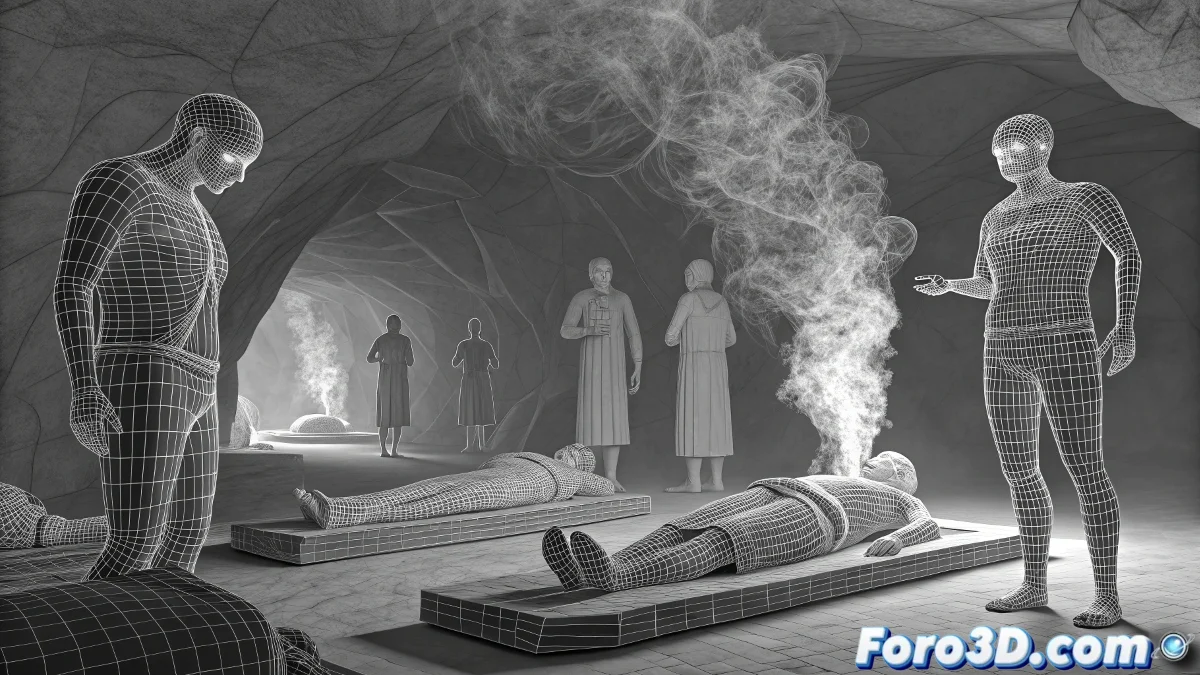
- Cave Scene: Rocky backgrounds with irregular textures created with stone and erosion brushes.
- Smoke Effects: Air and scatter brushes to simulate rising smoke from the smoking process.
- Dramatic Lighting: Dim lights suggesting off-frame fire sources, creating evocative chiaroscuro.
- Ritual Elements: Symbolic objects like containers and tools around the mummies.
Color Palette and Mood
The palette is limited to warm earth tones—browns, muted oranges, warm grays—to evoke antiquity and natural processes. 🟫 Contrasts are handled subtly to maintain a reverential and mysterious atmosphere, with areas of higher saturation around the mummies for visual emphasis. The smoke is painted with slightly cooler tones to create atmospheric depth.
Anthropological Details and Accuracy
The illustration incorporates elements based on real archaeological findings: fetal positions, evidence of ritual cuts, and specific smoking dehydration patterns. 🔍 Skin textures are created using references from modern natural preservation and studies of ancient remains, balancing scientific accuracy with artistic expression.
Applications Beyond Illustration
These recreations serve as educational tools for museums, materials for academic publications, and resources for documentaries on archaeology and ancient funerary practices. 🏛️ The ability to visualize these processes helps the general public understand preservation techniques that would otherwise be abstract or difficult to imagine.
Thus, while science continues to uncover our ancestral secrets, digital art allows us to give them visual form… though no render can fully capture the spiritual meaning these practices held for those who performed them. Because in historical illustration, the only thing that should be preserved is memory, not just appearance. 😉