When Space Meets 3D Rendering
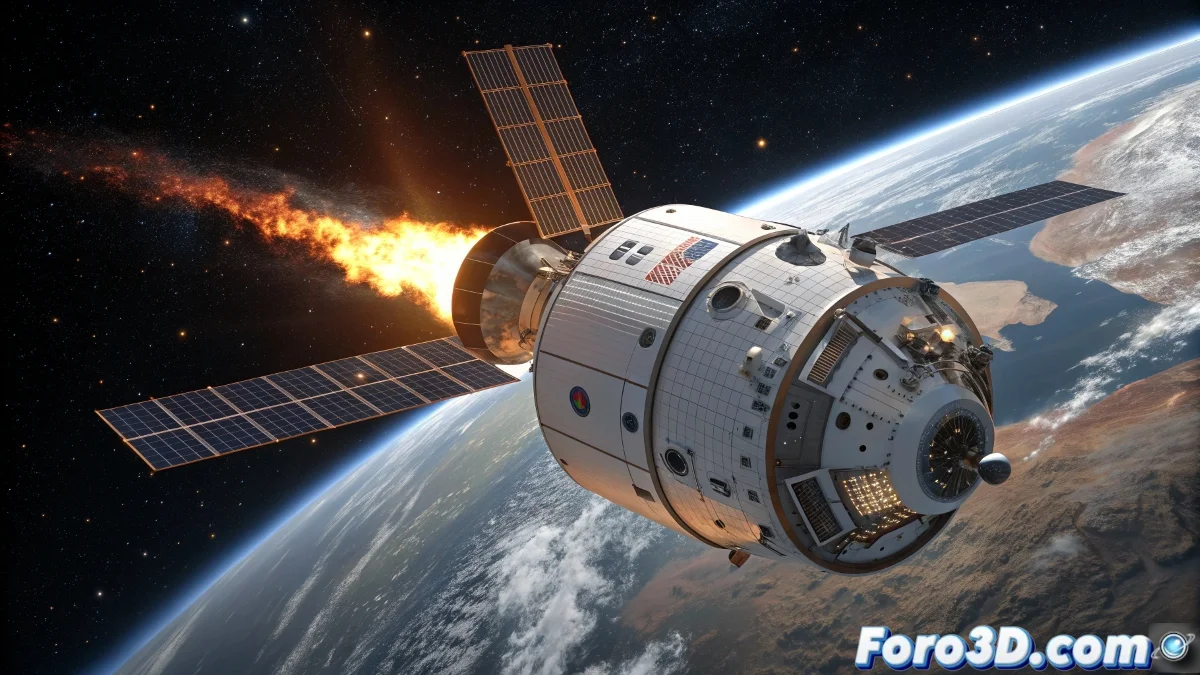
The launch and subsequent failure of The Exploration Company's Nyx capsule represents one of those moments where space ambition faces the harsh reality of engineering. 🚀💥 In Cinema 4D, we can recreate this unique mission—which carried human ashes, DNA, and cannabis seeds—from its launch at Vandenberg to its tragic end in the Pacific. This visualization not only documents a historical event but also explores the thin line between innovation and risk in the new era of commercial spaceflight.
Space Project Setup
Upon starting Cinema 4D, the project is configured with units in meters to maintain realistic scales—the Nyx capsule measures approximately 2 meters in diameter. 🗂️ Layer organization is crucial: Capsule, Cargo, Earth, Orbit, and Reentry_Effects keep the scene manageable during the animation process. Enabling the grid view and snapping ensures precision in positioning critical elements.
The recreation of failed space missions in 3D serves as a crucial educational tool, allowing analysis of failure points and improvement of future designs without the costs and risks of real tests.
Modeling the Capsule and Cargo
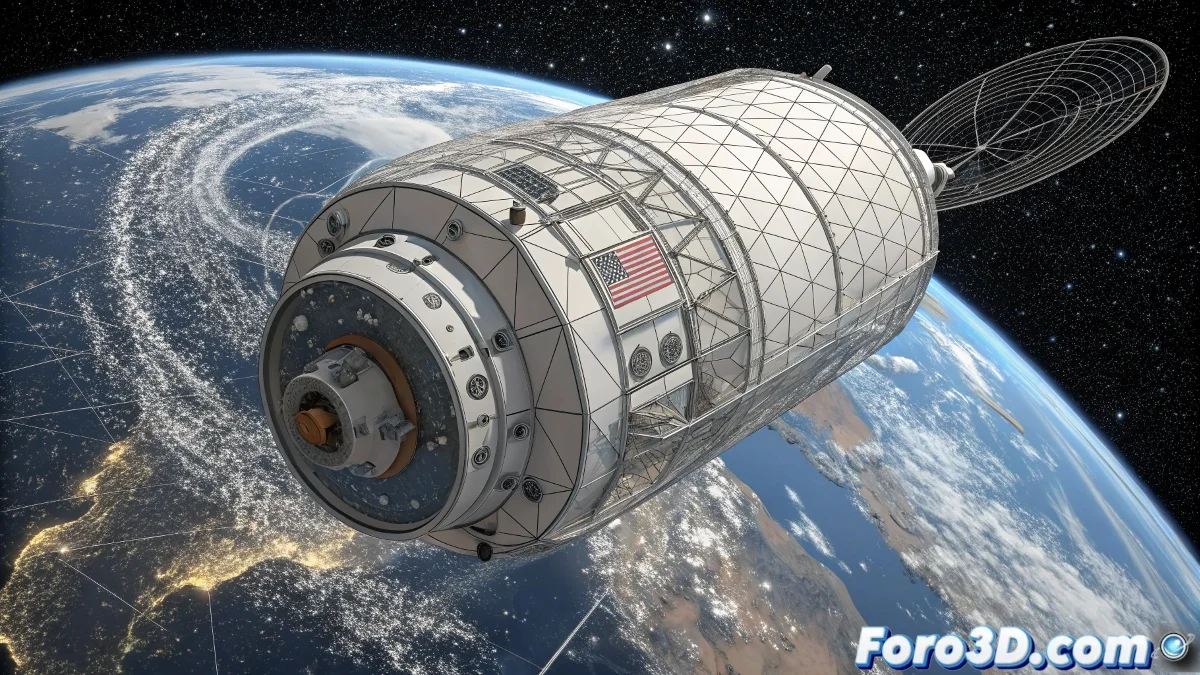
The capsule is modeled as a cylindrical structure with a reentry cone, based on design references from The Exploration Company. 🛰️ Details include foldable solar panels, communication antennas, and the parachute system that critically failed during reentry. The cargo is recreated with symbolic urns for ashes, DNA vials, and special containers for cannabis seeds—all modeled with precision while respecting the sensitivity of the content.
Animation of the Trajectory and Failure
- Orbital phase: The capsule follows a spline curve around the Earth, completing two orbits as actually occurred.
- Reentry: The descent is animated with a gradual increase in thermal and atmospheric effects.
- Critical failure: The parachute remains folded while the capsule accelerates toward the ocean.
- Impact: Final sequence showing contact with the water without deployment of recovery systems.
Materials and Reentry Effects
The materials replicate those used in real spacecraft: ablative thermal shield, aerospace metal, and composite components. 🔥 During reentry, particle emitters are added to simulate ionized plasma, using color gradients from red to white to indicate increasing temperature. Volumetric effects create the characteristic reentry trail.
Lighting and Environment
The lighting changes dramatically throughout the animation: intense sunlight in orbit, orange and red tones during reentry, and cool ambient light for the final ocean scene. 🌊 A space HDRI provides realistic reflections in orbit, while point lights simulate frictional heating during descent.
Rendering and Post-Production
Physical Render or Redshift is used for cinematic quality, with adaptive sampling to handle complex particle and material effects. 📸 Separate passes for incandescence, reflection, and depth allow precise adjustments in post-production to emphasize the drama of the failure and cargo loss.
Beyond Visualization
This recreation serves as a technical analysis of the failure, an educational tool on atmospheric reentry challenges, and a visual tribute to a mission that, though failed, represented an advance in commercial space services. 🎓 The ability to simulate and visualize these events accelerates collective learning in the emerging space industry.
Thus, while the real capsule rests on the Pacific seabed, its digital twin can be studied and improved infinitely… because in Cinema 4D, the only thing that should be lost at sea is the opportunity to learn. 😉