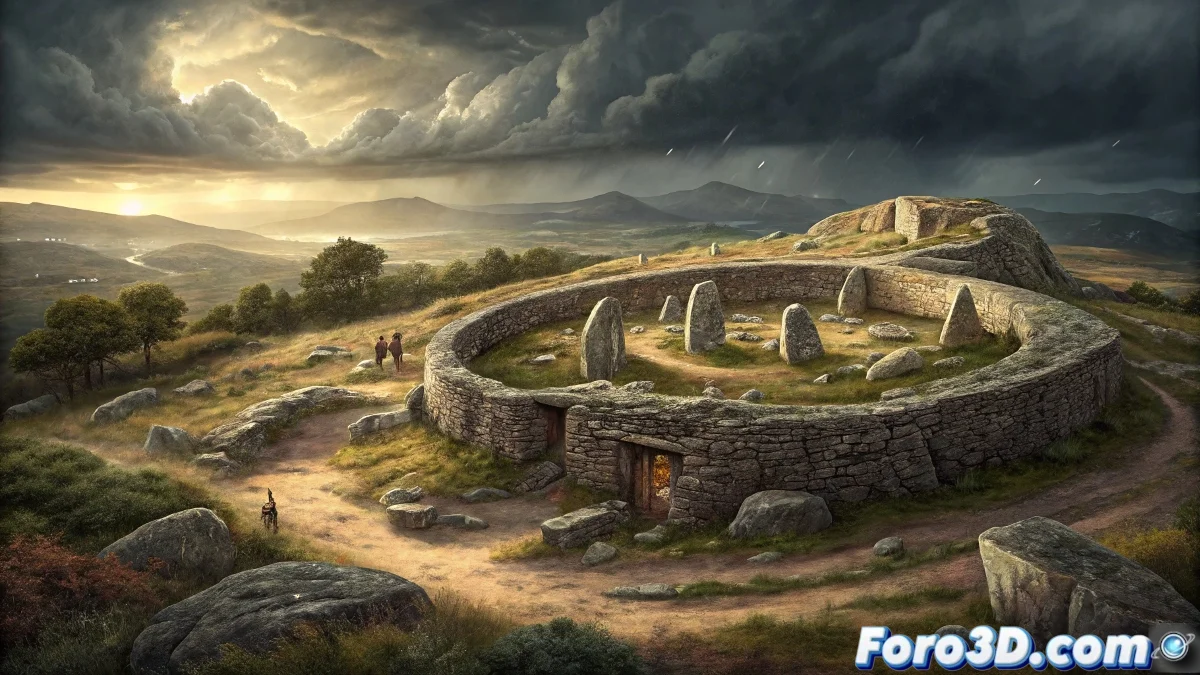
Where the stones still whisper forgotten rituals
The Castro de Ulaca in Ávila represents one of those places where the boundary between history and legend blurs among millennial stones. This Vetton sanctuary, where according to archaeological research human sacrifices were performed, preserves an energy that transcends the centuries. In Krita, we can visually explore this duality, capturing both the archaeological precision and the supernatural atmosphere that permeates every corner of this Celtic enclave.
The recreation of Ulaca is not a mere exercise in historical illustration, but an emotional immersion into a space where the ritual and the everyday intertwined. Each brushstroke in Krita must convey that ceremonial weight that still seems to gravitate over the circular walls and sacrifice altars.
Painting Ulaca is dialoguing with the echoes of rituals that time has not been able to completely silence
Pictorial workflow in Krita
- Archaeological research and study of Vetton culture
- Atmospheric sketching that prioritizes emotion over detail
- Layered painting building from backgrounds to foregrounds
- Expressive texturing that captures the erosion of time
Capturing the essence of the sacred Vetton
The creative process begins with a deep understanding of the characteristic architecture of Vetton castros. In Krita, rocky texture brushes allow capturing that organic quality of dry stone constructions, while blending tools help create smooth transitions between natural and artificial elements. The organization into logical layer groups is essential for handling the complexity of a complete historical landscape.
Adjustment layers and blend modes become crucial allies for creating that meaning-laden atmosphere that defines ritual spaces. By overlaying layers with different blend modes and applying strategic layer masks, we can suggest that ethereal quality that so impresses visitors to the real Ulaca.
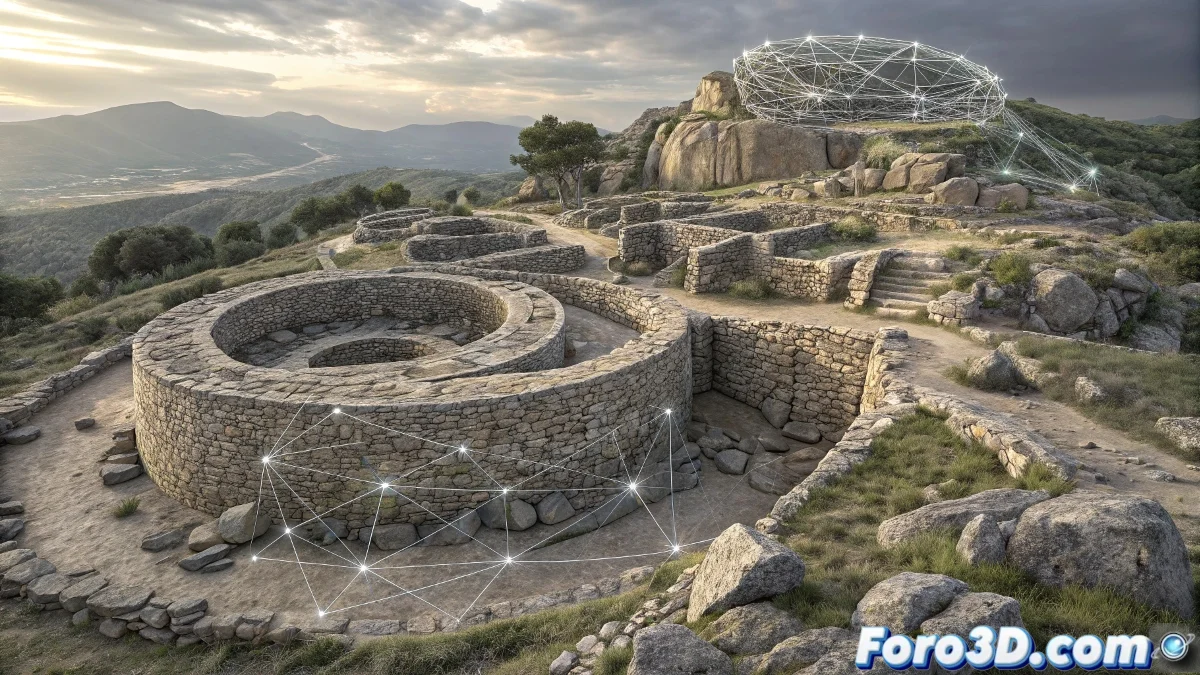
Advanced historical painting techniques
- Custom brushes for stone and native vegetation textures
- Harmonized color layers based on historical earthy palettes
- Transformation tools to maintain architectural perspective
- Filters and effects to simulate twilight lighting conditions
The color palette becomes the main vehicle for conveying the solemnity of the place. Earthy tones dominate the scene, with ochres, siennas, and burnt earths that evoke both the Ávila landscape and the ritual antiquity of the enclave. Strategic touches of more saturated color in ceremonial elements—rust stains, ritual pigments—create focal points that guide the visual narrative while deepening the sense of mystery.
In Krita, each brushstroke must contain both history and emotion
Composition that narrates Vetton secrets
The spatial distribution of elements seeks to visually convey Ulaca's dual function as a fortress and sanctuary. Defensive walls framing ceremonial spaces, strategically located altars, and paths that wind toward the unknown create a powerful visual narrative about the complexity of Vetton society.
Krita's perspective resources allow playing with scales that accentuate the immensity of the landscape against human fragility. Tiny figures performing rituals in monumental spaces, or elongated shadows suggesting invisible presences, become narrative elements that communicate the essence of the place more effectively than any textual description.
And as you save your .kra file, you can't help but feel that those digital stones retain something of the echo of the ritual chants that once resonated among them 🗿