Where Broken Dolls Come to Digital Life
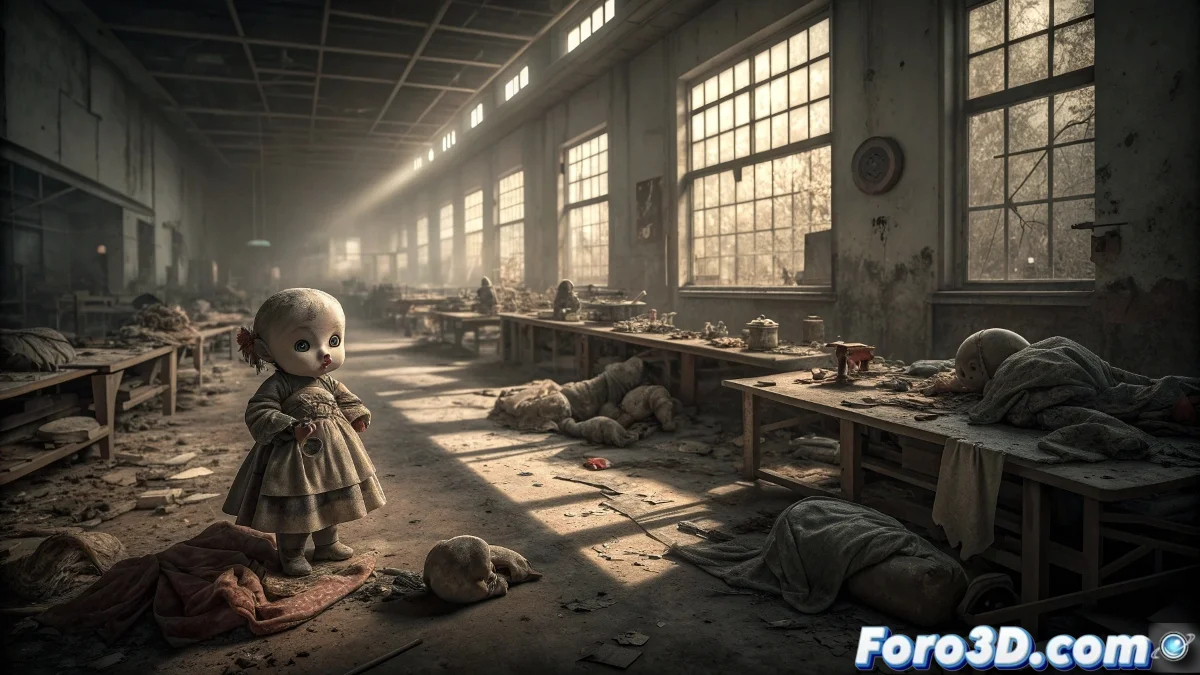
The abandoned doll factory in Castellón represents one of those places where the industrial past meets the most visceral psychological terror. This space, where empty glass eyes and scattered porcelain limbs still lie, offers a unique visual narrative for any 3D artist. In Autodesk Maya, we can explore this unsettling atmosphere, transforming real abandonment into an immersive experience that raises goosebumps.
The fascinating thing about recreating this scene is how it allows playing with that disturbing duality between the childish innocence associated with dolls and the eerie decay of industrial abandonment. Every model, every texture, and every lighting decision must serve to amplify this tension, creating an experience that lingers in the viewer's mind.
Some silences are more eloquent than screams, and an abandoned doll factory screams in silence
Workflow in Autodesk Maya
- Documentary research on abandoned industrial architecture
- Detailed modeling of spaces and characteristic objects
- Advanced PBR texturing for aged materials
- Psychological lighting that generates visual discomfort
The Art of the Eerily Real
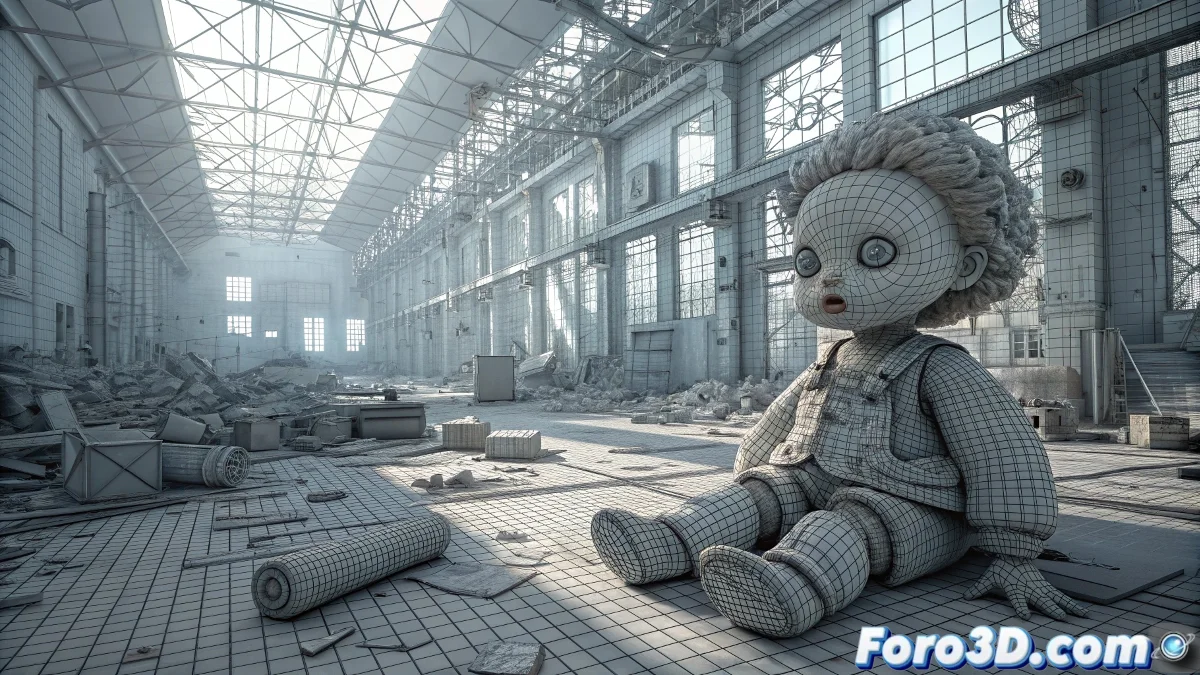
The process begins with the architectural recreation of the industrial space. In Maya, polygonal modeling tools allow capturing that organic quality of decay: peeling walls, uneven floors, and structures that seem about to collapse. Attention to details like rusted machines, conveyor belts frozen in time, and empty shelves is crucial to convey authenticity.
PBR textures become the soul of the project, transforming simple geometries into surfaces loaded with history. Roughness maps that capture accumulated dust, normals that simulate time erosion, and strategically placed dirt masks contribute to creating that sensation of prolonged abandonment that defines the place.
Advanced Techniques for Disturbing Atmospheres
- Particle systems for floating dust and spores
- Custom shaders for aged doll materials
- Volumetric lights that create volume in the stale air
- Subtle rigging to suggest movement in static dolls
Dramatic lighting stands as the most powerful tool for visual narrative. The setup of directional lights simulating light filtering through broken windows creates that chiaroscuro play so characteristic of horror cinema. The use of contradictory color temperatures—warm lights that should be welcoming but turn unsettling—generates that emotional dissonance that keeps the viewer on edge.
In Maya, every shadow tells a story and every reflection in a glass eye hides a nightmare
Composition that Destabilizes
The distribution of elements in the scene seeks to challenge the viewer's expectations. Dolls placed in impossible positions, broken symmetries that discomfort the human eye, and forced perspectives that create visual vertigo contribute to that sensation of wrongness that defines effective horror. It's not about what is shown, but what is suggested between visual lines.
The doll details deserve special attention: eyes that seem to follow the viewer, worn smiles that turn sinister, and broken joints that suggest prior movement. These elements, strategically distributed, create those moments of uncomfortable recognition that separate a simple 3D scene from a memorable experience.
And as the final render completes, you can't help but look twice at that corner where you swear a doll moved its head... but it must be a global illumination effect, right? 🪆