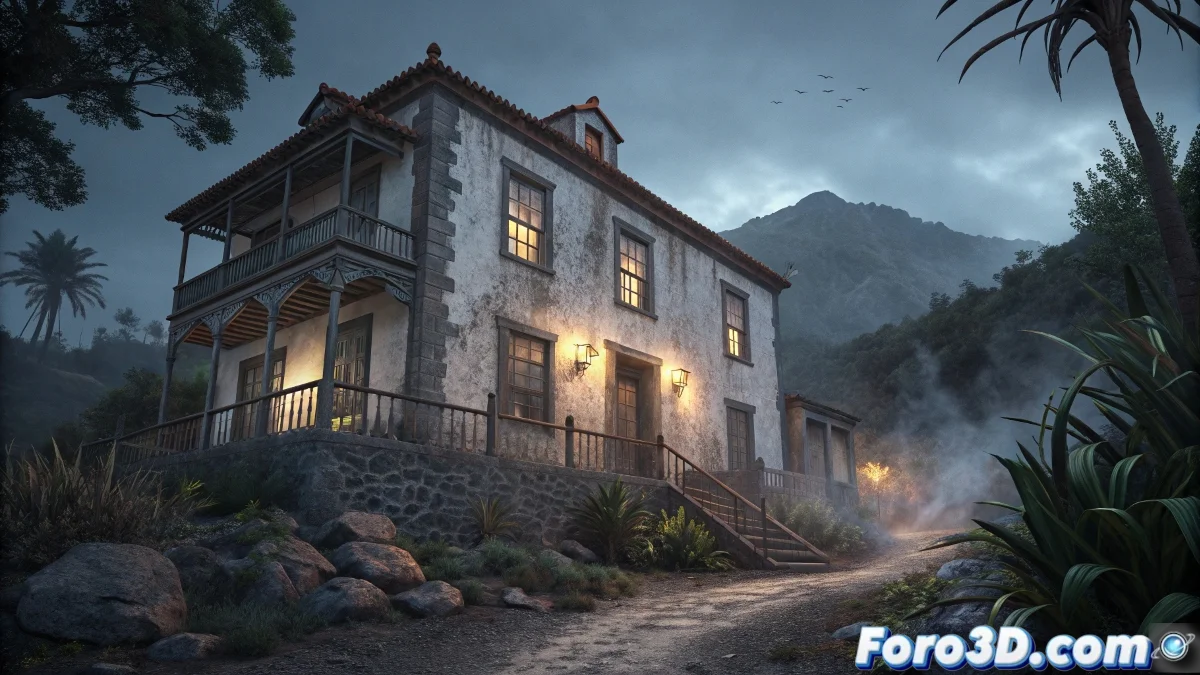
Where Nodes Meet Ghosts
In the Tacande neighborhood in La Palma hides a piece of history that few know: the first house in Spain where formal paranormal investigations were conducted. This 19th-century dwelling, with its traditional Canarian architecture, has witnessed decades of inexplicable phenomena that have attracted both skeptics and believers. In Nuke, we can visually explore these mysteries, using professional compositing tools to give visual form to the intangible and create a cinematic representation of the reported phenomena.
What fascinates about this project is how it allows balancing historical respect with visual creativity. Each effect, each distortion, and each supernatural element must feel authentic and organic, as if we were really witnessing those phenomena that so many witnesses have described over the years. The Tacande house is not just a horror setting; it is a living document of Spanish paranormal history.
Compositing the paranormal is not about creating monsters; it's about making the invisible visible
Workflow in Nuke
- Material preparation and compositing graph organization
- Camera tracking for perfect integration of elements
- Compositing paranormal and atmospheric effects
- Dramatic color grading for an unsettling atmosphere
The Science of the Supernatural
The process begins with meticulous preparation of reference material. In Nuke, organizing the node graph is crucial for handling the complexity of a composition that integrates 2D, 3D elements, and special effects. Creating organized groups for different types of effects—apparitions, distortions, atmospheric elements—keeps the workflow manageable and understandable, even as visual complexity increases exponentially.
Camera tracking becomes the foundation upon which all visual credibility is built. Whether using CameraTracker for real footage or PlanarTracker for specific surfaces, precision in tracking ensures that supernatural effects integrate perfectly with the environment, moving coherently according to the laws of perspective and physics... until we deliberately break them to create the paranormal effect.
Advanced Techniques for Inexplicable Phenomena
- Temporal distortions using TimeClip and strategic retiming
- Particle effects for ectoplasmic energy and orbs
- Alpha channel manipulation for progressive apparitions
- 2D-3D integration for ghosts with volume and depth
Paranormal effects compositing requires a subtle and sophisticated approach. Instead of resorting to exaggerated effects, choosing subtle distortions, slight color temperature changes in specific areas, and almost imperceptible modifications to the image grain create that sense of wrongness that defines effective horror. The key lies in what the viewer almost doesn't see but definitely feels.
In Nuke, the most effective terror is not in what you show, but in what you suggest between nodes
Atmosphere that Breathes History
Color grading becomes the silent narrator of the paranormal story. Creating a desaturated palette with strategic points of supernatural color—ectoplasmic greens, spiritual blues, subliminal alarm reds—guides the viewer's emotional response without the need for explicit elements. Controlled vignetting and localized contrast variations direct attention to where we want them to look, creating the feeling that something could appear at any moment on the edges of the frame.
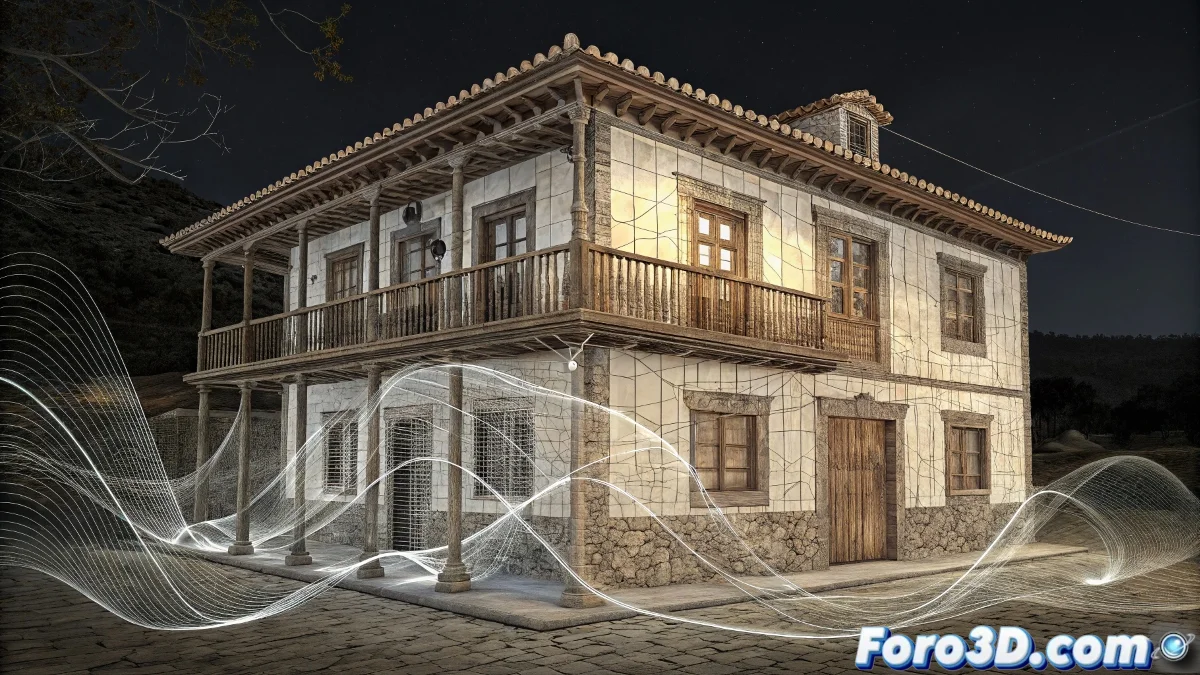
The integration of visually represented sound elements—audio waves from psychophonies, spectral visualizations of whispers—adds an additional layer of scientific credibility to the composition. These elements not only visually enrich the scene but also connect with the real history of the house as a subject of formal paranormal investigation.
And as you render the final sequence, you can't help but wonder if that artifact that appeared in frame 247 was a compression error... or an unexpected participant in your digital composition 👻