12,000-Year-Old Mummies: A Discovery That Redefines History
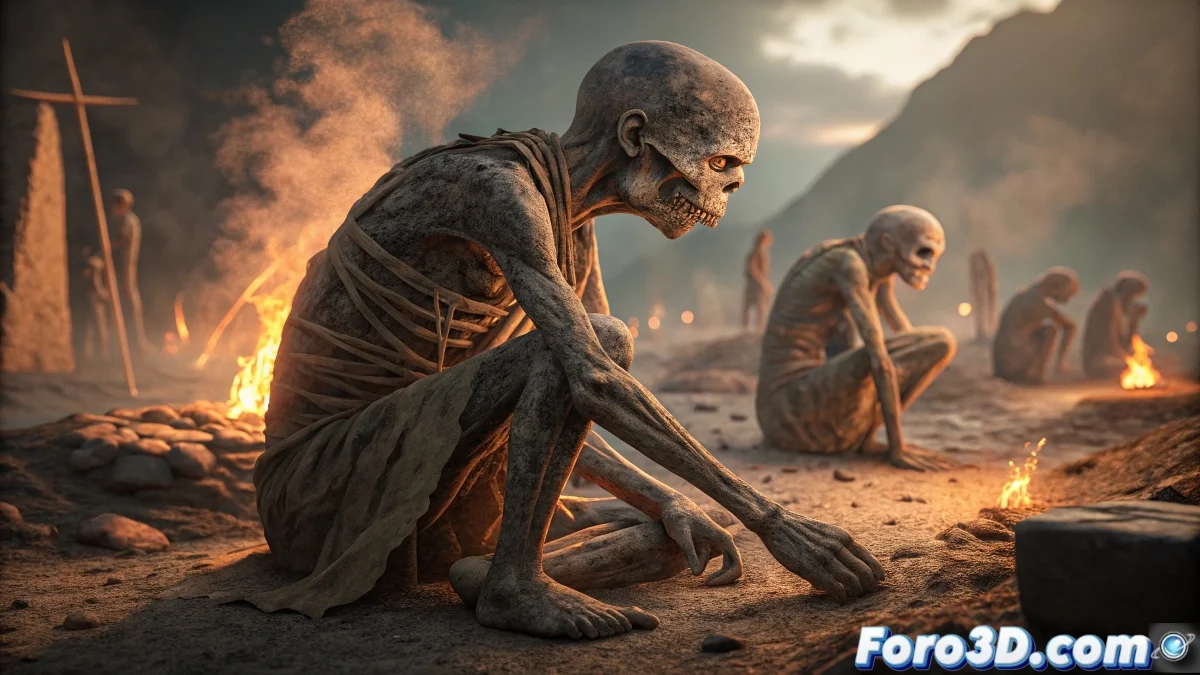
In a discovery that has left archaeologists perplexed, mummies have been found in Southeast Asia dating back up to 12,000 years, surpassing the age of the famous Egyptian mummies 🏺. This discovery was made in various regions, including China, Vietnam, Laos, Thailand, Malaysia, the Philippines, and Indonesia. The human remains were found in crouched positions and showed marks of cuts and burns, indicating they underwent a smoke-drying process, a technique used by hunter-gatherer communities to preserve bodies and maintain a spiritual bond with ancestors. A unique window into prehistoric rituals that challenge our understanding of ancient funerary practices.
Recreating the Discovery in Blender with Historical Accuracy
Blender offers the ideal tools to visually reconstruct this fascinating archaeological discovery 🖥️. We can model the human remains in crouched positions, adding precise anatomical details and cut and burn marks that reflect the real findings. Lighting plays a crucial role in simulating the environment of archaeological sites—deep shadows and warm lights that evoke the smoke-drying process—while subtle particle effects can simulate smoke enveloping the bodies. This approach not only educates but also pays homage to preservation techniques that were revolutionary for their time.
The remains were found in crouched positions with cut and burn marks, indicating a smoke-drying process for preservation.
Project Setup and Mummy Modeling
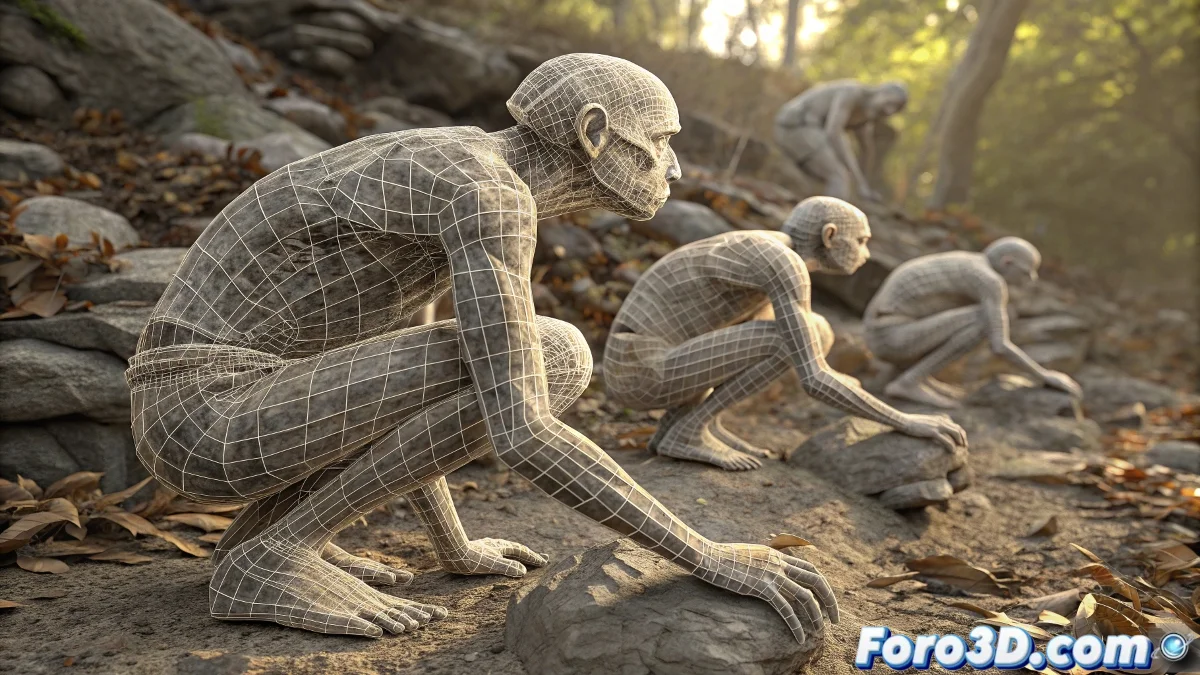
Starting a new project in Blender with metric units ensures correct human proportions for the mummies 📏. Modeling begins with a subdivided cube or the Sculpting tool to create bodies in a crouched position, with arms and legs flexed according to the posture found in the discoveries. Cut and burn marks are added through detailed sculpting or displacement textures, maintaining the subtlety that suggests smoke dehydration rather than violent damage. Organization into collections—Mummies, Terrain, Lighting—keeps the scene orderly and editable.
Materials, Textures, and Archaeological Environment
The materials for the mummies use dark brown tones with subtle Subsurface Scattering to simulate dehydrated but still organic skin 🎨. Burn marks receive textures with color irregularities and relief, while the terrain—created with an irregular plane and displacement maps—blends textures of dry earth, leaves, and rocks for realism. Lighting employs a soft main light from one side, complemented by weak secondary lights that accentuate details without breaking the somber atmosphere. Every element must convey antiquity and cultural significance.
Lighting, Cameras, and Atmospheric Effects
The lighting replicates the semi-dark conditions of an archaeological site, with a warm main light simulating torches or filtered sunlight ☀️. Soft fill lights illuminate details in shadows, while subtle volumetric effects—simulating dust or residual smoke—add atmospheric depth. Cameras include medium shots showing multiple mummies in context, and close-ups highlighting specific marks. Depth of field focuses on the main subjects, slightly blurring the background to guide the viewer's attention.
Render and Post-Production for Historical Realism
The render is set to 1920x1080 px with high sampling to capture fine texture and shadow details 🖼️. Ambient occlusion and soft shadows add depth, while the Cycles or Eevee engine handles organic materials with fidelity. In post-production, colors are adjusted toward warm but muted tones—ochre, brown, gray—that evoke earth and antiquity. Contrast is slightly increased to highlight marks and burns, and subtle vignetting is added to simulate the archaeological discovery perspective. The result should feel both educational and evocative.
The Irony of Ancestral Preservation
While these prehistoric communities perfected body preservation techniques that would last millennia, we still struggle to keep our food fresh in the fridge... though at least our smoke now only comes from the barbecue on Sundays 😅.