When the graphics engine meets art history
The rediscovery of Giuseppe Ghislandi's Portrait of a Lady in Argentina closes a dark chapter of history: the Nazi looting of artworks during World War II. 🎨🕵️♂️ In Unreal Engine, we can recreate not only the painting itself but also the drama of its recovery, building the scene where it remained hidden for decades and the crucial moment of its return to the legitimate cultural heritage.
Initial project setup
Upon starting Unreal Engine, a new project is created with the Blank template including Starter Content for basic assets. Organizing the Content Browser is essential: Scene, Painting, Furniture, Lighting, and Blueprints keep the elements orderly. Saving the project as retrato_dama_unreal ensures that the configuration is preserved… because in historical recreation, every detail counts.
Recreation of the architectural space
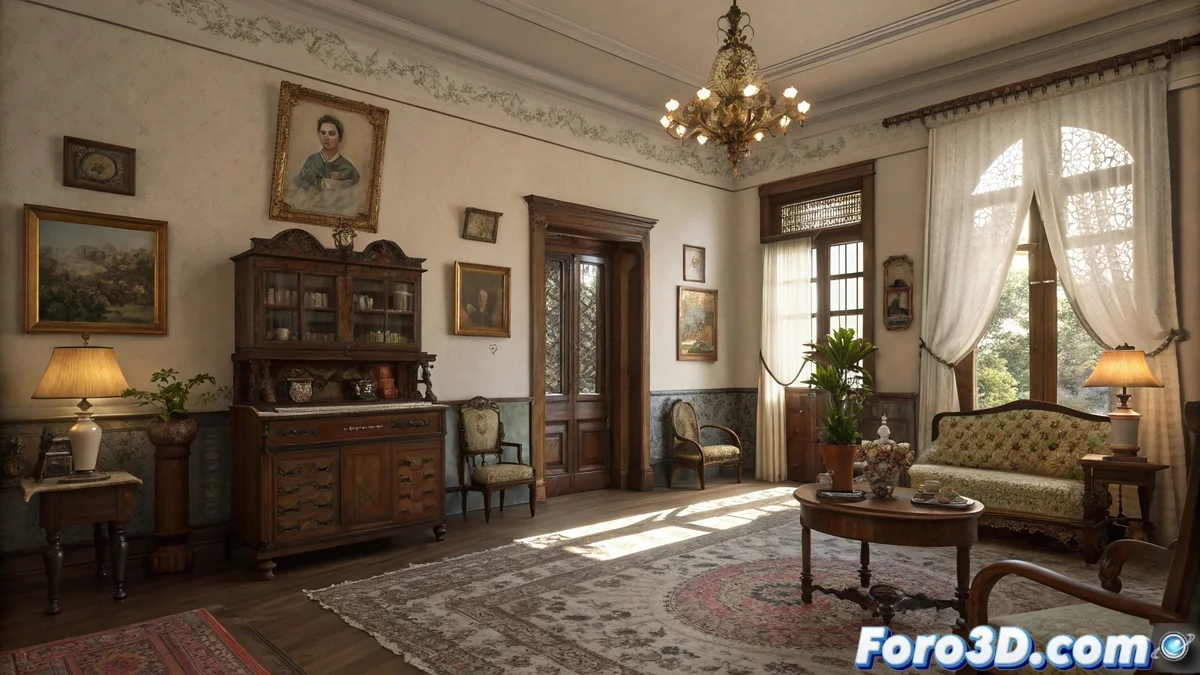
The Mar del Plata house is modeled based on references from mid-century Argentine architecture, with textured walls and wooden floors. 🏠 The room where the painting was found is furnished with period pieces—upholstered chairs, heavy tables, opaque curtains—that reflect the style of those who hid the artwork. The windows allow strategic light entries that guide the gaze toward where the painting was hidden.
The recreation of historical spaces in real-time not only reconstructs architecture; it revives social and political contexts, enabling immersive educational experiences that connect past and present.
Implementation of the artwork and its history
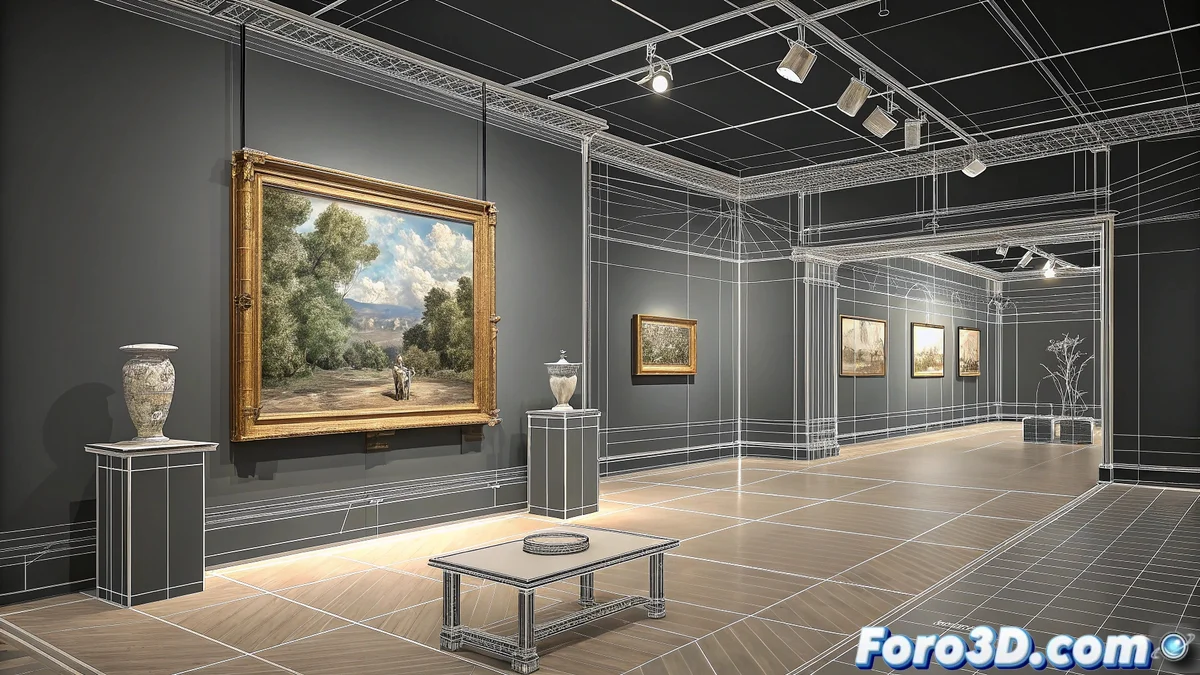
Ghislandi's painting is recreated using a plane with a special material that simulates oil on canvas, using high-resolution textures and normal maps to mimic brushstrokes. 🖼️ A focused lighting system is implemented that highlights the artwork when the user approaches, symbolizing its rediscovery. Optionally, floating documents—historical photos, investigation notes—are added that appear when interacting with the painting, telling its provenance.
Lighting and atmosphere techniques
- Dramatic lighting: Directional spotlights are used to create cones of light over the painting area, contrasting with dimly lit areas for mystery.
- Dust effects: Suspended dust particles are implemented in light rays, suggesting the passage of time and concealment.
- Ambient sound: Audio layers of whispers, footsteps, and documents being handled are added, reinforcing the investigative narrative.
Interactivity and narrative
Using Blueprints, triggers are created that activate contextual information when approaching key points: 📜 the wall where it was hidden, the furniture that camouflaged it, the window through which investigators entered. The user can "pick up" evidence elements that unlock layers of the story—from the original theft in Amsterdam to the raid in Argentina. This mechanic transforms the passive observation experience into active investigation.
Rendering and export
The scene is optimized for real-time rendering with Lumen, maintaining high frame rates even on moderate hardware. 🎮 It is exported as an executable application or web experience, allowing museums and educational institutions to incorporate this recreation into their exhibitions on restituted art.
The educational power of real-time
This recreation serves as a powerful tool to discuss not only art history, but also restitution justice, historical memory, and cultural ethics. 🌍 Unreal Engine's ability to combine visual fidelity with interactivity deepens the emotional connection with stories that deserve to be remembered.
Thus, while the real painting returns to its legitimate place, its digital twin can be experienced and explored by everyone… without risk of deterioration or new theft. Because in Unreal Engine, the only looting allowed is that of the imagination. 😉