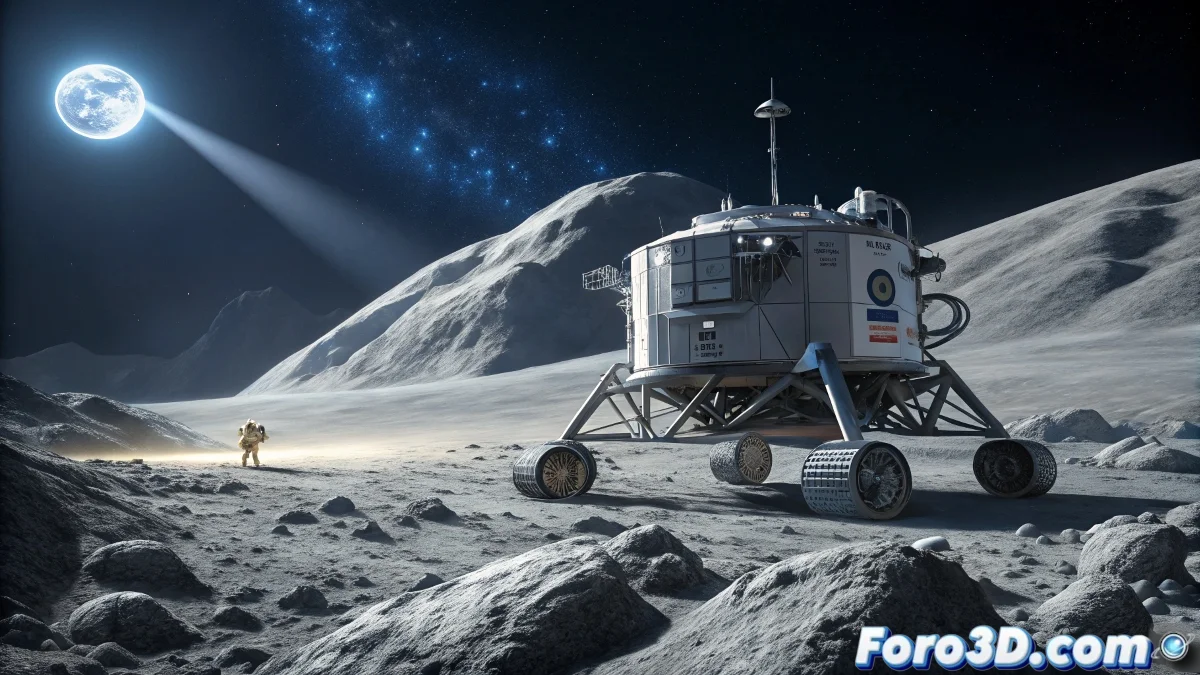
Blue Origin and NASA: In Search of Lunar Ice
NASA has taken an important step in its plan to return to the Moon and explore its resources, assigning Blue Origin, Jeff Bezos' company, the mission to send an explorer vehicle to the lunar south pole 🚀. This area is particularly interesting because deposits of frozen water could be found there, a vital resource for future human missions. The rover will be key to studying the terrain and analyzing how to harness those resources in the next era of space exploration. Because in space, water is not just life, it's fuel and oxygen 💧.
Recreating the Mission in Animation Master
Animation Master offers the perfect tools to visualize this ambitious mission, from modeling the rover to animating its deployment on the lunar surface 🎬. We can create the lunar surface with textures representing craters, deep shadows, and subtle ice reflections, while the explorer vehicle gently descends from a landing module and moves with realistic mechanical motions. Lighting is key to conveying the unique conditions of the south pole, where sunlight is scarce and contrasts are extreme. An opportunity to combine technical precision and visual storytelling.
The lunar south pole is particularly interesting because deposits of frozen water could be found there, a vital resource for future human missions.
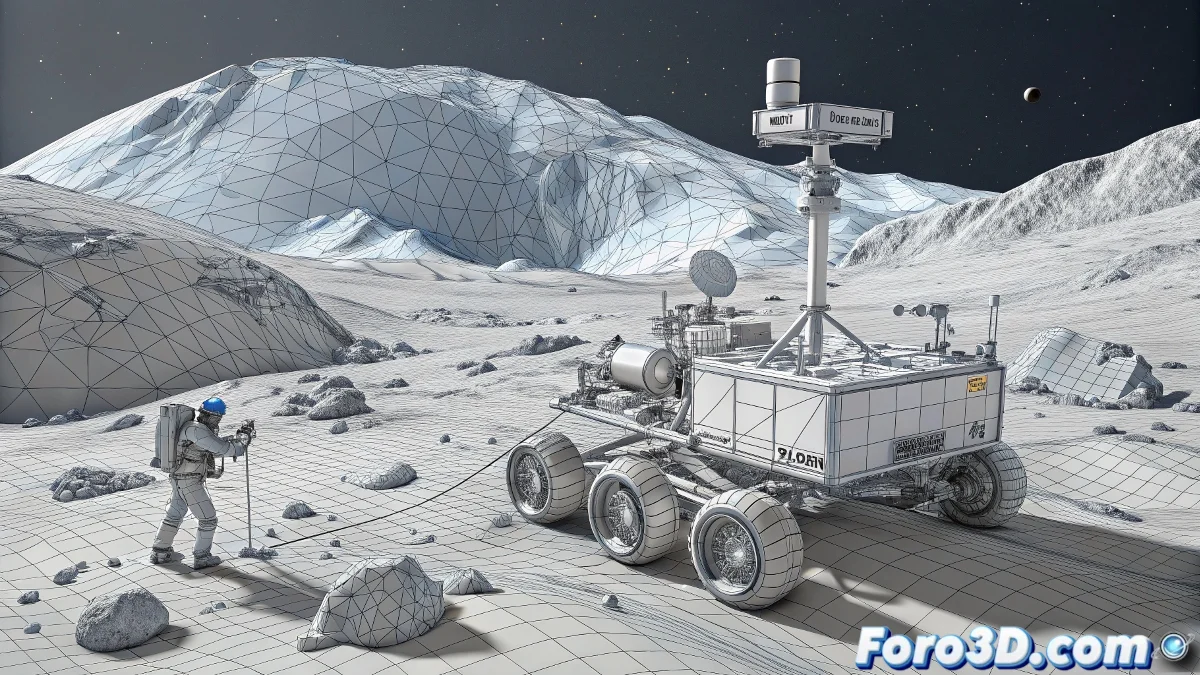
Project Setup and Rover Modeling
Starting a new project in Animation Master with a realistic scale ensures that all proportions—from the rover to the craters—are consistent 🗂️. Modeling the rover begins with a smoothed rectangular base body, to which large wheels with tread details for lunar traction, antennas, cameras, and a robotic arm for sample collection are added. Deployable solar panels on the sides provide power, reflecting the functional design of real vehicles. Organization into layers (Rover, Terrain, Lighting) keeps the scene manageable and editable.
Lunar Terrain and Materials: Realism in Detail
The terrain is created using an irregular plane with displacement maps based on real NASA data, adding craters, rocks, and elevations 🏔️. Ice zones are simulated with translucent materials and subtle specular shine, placed strategically in shadowed areas for scientific accuracy. The rover's materials use metals with soft reflections and bluish solar panels, while the terrain has a matte finish in gray tones with variations to avoid monotony. Each element must serve both aesthetics and the exploration narrative.
Lighting, Cameras, and Animation
The lighting replicates south pole conditions: a cold, hard main light simulates the sun, creating deep shadows and marked contrasts ☀️. Weak secondary lights illuminate details in shadows without breaking the drama. Cameras include close-up shots of the rover with the lunar horizon, and overhead views for context. The animation shows the slow movement of the wheels, the deployment of the robotic arm toward ice zones, and camera turns that reveal the scale of the environment. Smooth and physically plausible keyframes are essential.
Render and Post-Production for Visual Impact
The render is set to 1920x1080 px with high sampling to capture fine details and light effects 🌌. Soft shadows and ambient occlusion add depth, while an engine with translucency support handles the ice and reflections. In post-production, colors are adjusted toward cold tones with high contrast, ice and solar panel shines are enhanced, and a slight solar glow is added for drama. The final result must evoke both the desolate beauty of the Moon and the triumph of human technology.
The Irony of Space Exploration
While Blue Origin dreams of taking rovers to the Moon, many of us are still struggling to get ours to start on Monday morning... though at least our rover doesn't need to survive temperatures of -200°C 😅.