Interpreting the Mysterious Cosmos with Unity 📡
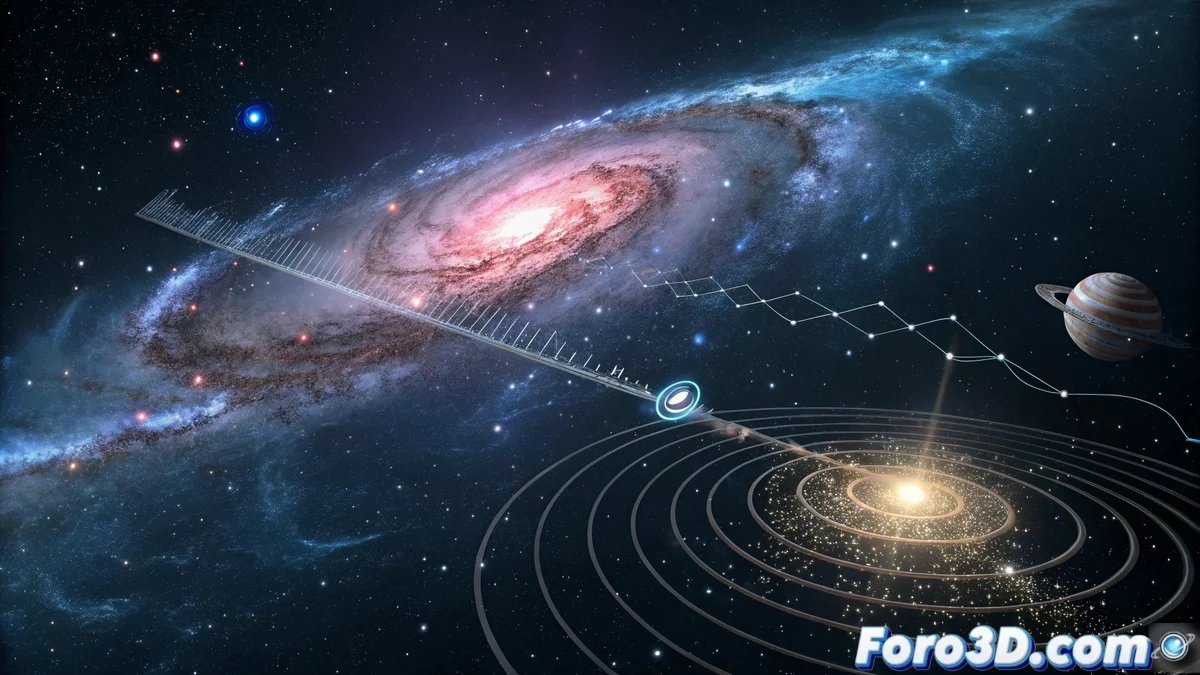
A group of astronomers has detected a repetitive radio signal from a distant galaxy whose pattern does not fit known natural explanations, awakening the possibility of an artificial origin. This type of finding finds in Unity the perfect environment for its recreation, combining immersive spatial visuals, particle systems, and advanced sound design. The engine allows not only to visualize the immensity of the cosmos but also to give audible form to the inexplicable, creating a unique narrative experience around the cosmic mystery.
Creation of the Space Environment with Dynamic Skyboxes
The process begins by importing or creating a dynamic Skybox that represents the galaxy of origin of the signal. Using custom shaders with smooth rotation, the slow movement of stars and nebulae is simulated. To add depth, planes with textures of spiral galaxies and star clusters at variable distances are integrated, using transparencies and subtle emission effects. The key is to balance visual density without saturating the scene, keeping the focus on the signal's origin. 🌌
Particle System for Signal Propagation
The radio signal is represented by a particle system that emits from an origin point in space. By configuring:
- Interference textures or circular patterns as sprites
- Emission speed variable that matches the reported pattern
- External forces that distort the trajectory (simulating interstellar medium)
- Emissive materials with unnatural colors (purples, electric greens)
This system creates a visual effect of an expanding wave that travels through space.
A mysterious signal is not seen; it is felt. And sometimes, it is felt through the eyes.
Spatialized Audio and Filter Effects
Unity's Audio Spatializer system allows creating the illusion that the sound comes from a specific point in 3D space. By applying cascading audio effects:
- Echo and Delay to simulate repetition pattern
- Low Pass Filter that varies with the "distance" from the emitter
- Chorus and Distortion to add artificial quality
- Automation of parameters via script for dynamic changes
A sound profile is achieved that feels both familiar and alien.
Interface and Narrative Elements
To contextualize the experience, subtle UI elements are added:
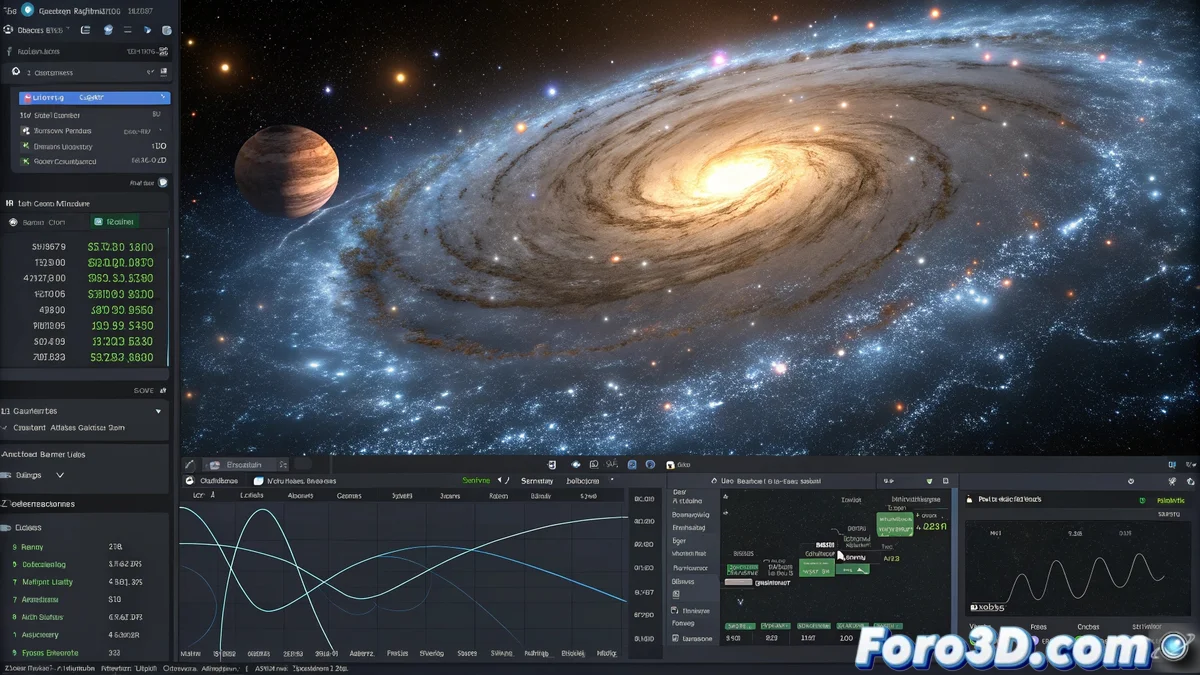
- Frequency meters animated that react to the audio
- Data texts overlaid that show galactic coordinates
- Reticle lines that focus toward the signal's origin
- Trigger events that activate explanations or hypotheses
These elements turn the simulation into an educational and speculative experience.
Optimization and Performance Considerations
To maintain fluidity during the simulation:
- LOD groups for distant spatial elements
- Audio Mixing optimized with virtualization
- GPU Instancing in the particle system
- Occlusion Culling to discard non-visible objects
These techniques ensure that the experience runs smoothly even on modest hardware.
The Final Ironic Touch
While astronomers analyze terabytes of data in search of patterns, we analyze how many particles our system can emit before the FPS plummet. In the end, our most convincing extraterrestrial signal might be the sound of the GPU fan struggling to keep up with the scene. But hey, at least our alien contact is quieter than a graphics card at its limit. 😅