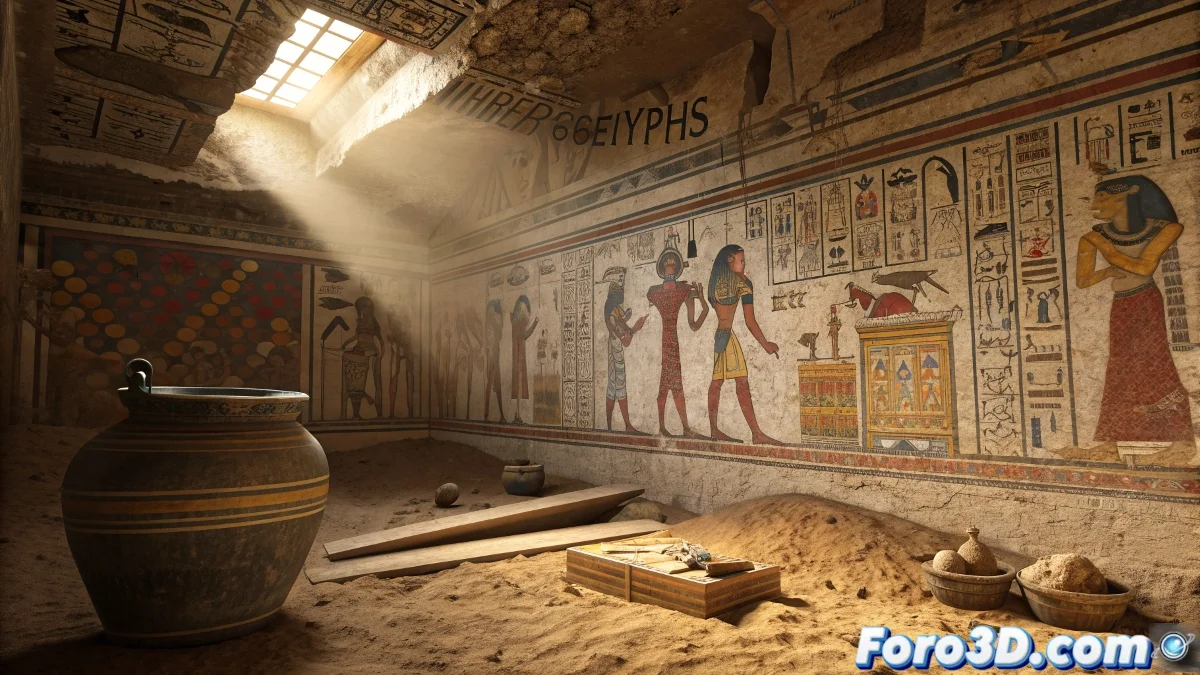
When Archaeology Meets 3D Rendering
The discovery of an Egyptian tomb from the 20th Dynasty is news that excites historians and artists alike. 🏺 For the Blender community, it represents a fascinating opportunity to travel through time using polygons and shaders. Digitally recreating such a find is not just a technical exercise; it is a way to preserve and understand the past with a modern tool. The goal is to capture the essence of a space sealed for millennia, with its unique atmosphere of mystery and grandeur.
Building the Burial Chamber, Digital Brick by Brick
The first step is to model the basic structure of the tomb. In Blender, this is achieved by starting from simple primitives like cubes, using Extrude and Loop Cuts to define corridors, niches, and the main chamber. 🧱 It is crucial to pay attention to proportions and typical Egyptian architecture, with its thick walls and vaulted ceilings. A solid geometric base is the canvas on which the story will be painted with textures and details.
Precision in the initial modeling is the foundation on which realism is built.
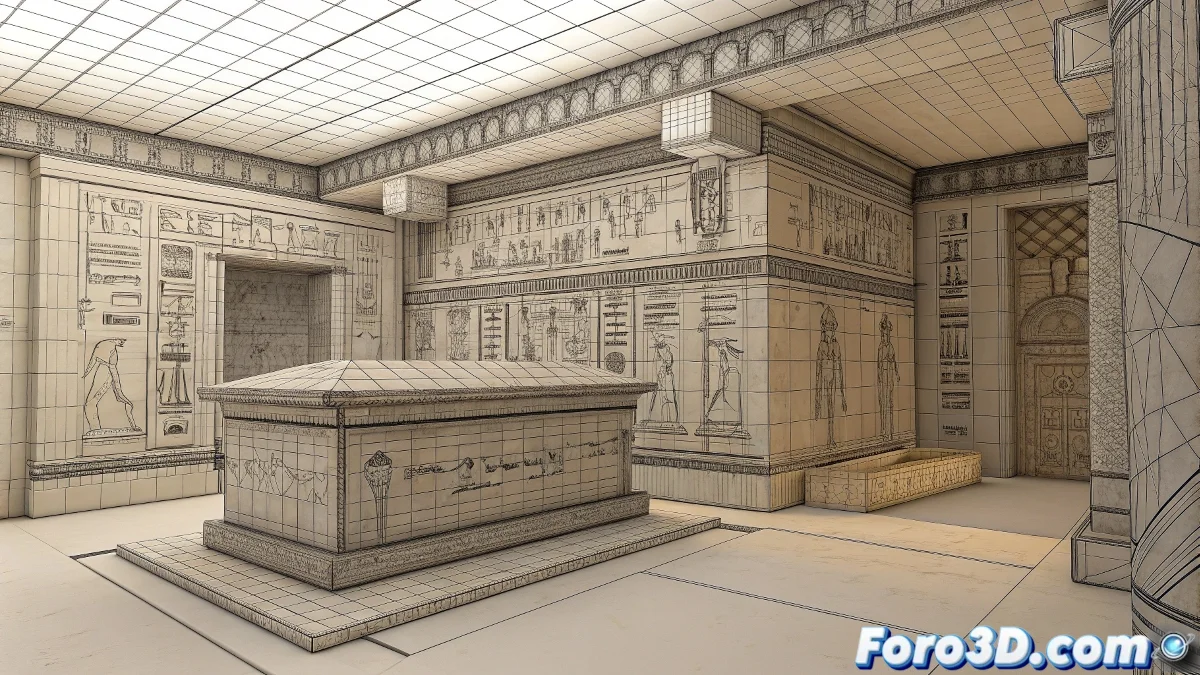
The Soul of the Tomb: Hieroglyphs and Materials
The real challenge and greatest reward lie in bringing the walls to life. Hieroglyphs can be applied using high-resolution textures and the power of Displacement Maps to generate realistic relief without collapsing the mesh. 📜 In the node editor, layers of dirt, cracks, and faded pigments can be blended to achieve that aged look over centuries. For the artifacts, Sculpt Mode is ideal for sculpting fine details on vases and statuettes.
- Smart Textures: Combine color, roughness, and displacement maps for believable materials.
- Particle Systems: Simulate accumulations of sand and dust in the corners.
- Volumetrics: Add a faint suspended dust mist for atmospheric depth.
Lighting and the Finishing Touch
Lighting is the key to sealing the atmosphere. A warm and dim light should be used to simulate the effect of a torch or oil lamp, creating strong contrasts and deep shadows. 💡 Setting up Depth of Field on the camera helps direct the viewer's gaze toward the most important details, like a sarcophagus or a particular inscription. The final render in Cycles, with the Denoiser activated, will capture all the richness of the scene.
It is a common irony that, after hours seeking historical realism, the finish of an Egyptian vase in the render can look as shiny as a modern Scandinavian design furniture piece. 🪔 Sometimes, perfect realism is the enemy of authentic atmosphere.