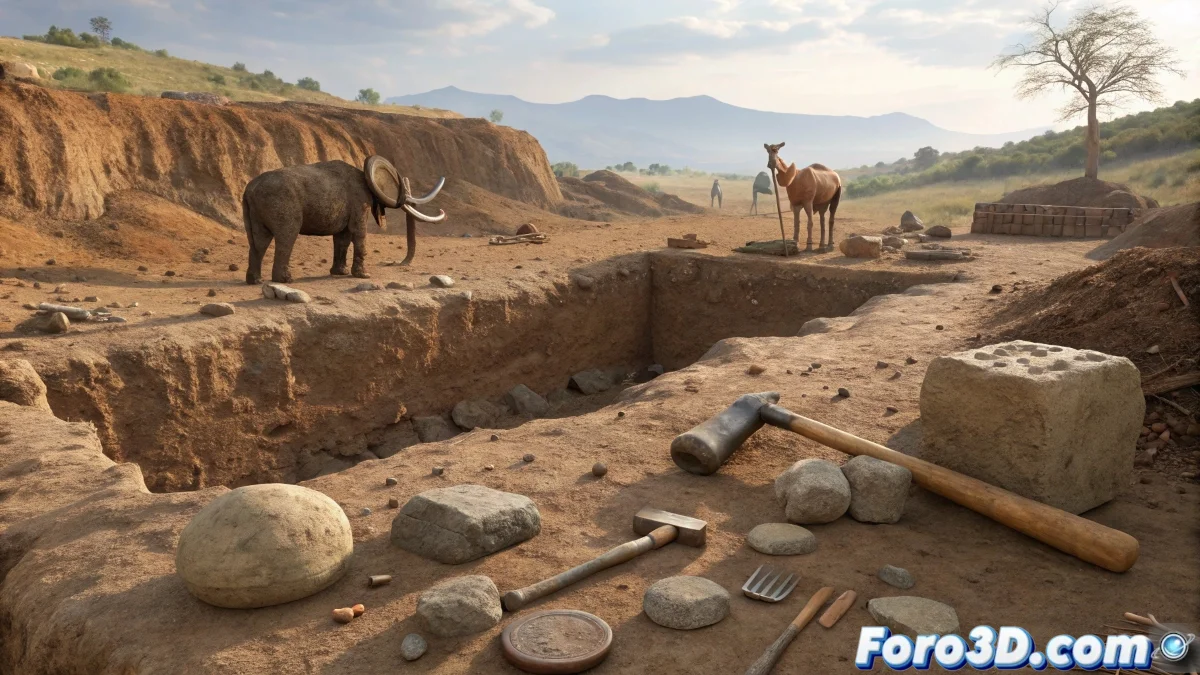
A Digital Journey to the Dawn of Humanity
An extraordinary archaeological discovery in the Greek Peloponnese has revolutionized our understanding of human presence in Europe. 🪓 Stone tools from the Lower Paleolithic period, potentially as old as an impressive 3.3 million years, have been found in a coal mine in Megalopolis. This finding advances the known human presence in Greece by more than 250,000 years, rewriting history books while painting a fascinating picture of prehistoric life with remains of giant deer, elephants, hippos, rhinoceroses, and macaque monkeys.
For 3D artists and visualizers, this discovery represents a unique opportunity to explore digital sculpting and historical texturing techniques in Modo. Recreating these lithic tools requires not only technical precision but also a deep understanding of Paleolithic knapping methods and archaeological preservation conditions. 💻 The combination of advanced sculpting tools, realistic material systems, and carefully studied lighting can transport us directly to the site where this monumental discovery was made.
A digital window to the first instruments created by human hands.
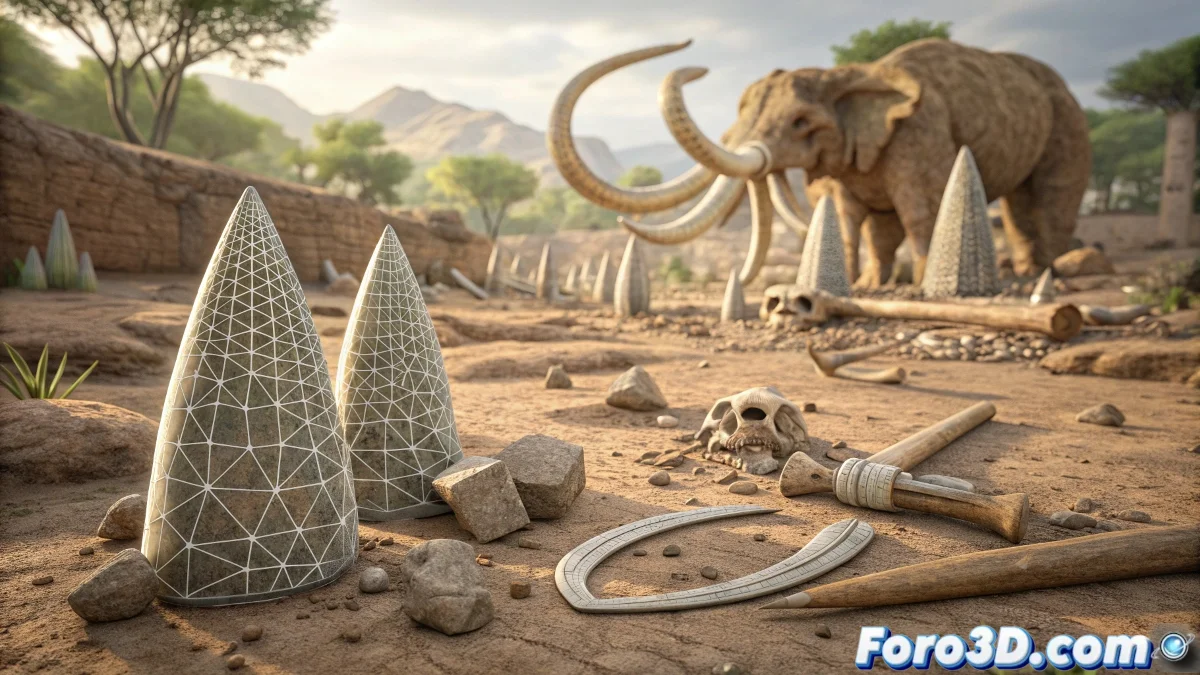
Historical Setting and Archaeological Approach
The first step for an accurate recreation in Modo is to establish the unit system in meters, ensuring that the proportions of the tools and fossil remains correspond to the real measurements documented by archaeologists. 📐 Layer organization is fundamental: Tools, Fauna, Terrain, Lighting, and Cameras. This structure allows efficient management of the multiple elements that make up the scene and adjustment according to available scientific documentation.
The essential elements to include in the recreation are:
- Lithic tools with irregular edges and eroded surfaces
- Fossil remains of the prehistoric fauna from the site
- Excavated terrain that simulates the archaeological context
- Elements of geological and stratigraphic context
Sculpting and Texturing Techniques for Paleolithic Tools
Creating the stone tools requires strategic use of Modo's sculpting tools like Sculpt and Push to achieve that irregular and rudimentary appearance characteristic of Paleolithic knapping. 🪨 The application of high-resolution displacement maps accentuates the natural irregularities of the stone and the effects of millennial erosion. For the fauna remains, porous and whitish materials with touches of natural wear should be used to suggest the passage of millions of years.
It is profoundly ironic that millions of years ago our ancestors already knapped stones with primitive but effective ingenuity, while today many of us still struggle to change the drill bit without consulting the instruction manual. 🛠️ A testament that, although technology advances, the relationship between humans and their tools remains as fundamental as it was 3.3 million years ago.