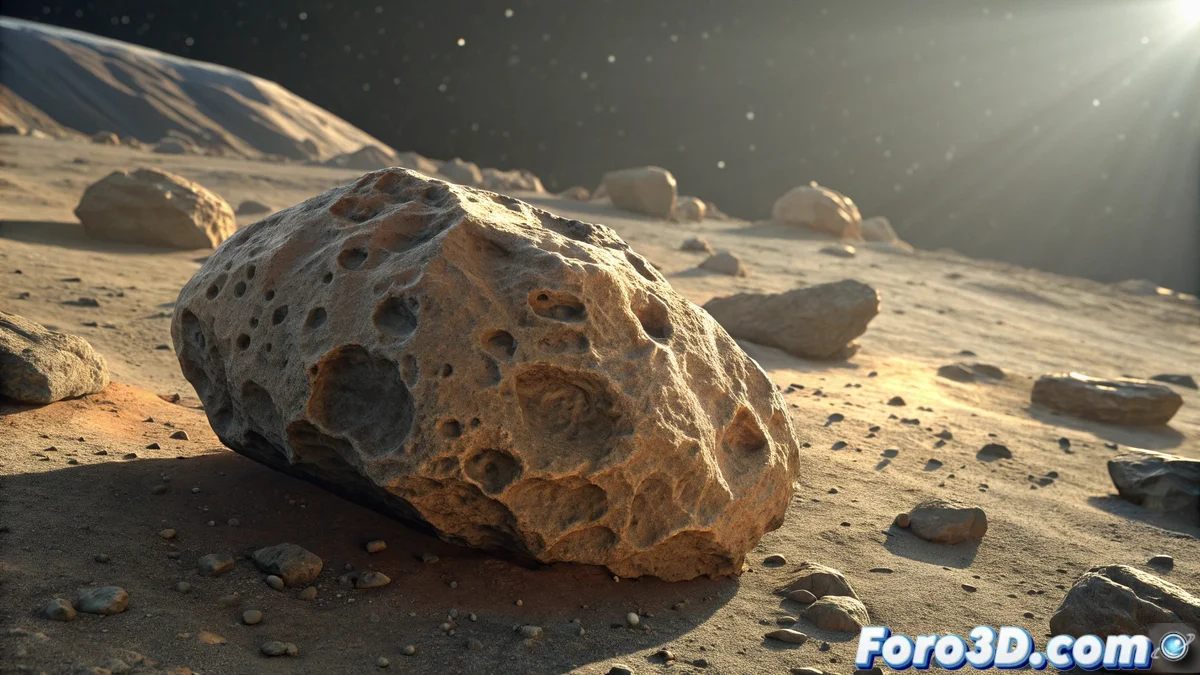
When Mars Sends Us a Rocky Message
An extraordinary astronomical event has occurred in Pennsylvania: the fall of a rare Martian-origin meteorite known as a shergottite. 🪐 This type of meteorite is extremely scarce and contains crucial information about the formation and composition of Mars, representing a unique opportunity for scientists to unravel the mysteries of the red planet without the need for costly space missions. The study of these fragments could reveal secrets about Martian geological history and its potential to harbor life in the past.
For 3D modelers and astronomy enthusiasts, this event offers a fascinating opportunity to explore geological modeling techniques in Wings 3D. 💻 The digital recreation of the meteorite allows not only to document its appearance, but also to study and communicate its unique characteristics through precise visualizations. The combination of organic modeling tools, application of realistic textures, and appropriate lighting systems can capture the essence of this interstellar messenger.
A fragment of the solar system that traveled millions of kilometers to tell us its story.
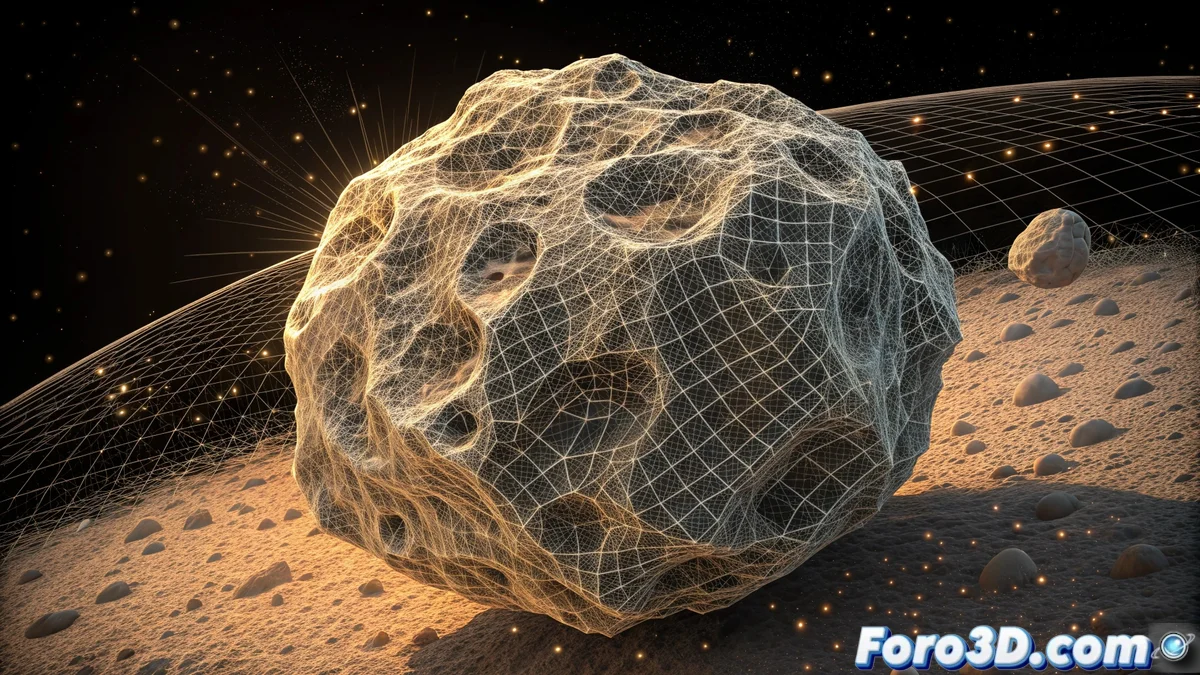
Modeling Techniques for Extraterrestrial Objects
The recreation in Wings 3D begins with research on real references of Martian meteorites. 📐 The setup of metric units is crucial to maintain the appropriate scale, while vertex and edge manipulation allows creating the irregular shapes characteristic of meteorites. The modeling must capture not only the general shape of the object, but also the impact craters, surface cracks, and protrusions that reveal its violent journey through the Earth's atmosphere.
The essential elements to recreate Martian authenticity include:
- Irregular shapes with protrusions and impact craters
- Reddish textures characteristic of Martian dust
- Cracks and fractures from atmospheric thermal stress
- Fused surfaces from friction during atmospheric entry
Texturing and Lighting for Extraterrestrial Realism
Precise texturing is fundamental to convey the Martian origin of the meteorite. 🎨 The application of characteristic reddish and brown colors of Martian dust, combined with gray and black variations to represent different minerals, creates the authentic chromatic palette. The use of normal and bump maps accentuates cracks and craters, while lighting with grazing angles reveals the microtopography of the surface that provides so much data to planetary geologists.
The irony is that a piece of Mars that accidentally fell into our backyard is giving us more practical information about the red planet than many extremely expensive telescopes here on Earth… although the meteorite probably didn't plan this scientific mission when it began its interstellar journey. 🔭 A demonstration of how sometimes the most valuable discoveries come to us rather than us having to go look for them, even when they come packaged in rocks that pierce the atmosphere at incredible speeds.