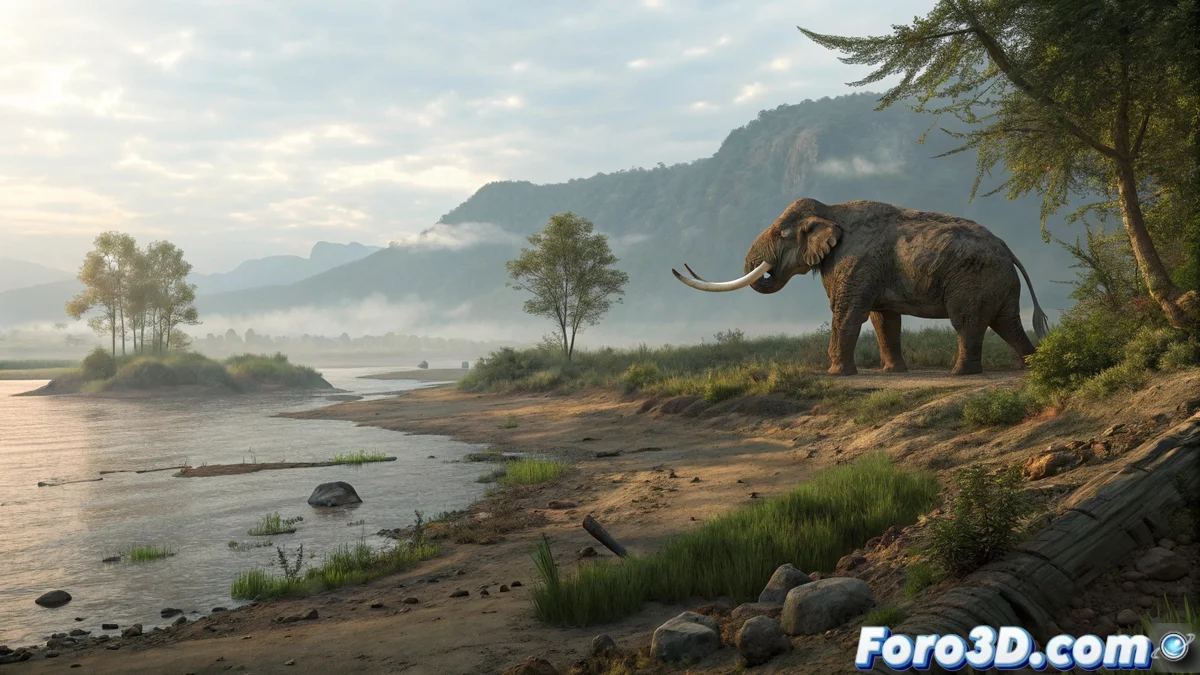
A Visual Journey to the Ice Age on the Banks of the Rhine
An extraordinary discovery has literally emerged from the waters of the Rhine River in Düsseldorf: an archaeology enthusiast has found a 125,000-year-old mammoth molar preserved in exceptional condition. 🦣 The tooth, which weighs four kilos and measures 30 centimeters, represents a unique window into the Ice Age megafauna and demonstrates how ordinary citizens can significantly contribute to the discovery of paleontological secrets that the earth still jealously guards.
For digital artists and visualizers, this find offers a fascinating opportunity to explore paleontological recreation techniques in Terragen. 🌊 The digital reconstruction of the discovery scene allows not only to document the context of the find, but also to study and communicate how these remains interact with their natural environment after millennia of erosion and geological changes. The combination of precise 3D modeling, organic textures, and realistic lighting can transport us to the exact moment of discovery.
A digital bridge between present-day archaeology and Europe's glacial past.
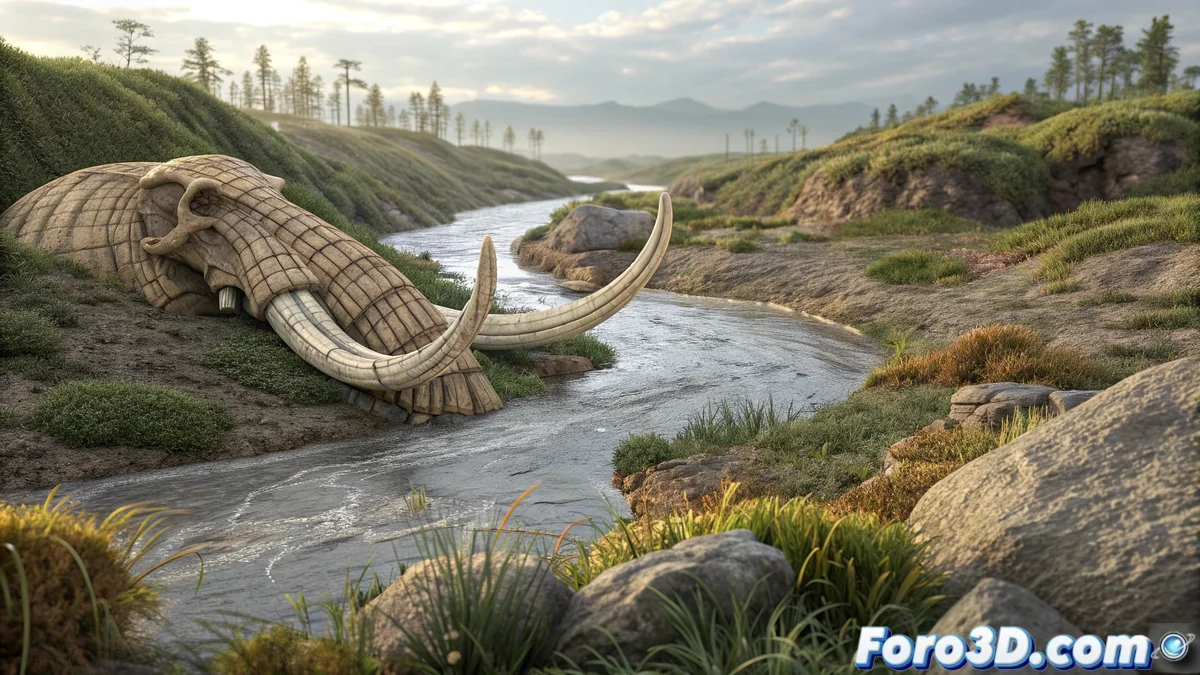
Modeling Techniques for Paleontological Remains
The Terragen recreation begins with a detailed morphological investigation of the mammoth's dental structure. 🦷 The setup of metric units is crucial to achieve the precise scale of the 30 cm molar and its unique features. The modeling must capture not only the general shape of the tooth, but also the chewing grooves, wear patterns, and natural fractures that reveal valuable information about the animal's diet and life.
The essential elements to faithfully recreate the scene include:
- Mammoth molar with authentic grooves and wear patterns
- Ancient dental enamel textures with a 125,000-year patina
- Riverside environment of the Rhine with realistic fluvial erosion
- Vegetation characteristic of the Düsseldorf region
Lighting and Atmosphere for Paleontological Context
The lighting in Terragen must simulate natural conditions of the Rhine riverbank. ☀️ It is recommended to set up mid-morning sunlight with a moderate angle that creates soft but defined shadows, highlighting both the texture of the molar and the details of the surrounding terrain. The inclusion of subtle reflections on the water and dim ambient lighting helps create depth and realism, while cool tones in post-production reinforce the sense of historical authenticity.
It is profoundly curious that a molar has survived 125,000 years through glaciations, floods, and climate changes, while we lose our baby teeth in less than a decade. 😅 An evolutionary irony that reminds us of the durability of paleontological remains compared to the fragility of our own dentition, even with all the advances in modern dentistry.