Illuminating the Past with 3D Modeling
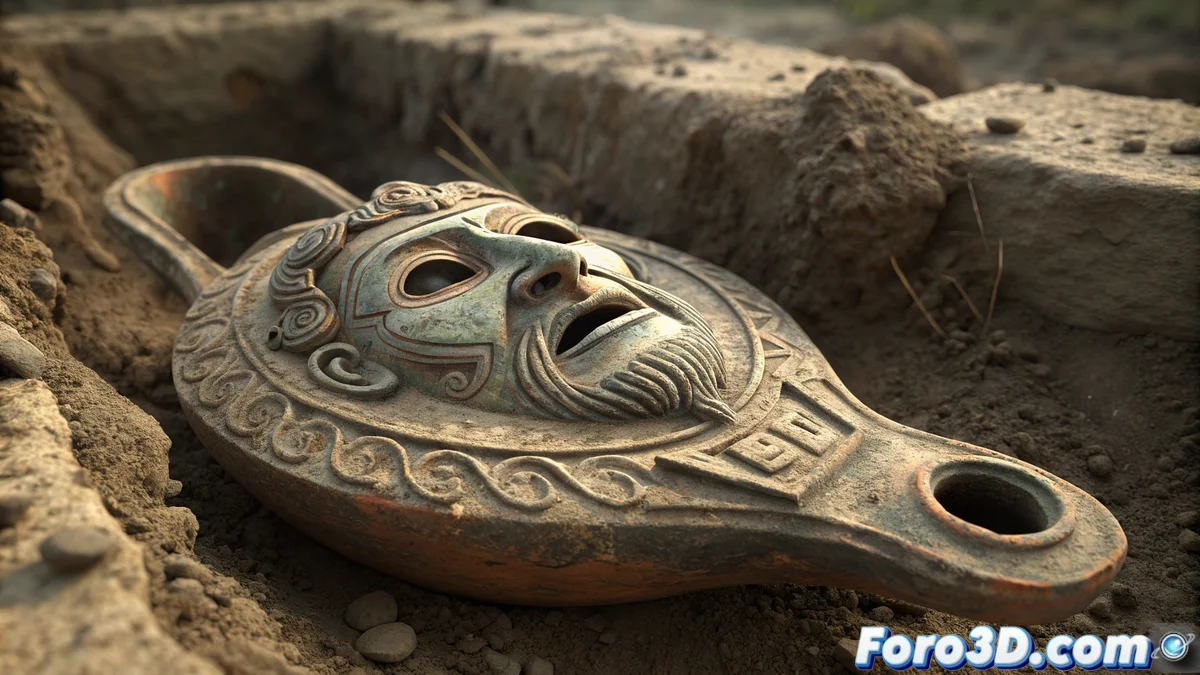
An exceptional archaeological discovery has emerged in the Netherlands: a Roman oil lamp shaped like a theatrical mask, found in a millennial cemetery and dated to the 3rd century AD. 🏺 This uncommon find in the region offers a fascinating glimpse into funerary rituals and Roman cultural influences in northern Europe. The lamp, made of ceramic with characteristic facial details from classical theater, represents a unique testament to the intersection of daily life, art, and spirituality in the Roman Empire.
For 3D modelers and digital artists, this artifact represents an extraordinary opportunity to explore techniques for precise historical modeling in Rhino. 💻 The digital recreation of this lamp allows not only to visually document its design, but also to study and share its cultural characteristics and manufacturing techniques. The combination of surface modeling tools, digital sculpting, and realistic material application can bring this ritual object back to life after nearly two millennia.
A digital window into Roman craftsmanship and symbology through light.
Modeling Techniques for Ancient Ceramics
The recreation in Rhino begins with meticulous historical research on the proportions and style of Roman theatrical masks. 📐 Setting units in millimeters is crucial to achieve the dimensional precision required for archaeological objects. The modeling must capture not only the basic shape of the lamp, but also the imperfections and irregularities typical of ancient handcrafting, which add authenticity to the digital piece.
The key elements to faithfully recreate the lamp include:
- Oval shape of the base with rounded edges
- Facial features characteristic of Roman theater
- Wick nozzle with historically precise dimensions
- Imperfections and handcrafting marks
Texturing and Materials for Historical Authenticity
Texturing in Rhino must simulate the real physical properties of Roman fired ceramics. 🪔 A material with earthy color (#c48b60), medium roughness, and slight shine suggesting residual oil presence is required. Surface imperfections, small cracks, and color variations are essential to convey the effects of time and ritual use. The application of a subtle patina completes the sense of historical authenticity.
It is profoundly ironic that a lamp that illuminated funerary rituals nearly 2,000 years ago now only serves to shine on a computer monitor. 💡 A reflection on how modern technology allows us to preserve and study objects whose original meaning has completely transformed over the centuries.