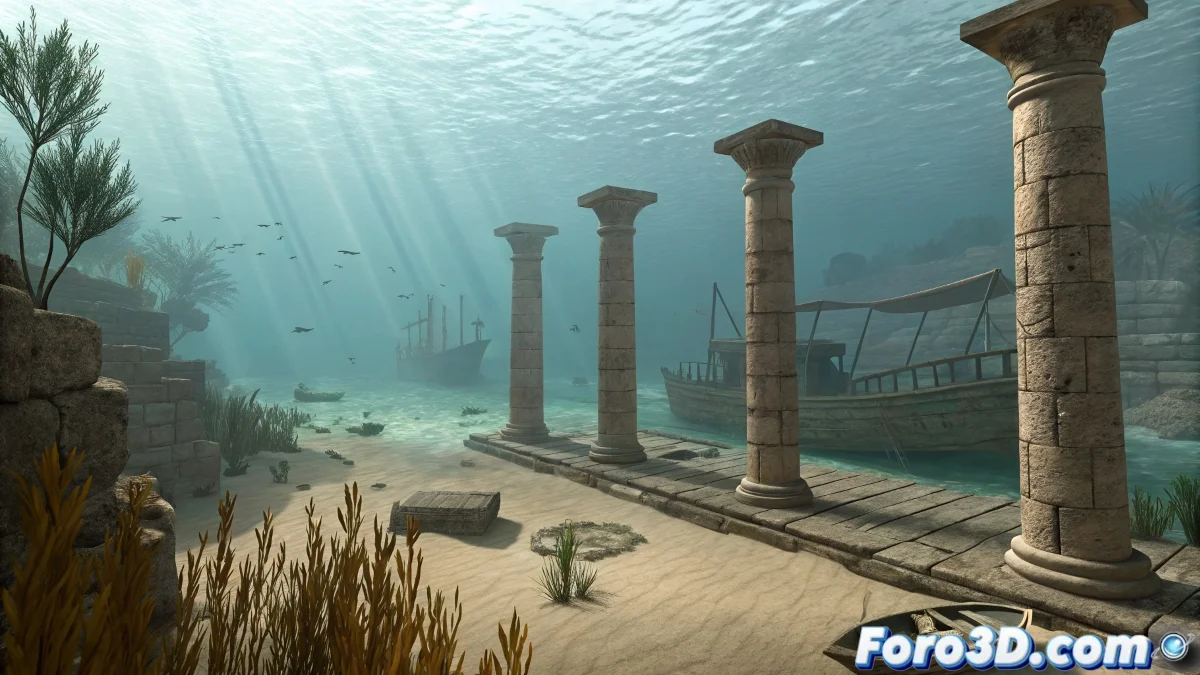
An Animated Journey to Cleopatra's Lost Harbor
On the north coast of Egypt, an extraordinary archaeological discovery is captivating the imagination of historians and digital artists alike. 🌊 Archaeologists have found the remains of an ancient sunken harbor near the Taposiris Magna temple, a finding that could bring us closer to solving one of history's greatest enigmas: the location of Cleopatra's tomb. The newly discovered harbor appears to be aligned with a 4,300-foot tunnel found in 2022, suggesting an integrated network that may have been used for royal burials during the Ptolemaic period.
For animators and 3D artists, this discovery represents a fascinating opportunity to explore underwater animation and historical reconstruction techniques in MotionBuilder. 💻 The digital recreation of this sunken harbor allows not only to visualize what it might have looked like in its heyday, but also to simulate how it interacted with the marine environment and the adjacent tunnel network. The combination of water animation, underwater lighting, and historical architectural modeling can transport us directly to this mysterious place.
An animated window to the past that could reveal the best-kept secrets of Ancient Egypt.
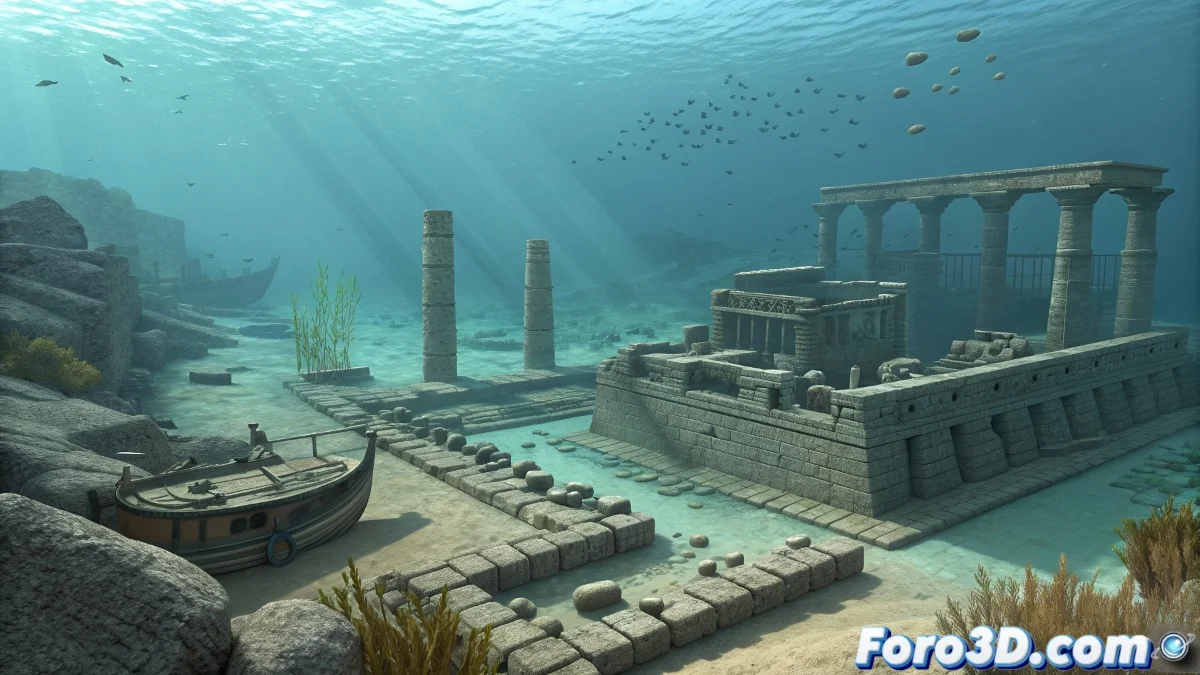
Historical Setup and Project Preparation
The first step for an accurate recreation in MotionBuilder is to establish the unit system in meters, ensuring that the proportions of the harbor and tunnels correspond to the real measurements documented by archaeologists. 📐 Layer organization is fundamental: Harbor, Tunnels, Structures, Water, Lighting, and Cameras. This structure allows efficient management of the multiple elements that make up the scene and animating them coherently with the available historical documentation.
The essential elements to include in the animated recreation are:
- Docks and piers with temporal wear deformations
- The 4,300-foot tunnel aligned with the harbor
- Ancient ships partially submerged with historical proportions
- Archaeological elements such as jars and anchors scattered around
Underwater Animation and Lighting Techniques
Water animation requires the use of translucent shaders with soft reflections and slight turbidity to realistically convey the sensation of marine depth. 🌊 The movement of gentle currents must interact naturally with the submerged structures, creating an organic effect that suggests the passage of time underwater. For lighting, a bluish ambient light should be set up to simulate filtered underwater light, complemented with soft spotlights that highlight key areas of the harbor and rays of sunlight penetrating from the surface.
It is deeply curious how Cleopatra might have sailed through these docks more than two thousand years ago, while today we get lost looking for a GPS to tell us where to park in the city center. 🗺️ A historical irony that shows how some mysteries of the past remain more accessible than the logistical challenges of the present.