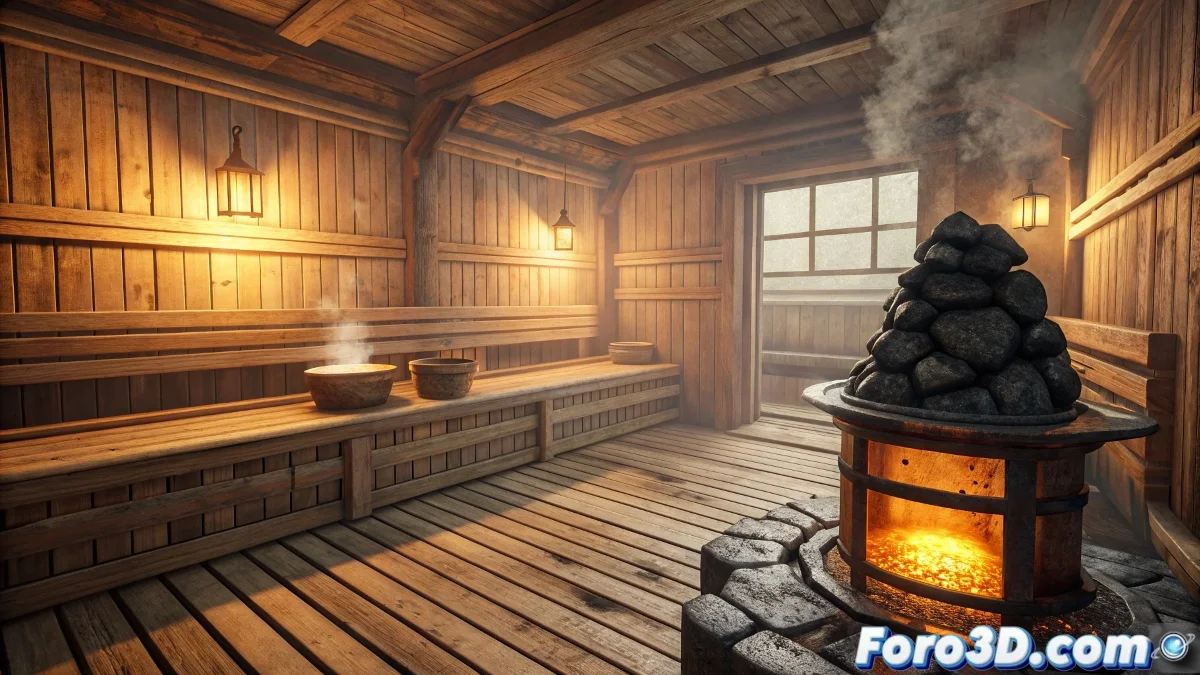
Digitizing Nordic Tradition
When UNESCO declares an element as Intangible Cultural Heritage, it is recognizing something that transcends the physical to delve into the soul of a people. The Finnish sauna represents exactly that: a space where tradition, well-being, and national identity merge. Representing this concept in Blender requires capturing not only the forms but also the atmosphere and cultural essence that make it unique.
The artistic challenge is to convey through 3D models the warmth, the texture of aged wood, and that soft light that defines the sauna ambiance. Beyond precise modeling, it's about evoking sensations through lighting and materials. The digital artist must become a visual ethnographer, understanding the elements that make this space special for Finns.
Key Elements for Authenticity
- Natural wood with visible grain and knots on walls and benches
- Stone stove or kiuas as the heart of the sauna
- Water buckets and löyly to generate authentic steam
- Small window that maintains privacy while filtering outside light
Constructing the Traditional Space
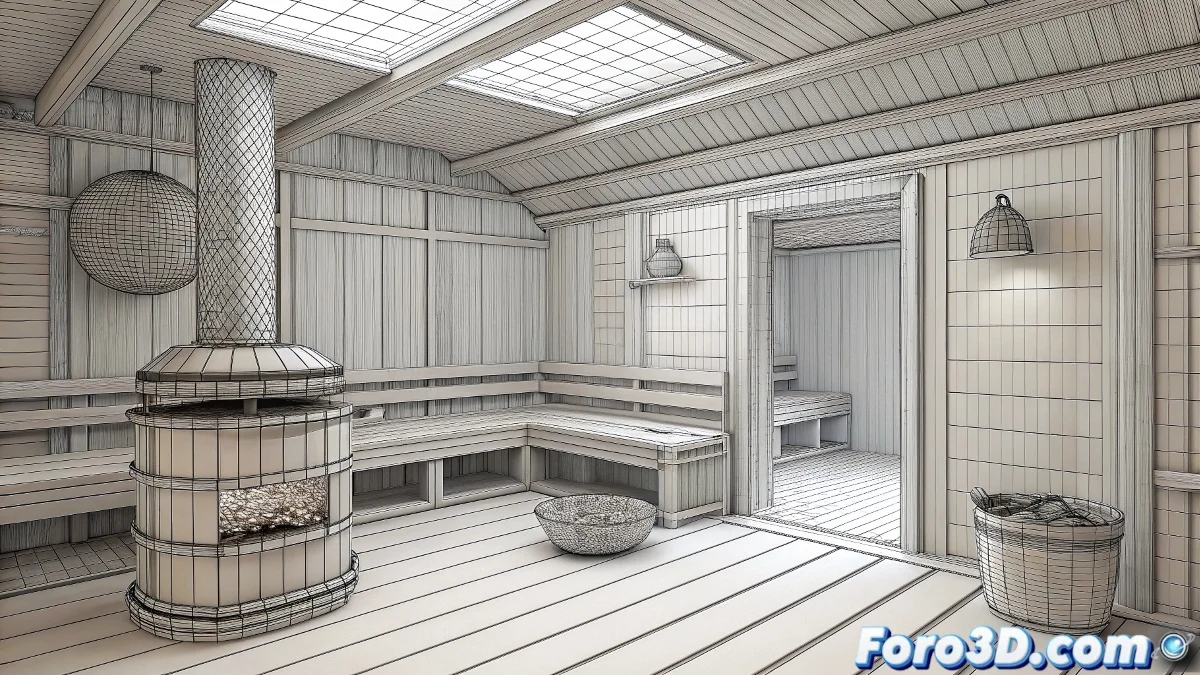
Modeling begins with the basic structure: a room of modest dimensions, preferably made of logs or wooden planks. The arrangement of benches on several levels responds to the characteristic thermal stratification. The upper level, which is hotter, should show signs of continuous use. The kiuas occupies a central place, with its stacked stones ready to receive the water that will generate the sacred steam.
A true Finnish sauna is recognized by its simplicity and functionality
Materials play a crucial role in the scene's believability. The wood should show porosity and a certain degree of wear, never a new or artificial look. The Blender shader can be enriched with roughness maps that capture how moisture and heat have affected the surface over time. Sculpting tools help add natural irregularities that avoid excessive geometric perfection.
Atmospheric Lighting Techniques
- Warm light from soft, diffuse sources
- Steam volumes that create visual depth planes
- Subtle reflections on wet wood surfaces
- Cozy penumbra that invites introspection
Lighting is perhaps the most challenging and yet most decisive element. It's not about illuminating, but about suggesting. The light should filter softly, creating pools of visibility and shadowy zones that invite intimacy. The use of volumes to simulate the löyly steam adds that atmospheric layer that differentiates a real sauna from a simple wooden room.
Those who think a sauna is just a hot room have probably never understood why UNESCO considers it a heritage of all humanity 🧖