A Journey Back in Time to the Minoan Labyrinth
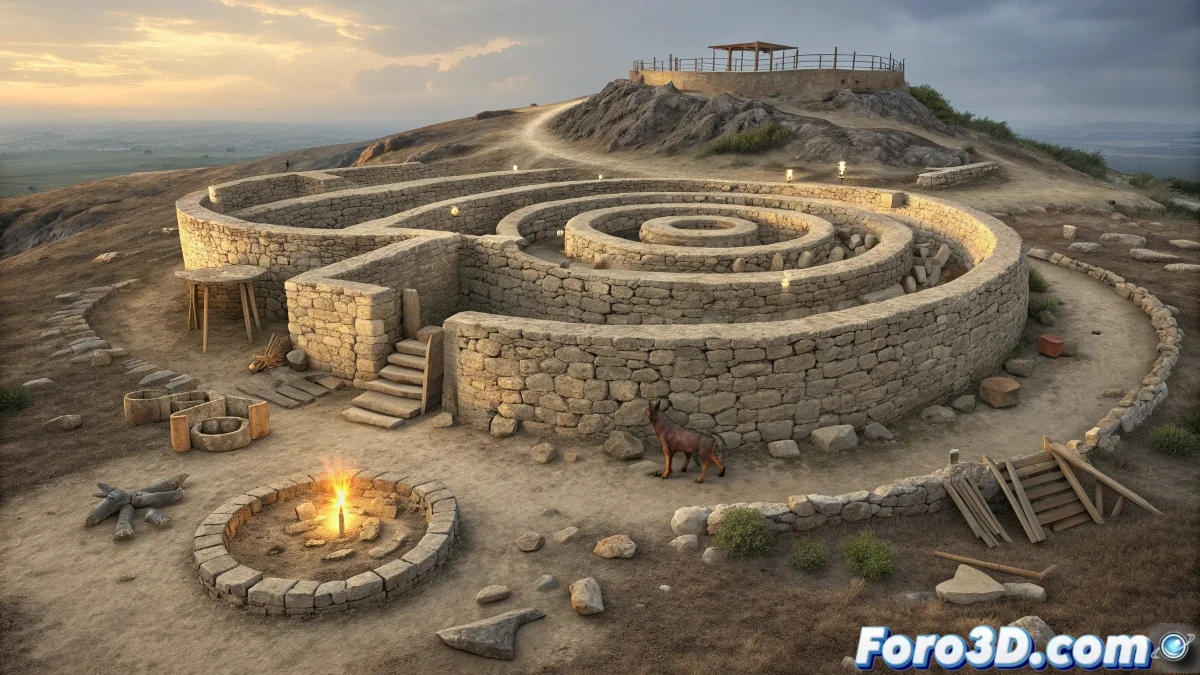
An extraordinary archaeological discovery has emerged in the hills of Crete: a 4,000-year-old circular structure that evokes the mythical Minoan labyrinths. 🏺 Located at 494 meters altitude thanks to the radar of the new Heraklion airport, this Protopalatial period monument (c. 1900 BC) could rewrite what we know about early Minoan civilization. The finding of animal bones and utensils for eating and drinking inside suggests it was used for ceremonies or collective banquets, adding a layer of mystery to this already enigmatic place.
For 3D artists, this structure represents a fascinating opportunity to explore techniques of organic modeling and historical texturing in Autodesk Maya. The digital recreation of this ceremonial space allows not only to visually document the discovery, but also to speculate on its original appearance and ritual atmosphere. 💻 The combination of polygonal modeling tools, advanced lighting systems, and carefully researched textures can bring this millennial monument back to life.
A digital window to the past that connects the myth of the Minoan labyrinth with archaeological reality.
Historical Context and Archaeological Approach
The first step for an accurate recreation in Maya is to establish the correct scale in meters, ensuring that the monument's proportions correspond to the real dimensions of the find. 📐 Layer organization is crucial: Structure, Terrain, Utensils, Lighting, and Cameras. This structure allows efficient management of the multiple elements that make up the scene and adjust them according to the available archaeological documentation.
The essential elements to include in the recreation are:
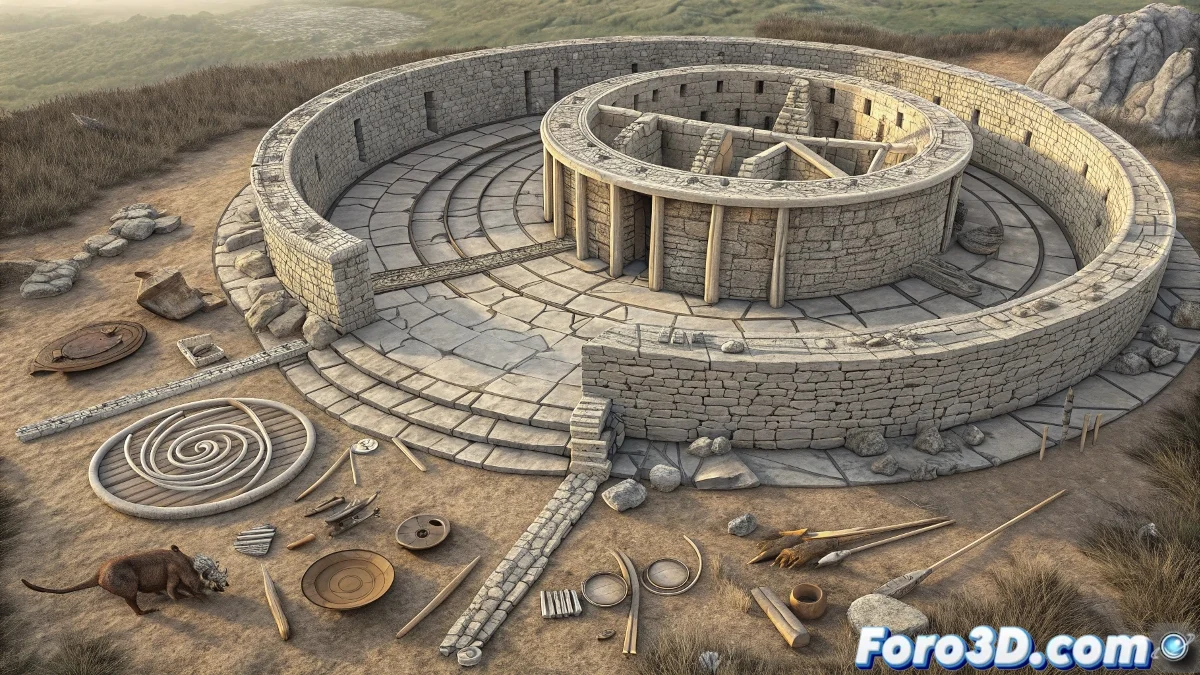
- Concentric walls that form the characteristic circular design
- Eroded stone textures with earthy tones
- Ceremonial utensils such as bowls and jars scattered around
- Animal bone remains that suggest ritual activities
Lighting Techniques and Ritual Atmosphere
Lighting is the element that truly conveys the ceremonial character of the space. A dim natural lighting should be set up to simulate Mediterranean light, complemented with warm lights that evoke torches or ceremonial fire. 🔥 The strategic use of contrasts between illuminated areas and deep shadows accentuates the sense of mystery and ritual. The integration of particle effects to simulate suspended dust or light mist completes the mystical atmosphere of the place.
It is profoundly ironic that thousands of years ago the Minoans built labyrinths for their rituals, while today we get lost in the airport corridors whose radar enabled this discovery. 🧭 A sample of how modern technology and antiquity intertwine to reveal secrets that had been waiting millennia to be found.