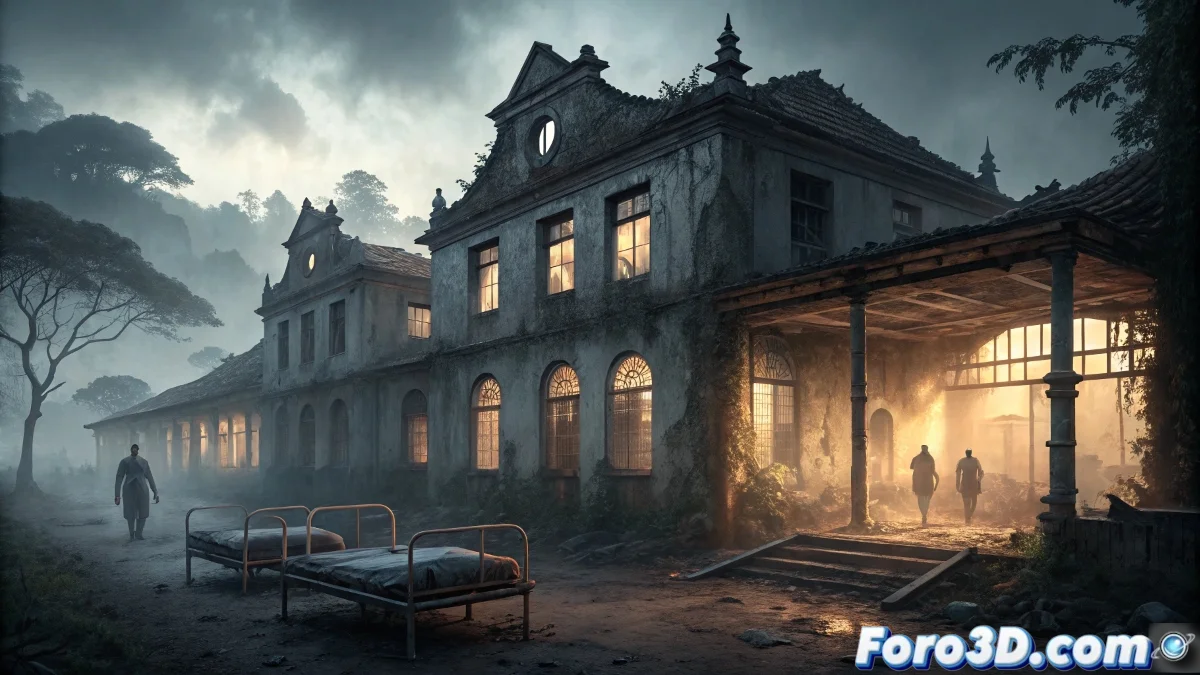
Recreating St. Augustine Hospital on Corregidor in Kanova: historical trauma and paranormal activity
The St. Augustine Hospital on Corregidor Island, Philippines, represents one of the most intense epicenters of historical trauma in the Pacific during World War II. This military hospital was heavily bombed by Japanese forces, leaving a legacy of suffering that, according to numerous testimonies, has become paranormally anchored in its ruins. Visitors report ghostly screams, shadow apparitions, and the overwhelming sensation of being watched in rooms where soldiers and civilians died in terrible conditions. 🏥
The legacy of suffering on Corregidor
During the Battle of Corregidor in 1942, St. Augustine Hospital operated under extreme conditions, treating hundreds of wounded while enduring direct bombings. The collective trauma of doctors, nurses, and dying patients seems to have impregnated the walls of the ruins. Reported paranormal phenomena include not only visual apparitions but also ghostly sounds of moans, dragging stretchers, and whispers in empty rooms, creating a atmosphere of terror based on real historical pain.
Key historical and paranormal elements:- Hospital structure damaged by direct artillery bombardments
- Operating rooms with abandoned and rusted medical equipment
- Corridors where stretchers with severely injured were dragged
- Triage areas that operated under constant enemy fire
"In St. Augustine, the past is not dead; it breathes in every echo and moves in every shadow, reminding us of the human cost of war"
Project setup and structural modeling in Kanova
Launch Kanova and create a new architectural project with dimensions reflecting the hospital ruins. Start by modeling the basic structure of the Spanish colonial building adapted as a military hospital. Use modeling tools to create damaged walls, partially collapsed roofs, and broken windows showing the impact of bombings. Import vintage 1940s medical equipment models to add historical authenticity.
Structural model preparation:- Model main structure with ruined Spanish colonial architecture
- Add bombardment damage: artillery holes, collapsed walls
- Import models of stretchers, surgical equipment, and old medical kits
- Create separate layers: structure, debris, equipment, effects
Post-war abandonment materials and textures
Assign realistic materials that capture decades of abandonment and bombardment damage. Use eroded concrete textures for walls, with brick exposure in damaged areas. For the medical equipment, apply rusted metal and rotted wood materials. Create dirt and dust layers using grunge textures with overlay and multiply blending modes to add visual depth to the deterioration.
Abandonment materials setup:- Walls: damaged concrete with brick exposure in collapsed areas
- Floors: rotten wood planks with intense wear textures
- Medical equipment: corroded metal with heavy rust and accumulated dust
- Windows: broken glass with faint reflections and dirt
Atmospheric lighting and paranormal effects
Lighting is essential to create the ghostly atmosphere of the hospital. Set up dim ambient light simulating moonlight filtering through destroyed roofs and broken windows. Use point lights strategically to create elongated shadows suggesting humanoid figures. For paranormal effects, incorporate colored lights in pale bluish and greenish tones that appear and disappear in different areas, simulating spectral manifestations.
Ghostly lighting setup:- Moonlight with pale blue color and low intensity
- Intermittent point lights simulating ghostly apparitions
- Spot lights projecting humanoid shadows on walls
- Volumetric lights for fog and paranormal mist effects
Final composition and historical trauma narrative
Create cinematic views that tell the trauma story: a long corridor with abandoned stretchers, an operating room with scattered surgical instruments, a triage room with suggestive stains on the floor. Use camera angles that generate unease and tension, such as ground-level shots or Dutch angles. In post-production, add visualized sound effects like air distortions to suggest the reported ghostly screams.
Emotional composition techniques:- Use perspective lines leading to paranormal points of interest
- Unbalanced compositions to generate visual discomfort
- Negative spaces where imagination completes the apparitions
- Extreme contrasts between lit areas and absolute darkness
Rendering the memory of suffering
The final render must convey not only the physical abandonment but the emotional weight of a place where extreme human suffering occurred. Every element—from the rusted medical equipment to the suggestive shadows—must contribute to the narrative of anchored historical trauma. The result should evoke both historical sadness and paranormal terror, creating a representation that honors the memory of those who suffered while capturing the inexplicable phenomena that keep their story alive in the ruins of St. Augustine. 💀