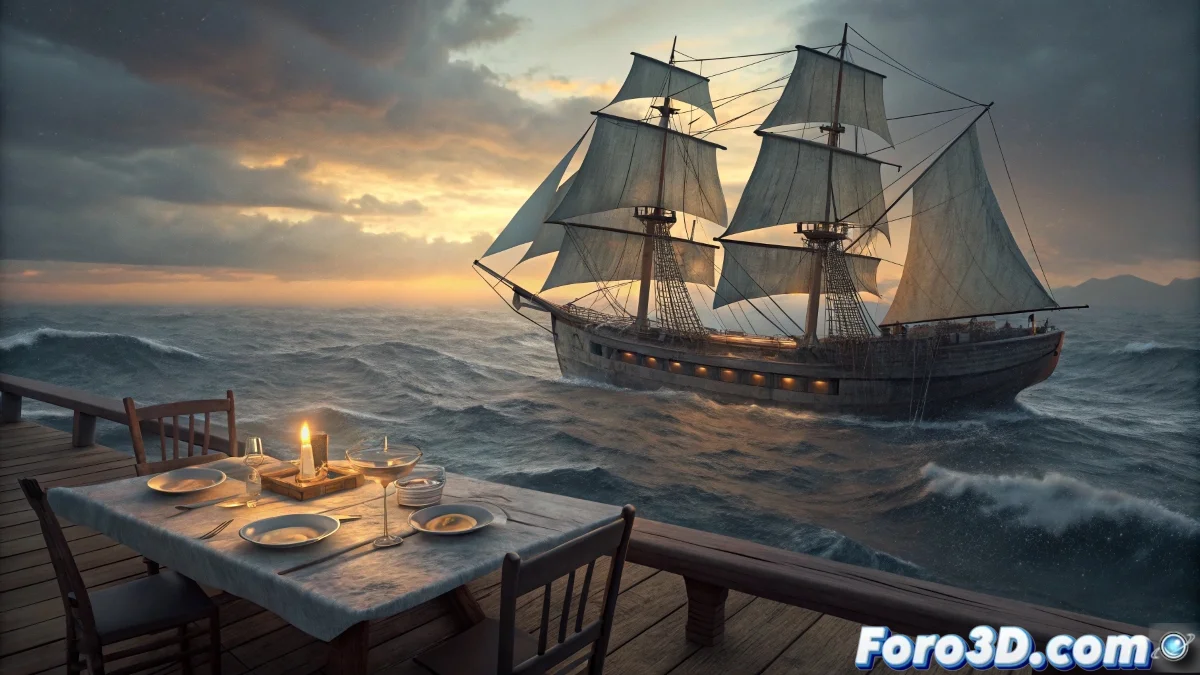
Recreating the Mary Celeste in Womp: The Mystery of the Ghost Ship
The Mary Celeste represents one of the most enduring and fascinating maritime mysteries in naval history. This American brig was found on December 4, 1872 completely abandoned but intact adrift in the Atlantic Ocean, about 400 miles from the Azores. What makes this case unique is that the ship was discovered with its sails partially deployed, the industrial alcohol cargo intact and all the crew's personal effects in place, including watches, jewelry, and documents. However, there was no trace of its ten occupants - Captain Benjamin Briggs, his wife, his daughter, and seven crew members - generating a mystery that endures to this day about what could have caused the hasty abandonment of a perfectly seaworthy ship. ⛵
Initial Project Setup in Womp
Start by creating a new project in Womp and set up the scene to represent the Atlantic Ocean near the Azores. Womp is ideal for this project due to its intuitive focus on 3D modeling, allowing quick creation of the brig's structure without advanced technical complications.
Workspace Preparation:- Select empty project template for maximum creative control
- Set appropriate measurement units for the ship's scale
- Establish oceanic blue background for context during modeling
"The Mary Celeste was not a wreck, it was a floating puzzle: everything in place except the people who should have been there" - Maritime mysteries researcher
Basic Hull Modeling of the Brig
Use Womp's primitive modeling tools to create the characteristic hull shape of the Mary Celeste. The ship measured 103 feet in length and 25.5 feet in beam, with a typical 19th-century brig design.
Modeling Techniques in Womp:- Use the Cube tool and adjust proportions for the basic hull shape
- Apply smooth deformations to create the characteristic curvature of the bow and stern
- Extrude sections to add volume and basic structural details
Creation of the Mast and Sails System
The Mary Celeste had three masts and was found with sails partially deployed. In Womp, create a stylized representation of the rigging system that captures the essence of the brig without requiring hyper-realistic details.
Sail System Elements:- Create simple cylinders for the main, mizzen, and foremast
- Use deformed planes to represent partially furled sails
- Add basic ropes using the tube or thin cylinder tool
Development of the Deck and Key Elements
The Mary Celeste's deck was intact but empty. Create the main structural elements such as the cabin, rudder, and hatches, maintaining Womp's characteristic simplicity while suggesting the human scale of the mystery.
Essential Deck Elements:- Model the main cabin where personal effects were found
- Create the abandoned rudder in neutral position
- Add cargo hatches to suggest the ship's merchant nature
Final Composition and Mysterious Atmosphere
Organize the final scene to convey the mystery, using Womp's camera to create suggestive angles that show the lonely ship in the ocean. Adjust the lighting to create an uneasy atmosphere that evokes the perplexity that its discoverers must have felt upon finding this perfectly seaworthy but completely abandoned ship in the middle of the Atlantic. 🌊