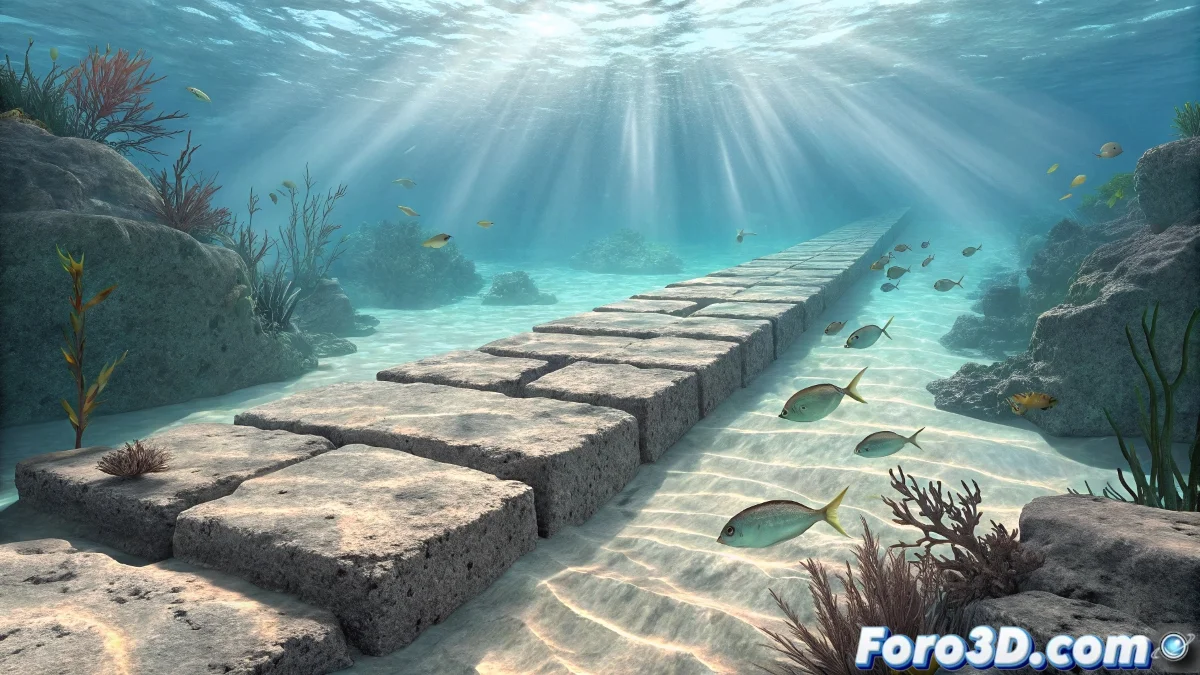
Recreating the Bimini Road with Artlantis: A Guide to Underwater Archaeological Rendering
The Bimini Road, also known as the Bimini Wall, represents one of the most fascinating underwater enigmas of the Caribbean, a formation of large limestone blocks arranged in an apparent straight line near North Bimini Island in the Bahamas. While some researchers suggest it could be a road, pier, or even ruins of Atlantis, the predominant geological explanation points to a natural beachrock formation. We will recreate this mystery using the advanced rendering capabilities of Artlantis to visualize both theories. 🏝️
Setting Up the Underwater Environment in Artlantis
Begin by establishing the underwater base scene with the specific conditions of Bahamian waters: exceptional clarity, sandy bottoms, and the characteristic depth where the formation is found (approximately 6 meters).
Initial Preparation in Artlantis:- Configure the scene with metric units and the real scale of the site
- Set the water plane at the correct depth with high transparency
- Create a sandy terrain with Caribbean seabed textures
"The Bimini Road challenges our perception: are we looking at ancient architecture or simply nature's whimsical work?" - Underwater Archaeologist
Modeling and Arranging the Limestone Blocks
The apparently perfect alignment of the blocks is the heart of the mystery. In your previous modeling software, create blocks with variations in size and shape that reflect both the artificial and natural theories, then import them into Artlantis.
Characteristics of the Blocks to Model:- Variable dimensions between 3-5 meters in length per block
- Angular shapes but with edges eroded by time
- Arrangement in a straight line with slight natural deviations
Materials and Textures for Eroded Beachrock
Configure realistic limestone materials in Artlantis that capture the millennial wear of beachrock. The key is to balance between a natural appearance and possible marks that suggest human work.
Material Configuration in Artlantis:- Limestone shader with high roughness and medium-low reflectivity
- Erosion textures with bump maps to simulate marine wear
- Inlays of shells and marine organisms attached to the rock
Underwater Lighting and Water Effects
Lighting is fundamental to convey the mysterious atmosphere of the place. Configure Artlantis's lighting system to simulate how sunlight filters through the crystal-clear waters and reflects off the stone blocks.
Lighting System in Artlantis:- Sunlight with a zenithal angle to simulate Caribbean midday
- Caustic effects projected onto the blocks and sandy bottom
- Color adjustments for the characteristic turquoise blue tone of the Bahamas
Final Composition and Visual Storytelling
In the final render, seek compositions that emphasize the debate between natural and artificial origin. Use angles that highlight the suspicious alignment of the blocks while also showing the imperfections that suggest natural processes, creating an image that invites reflection on this underwater enigma without offering definitive answers. 🔍