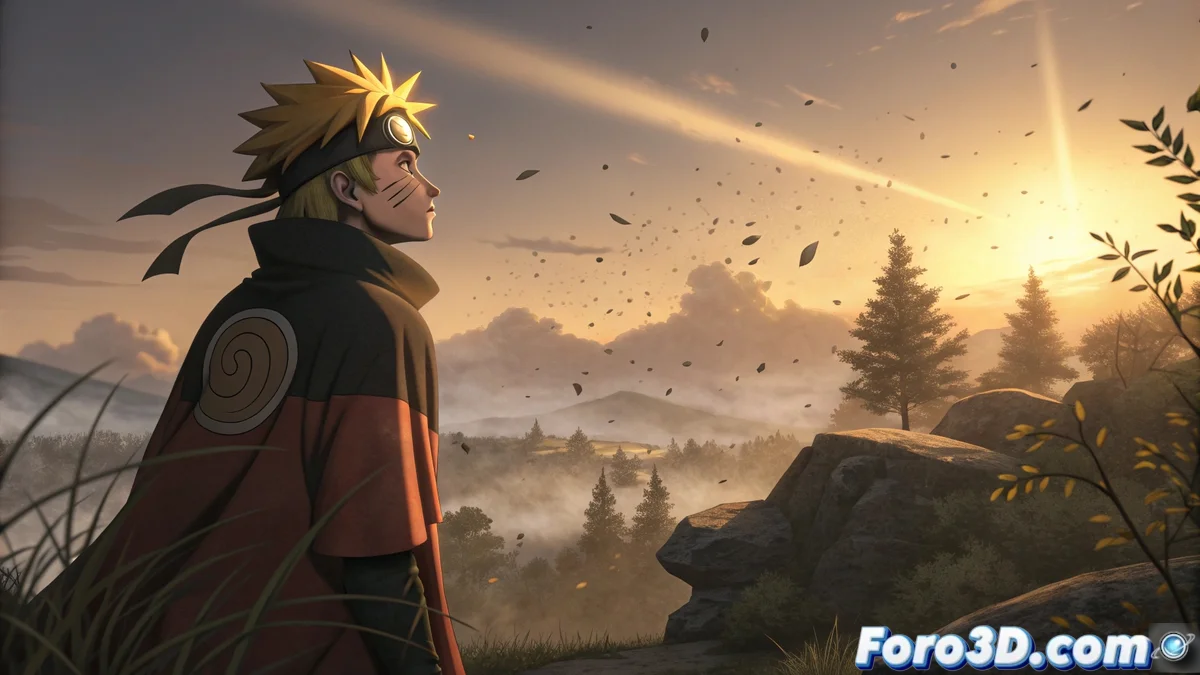
The Prophecy That Defined the Ninja World's Destiny
In the Naruto universe, an ancient prophecy foretold the arrival of a child who would bring radical transformation to the world, either toward peace or destruction 🌄. Jiraiya, one of the Legendary Sannin, dedicated much of his life to searching for this chosen one, first believing it was his disciple Nagato. However, time revealed that the true child of the prophecy was Naruto Uzumaki, whose pure heart and unbreakable will possessed the power to rewrite destiny. A narrative twist that shows heroes aren't always who we expect 😌.
Building the Key Moment in Autodesk Maya
Recreating this transcendental moment in 3D requires not only technical skill but also narrative sensitivity. Autodesk Maya provides the necessary tools to model the characters, design the scene, and apply lighting that emphasizes the scene's drama. The goal is to capture the essence of Jiraiya's discovery, positioning Naruto as the visual and emotional focus of the composition. A perfect task for artists who enjoy fusing art with storytelling 🎬.
Using directional and volumetric lighting helps highlight Naruto as the chosen child, while particle effects and long shadows add depth.
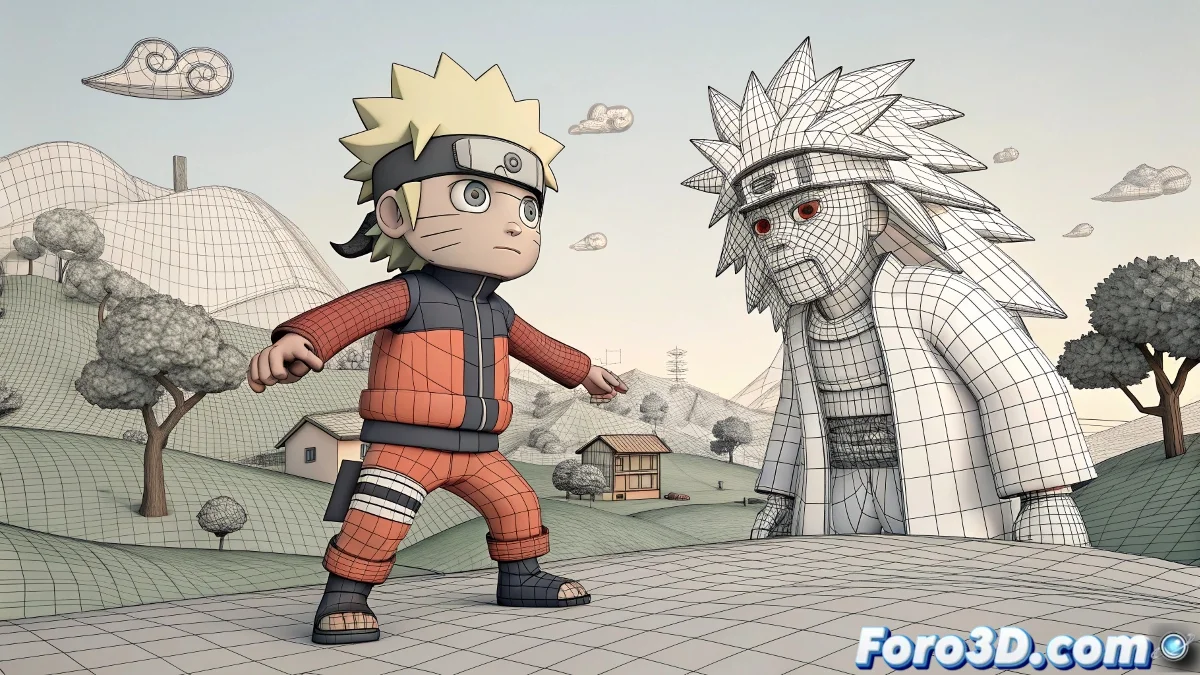
Project Setup and Character Modeling
Starting a new project in Maya with an organized layer structure is the first step toward a manageable scene. Working with metric units and creating separate groups for characters, environment, lights, and cameras is recommended. For the Naruto and Jiraiya models, start with geometric primitives and refine them using sculpting and deformation tools. Hyperrealism isn't necessary; recognizable shapes and expressive poses that convey the moment's emotion are sufficient 🗿.
Scenic Design and Visual Composition
The environment should evoke the ninja world without distracting from the protagonists. A simple landscape with hills, some stylized trees, and perhaps minimalist architecture works effectively. The composition places Naruto in the center, lit as the key figure, while Jiraiya is positioned in a secondary plane, observing with a mix of pride and concern. The lighting uses warm directional lights for the hero and cooler tones for the background, creating contrast that guides the viewer's gaze. Key elements to include:
- Stylized models of Naruto and Jiraiya in meaningful poses.
- A natural environment that suggests the series' universe without overloading the scene.
- Dramatic lighting with warm key light and bluish rim light.
- Subtle particle effects like dust or fog to add mystery.
Lighting, Rendering, and Post-Processing
Light setup in Arnold is crucial to achieve the desired atmosphere. A main directional light simulates dawn or sunset, fill lights define volumes, and bounce lights soften shadows. Rendering uses medium sampling to balance quality and processing time, with a denoiser for cleaner results. In post-production, color levels are adjusted, a subtle glow is added around Naruto, and a vignette is applied to center attention 🌅.
The Irony of the Ninja Destiny
It's curious that the same child who used to paint graffiti on the Hokage monument ended up being the light that would guide the entire village... though his persuasion techniques remained a bit explosive 💥.