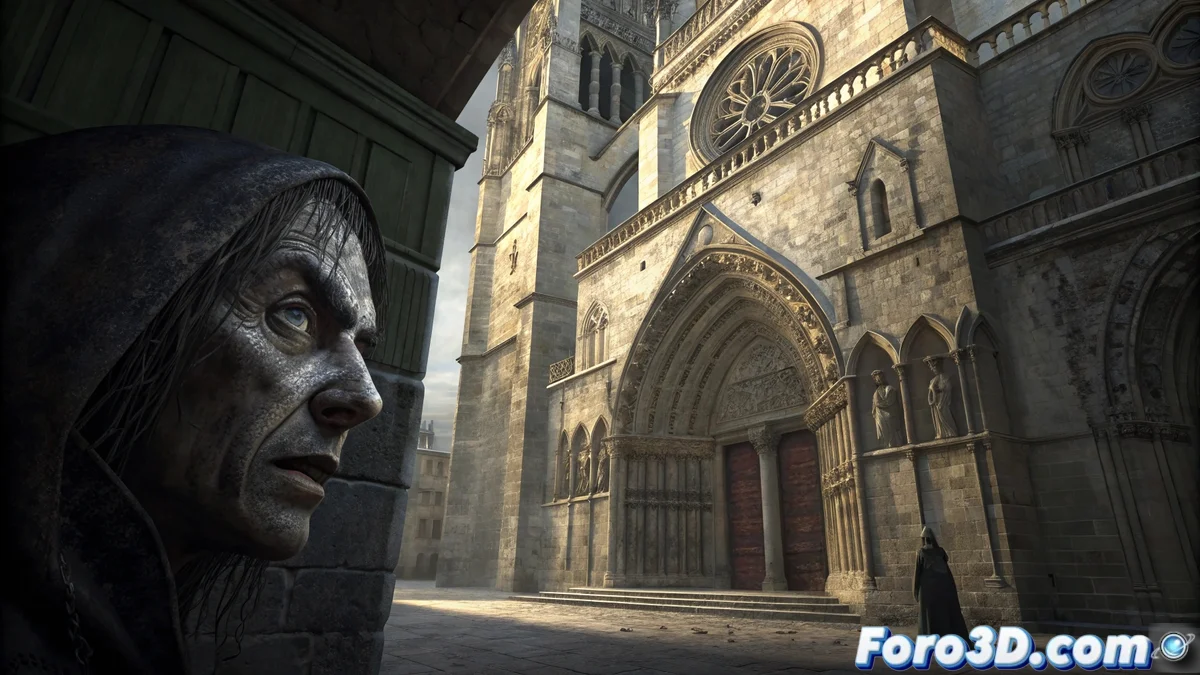
The Legend of the Grumpy Sculptor and His Eternal (But Erased) Face
One of the most curious legends of Burgos Cathedral tells the story of a sculptor who, dissatisfied with his payment, decided to immortalize his own face on the main facade as a form of silent protest. 🔥 The move was not to the liking of the project managers, who ordered the face to be removed immediately, erasing the artist's trace but not his story. This perfect anecdote lends itself to being revived digitally, allowing 3D artists to speculate on what that defiantly sculpted face might have looked like. ZBrush becomes the ideal tool for this digital archaeological mission.
Preparing the Digital Canvas for a Cathedral
The first step is to establish the project's foundations. In ZBrush, a new project is created and the scene is organized using subtools for each main element: the facade, the face, the ornaments, and minor details. It is crucial to set an appropriate scale from the start to maintain Gothic architectural proportions, avoiding the cathedral looking like a toy model. 🏛️ Using ZModeler, the general volumes of the facade are blocked out, defining the exact location where the face supposedly was. This blocking phase is fundamental for coherent integration later.
Bringing the Disgruntled Artist's Face to Life
With the facade blocked, it's time to sculpt the protagonist: the face. Basic shapes are started using brushes like Move, Standard, and ClayBuildup. Then, facial features –eyes, nose, mouth– are refined with precision tools like DamStandard and TrimDynamic. The key here is to endow the face with expression and character, imagining the determination of that sculptor. It's not just any face, but a statement of principles carved in stone, so the expression must convey that rebelliousness. 😤
Recreating a lost historical element requires balancing archaeological precision with artistic license.
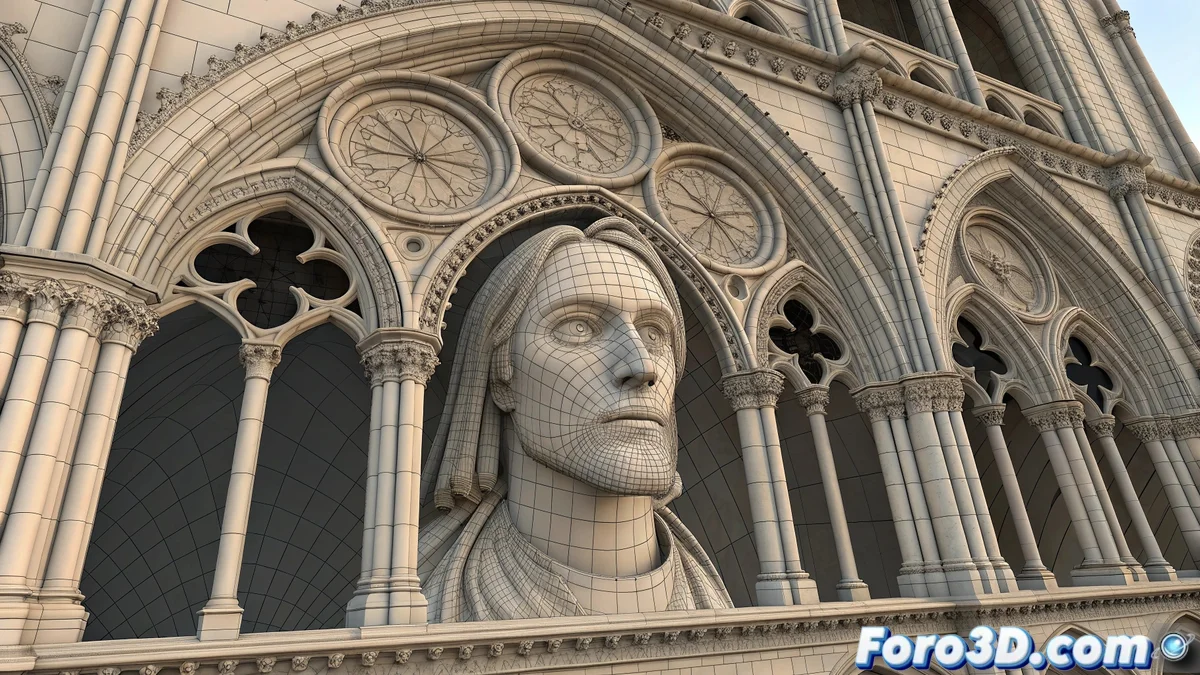
To achieve a believable result, it is essential to simulate the passage of time and wear. Aged stone textures are applied using Polypaint, adding cracks, erosions, and dirt in the crevices. Slash or Mallet brushes can simulate the blows that partially erased the face, integrating the "history" of the damage into the geometry itself. An important detail is to add moss or dust in the most protected areas, which adds an extra layer of realism and melancholy to the whole.
Lighting and Rendering to Tell a Story
Lighting is the narrator of this scene. A soft main light, similar to daylight, bathes the facade, while warmer secondary lights are used to highlight the volume and expression of the face, creating dramatic shadows that accentuate the sculpted details. Camera composition is equally important: a general shot establishes the context, while a close-up of the face allows appreciation of every crack and every gesture frozen in time. 🎭 For rendering, the BPR engine in ZBrush or KeyShot is recommended, enabling ambient occlusion and soft shadows for depth.
The key technical elements to consider for an optimal result are:
- Clean topology: Essential for detailed sculpting without artifacts.
- Strategic use of alphas: To speed up the creation of repetitive architectural ornaments.
- Polypaint layers: Will allow non-destructive adjustment of dirt and wear levels.
- Material setup: Use shaders that capture the porosity and reflectivity of limestone.
Finally, in post-production, a color adjustment toward warmer and earthier tones is made, reliefs are subtly enhanced, and a light vignette can be added to direct the gaze toward the face. The result is not just a 3D model, but the resurrection of a legend. After all, the sculptor wanted to be remembered, and thanks to ZBrush, his silent protest has found an echo centuries later in the digital world. An irony he would surely appreciate. 😉