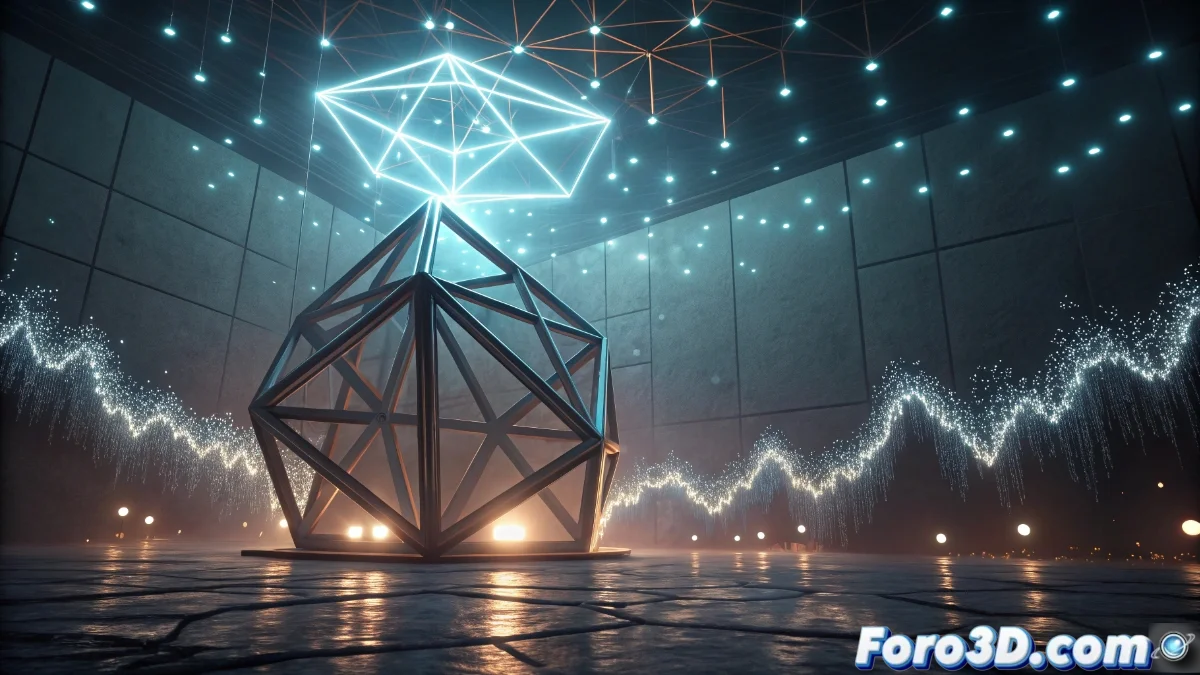
Reactive Modeling: Dynamic Geometries that Respond to External Stimuli
Reactive modeling marks a revolutionary advance in the generation of interactive visual content, where three-dimensional structures automatically modify their shape, size, and behavior upon perceiving inputs such as sound vibrations, melodies, or body gestures. This innovation enables immersive experiences in which graphic elements do not remain static, but instead pulse and transform in harmony with the acoustic environment or people's actions, establishing a perfect fusion between the digital and physical or auditory stimuli 🌊.
Technologies and Methods for Implementing Reactive Modeling
Contemporary solutions integrate a range of technical strategies spanning from programmable shaders to advanced particle configurations and real-time audio analysis procedures. Creators often combine environments like Unity or Unreal Engine with specific libraries for audio processing, such as FMOD, or motion tracking devices using infrared cameras and depth sensors. The central element lies in defining an exact mathematical relationship between the stimulus characteristics, such as the intensity of a frequency or the user's location, and the 3D mesh components, achieving alterations, expansions, or rotations that mimic the fluidity of nature.
Key Tools and Techniques:- Programmable shaders to adjust surfaces and volumes based on external data
- Particle systems that react to sound or spatial variations
- Real-time audio processing algorithms to translate waves into geometric deformations
Reactive geometries turn the static into the living, dancing to the rhythm of every note and movement 🔄.
Uses and Applications in Various Sectors
This methodology extends to numerous fields beyond digital entertainment and video games. In interactive artistic installations, reactive shapes produce virtual sculptures that sway to the music or interact with viewers. In education, they simplify the representation of abstract concepts, such as the properties of sound waves or magnetic fields. Virtual and augmented reality environments are progressively adopting these mechanisms to create spaces that intuitively respond to users' gestures and movements, dissolving the boundaries between digital interfaces and everyday human behavior.
Highlighted Implementation Fields:- Digital art: exhibitions with 3D sculptures sensitive to the audience's presence and sounds
- Education: visual simulations of complex physical and acoustic phenomena
- Virtual reality: environments that adapt to gestures and movements in real time
Reflections on the Evolution of Reactive Modeling
It is fascinating to observe the transition from the design of inert objects to the construction of geometries so perceptive that they undergo dramatic transformations in response to an intense bass hit or a simple hand movement. This technological leap not only enriches visual expressiveness but also redefines the interaction between humans and digital systems, opening doors to integrated sensory experiences where every external stimulus translates into a unique and meaningful graphical evolution ✨.