RAM Prices Stabilize in the United States
After a prolonged period where costs kept rising, the RAM memory market in the United States is starting to show a clear stabilization trend 📉. Reports from the specialized portal Tom's Hardware, based on data collected by PCPartPicker.com, confirm this change in price dynamics for various types of modules, which is a relief for those looking to upgrade their equipment.
RAM Kits That Halt Their Price Increases
This normalization is mainly perceived in common and mass-use DDR4 and DDR5 configurations. The data indicates that certain popular kits are no longer increasing in value, suggesting that the supply pressure on these specific products has decreased.
Modules Halting Their Rise:- DDR4-3200 kits in the format of two 8 GB modules each.
- DDR4-3600 configurations with two 16 GB units and also 32 GB.
- DDR5-4800 and DDR5-5200 modules, both in the 2x16 GB variant.
The market is normalizing for the most common and requested options by the majority of users.
Faster Modules Maintain Their Upward Trend
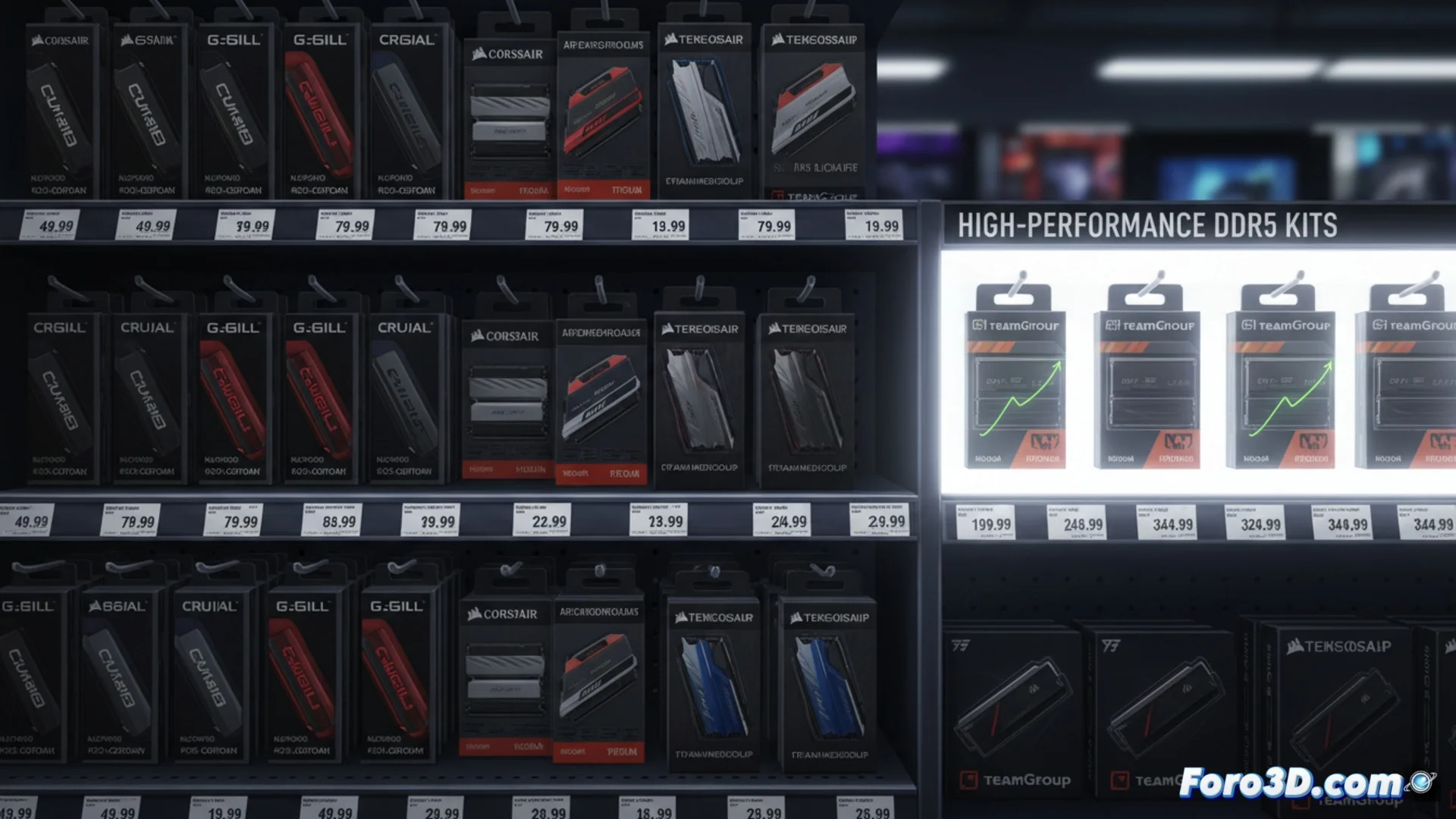
However, not all memory benefits from this calm. High-performance DDR5 modules, those operating at speeds of 5600 and 6000 MT/s, continue on an upward price trajectory 🚀. Although the growth rate is more moderate than in previous months, a point of equilibrium has not yet been reached.
Characteristics of Modules Still Rising:- They are designed to offer the maximum possible performance.
- Their demand is strong in demanding gaming environments and specialized work.
- The buying pressure on these specific products remains.
A Segmenting Market
This situation paints a scenario where the market is clearly divided. On one hand, users seeking standard performance can breathe more easily seeing prices that stop rising. On the other, those pursuing the last word in speed must accept that, for now, the law of supply and demand imposes an extra cost for being the fastest. It seems that normalization arrives for the common, while the exclusive continues to have its own price 💸.