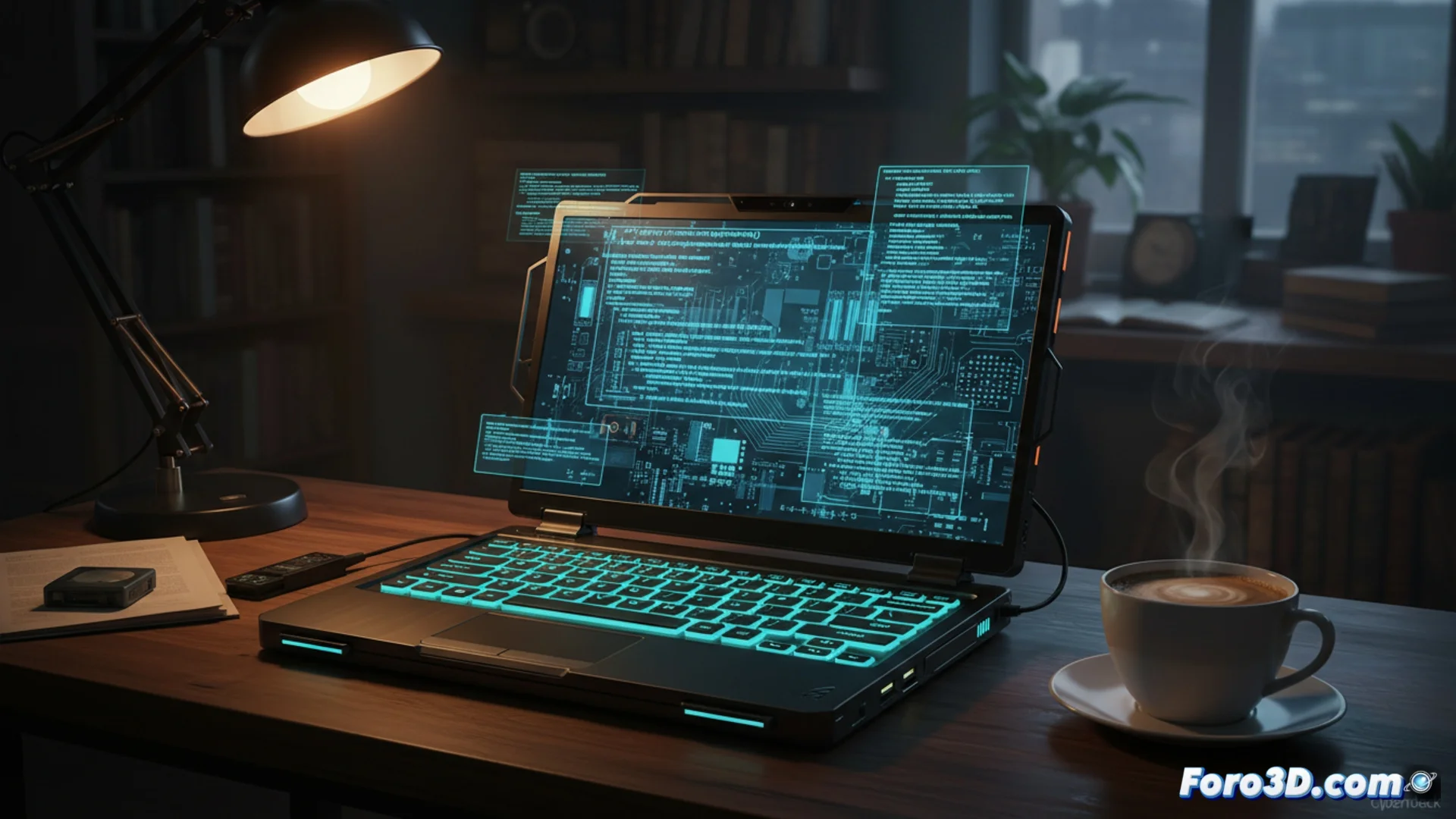
Rabbit presents the Cyberdeck laptop for vibe-coding after its R1
The company Rabbit doesn't give up. After its artificial intelligence device R1 failed to sell as expected, it now announces the Cyberdeck, a laptop designed for what they call vibe-coding. This concept aims to fuse AI directly into how a programmer creates, making the machine assist in real time. 🚀
A new approach to programming with AI assistance
The Cyberdeck is sold as a device for those who prioritize fluidity and trying new things when writing code. The central idea is that the user can explain a problem or idea in their own words, and the integrated artificial intelligence responds by generating, improving, or correcting code instantly. Rabbit bets on hardware and a interface that prioritize this dialogue, seeking for the developer to perceive the system as a collaborator, not just another application.
Key features of the approach:- Focuses on programming tasks where experimentation is essential.
- Natural language-based interaction to describe goals.
- Environment designed to feel the AI as a coworker.
It seems the strategy is clear: if your AI gadget doesn't succeed, launch a computer with AI and call it something else. At least this time it has a keyboard.
A complicated market for pure AI devices
This launch occurs at a time when the first gadgets dedicated solely to artificial intelligence, like the mentioned Rabbit R1 or the Humane AI Pin, have failed to excite the general public. The company changes course, moving from a portable assistant to a more specialized and powerful device, aimed at a specific niche of users. Its future depends on whether it can demonstrate real utility and an experience that surpasses that of a regular laptop with added AI software. 🤔
Launch context:- Pure AI devices have had a cool commercial reception.
- Rabbit shifts from a pocket assistant to a device for specific use.
- The challenge is to demonstrate tangible advantages over existing solutions.
Will it manage to define a new category?
The Rabbit Cyberdeck tries to make its way in a little-explored space: that of computers built from scratch for programming with AI. Its success will not only measure interest in vibe-coding, but also the viability of creating specialized hardware in a market dominated by generalist solutions. The bet is risky, but it reflects the constant search for new ways developers and machines can collaborate. ⌨️