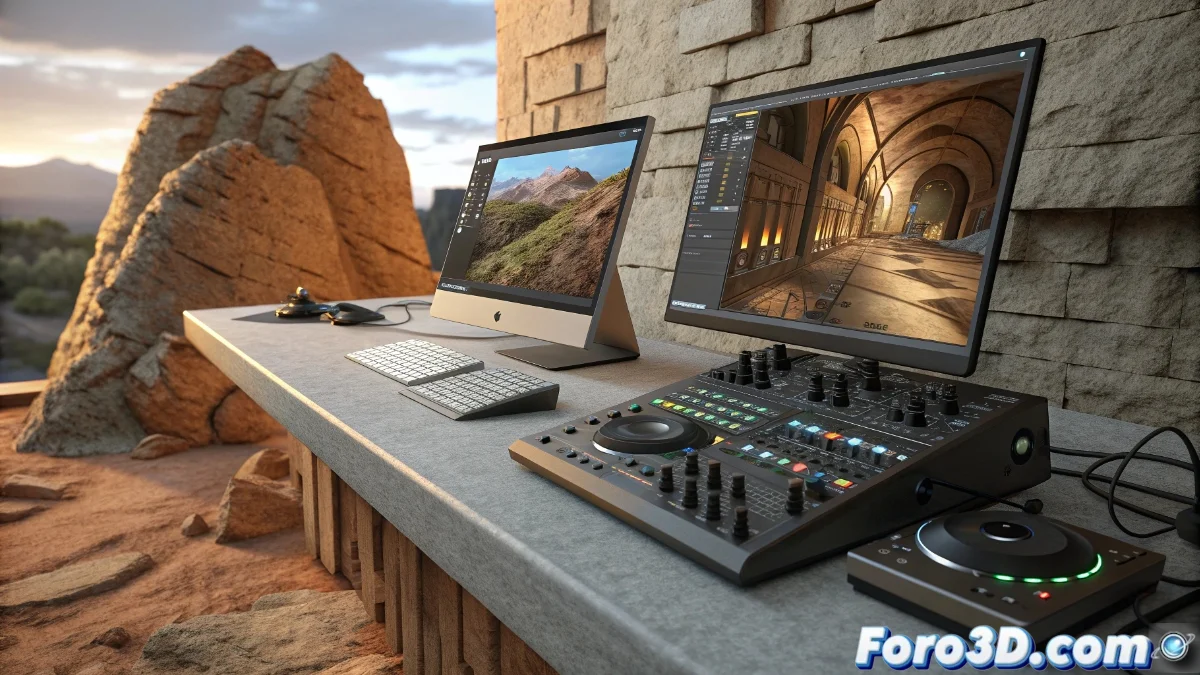
Quixel Mixer vs Substance 3D Sampler: key tools for realistic materials
In the field of 3D modeling, choosing software to create realistic materials is crucial for optimizing time and resources. Quixel Mixer and Substance 3D Sampler stand out as two leading options, each with distinctive philosophies and capabilities that meet different artistic needs. 🎨
Resource integration and work methodologies
Quixel Mixer stands out for its free access and direct integration with the Megascans library, offering thousands of real-world scanned assets to build textures agilely. On the other hand, Substance 3D Sampler is framed within the Adobe ecosystem, focusing on procedural generation and transforming images into materials through AI algorithms and intelligent filters. Both programs facilitate efficient workflows, although their integration approaches vary significantly.
Key integration advantages:- Quixel Mixer allows combining textures and assets with layers and masks, ideal for projects that demand realism based on scans.
- Substance 3D Sampler connects seamlessly with tools like Substance 3D Painter, favoring a cohesive pipeline in texturing and appearance development.
- Sampler enables importing photographs to convert them into complete materials, expanding creative options beyond pre-existing libraries.
The diversity of texturing tools can be overwhelming, but both solutions avoid the need to manually scan physical elements, optimizing creativity.
Cost and adaptability for different user profiles
The free nature of Quixel Mixer makes it an attractive option for beginners or studios with tight budgets, eliminating economic barriers by including Megascans at no additional cost. In contrast, Substance 3D Sampler operates through an Adobe subscription, ensuring regular updates and professional support, justifying its price for users who prioritize a robust ecosystem and advanced tools.
Decisive factors in the choice:- Quixel Mixer is ideal if immediate access to scanned resources without initial investment is valued.
- Substance 3D Sampler is more suitable for those who need flexibility and interconnected tools within the Adobe environment.
- The final decision usually depends on whether scan-based realism or procedural and AI capabilities are preferred.
Final reflections on efficiency and realism
Both tools, Quixel Mixer and Substance 3D Sampler, raise the bar in creating realistic materials, although their differences in integration, cost, and methodologies direct them to different audiences. While Quixel Mixer brings scanned realism to all budgets, Substance 3D Sampler bets on procedural innovation within a consolidated ecosystem. The key is to evaluate specific needs and available resources to maximize productivity in 3D projects. 💡