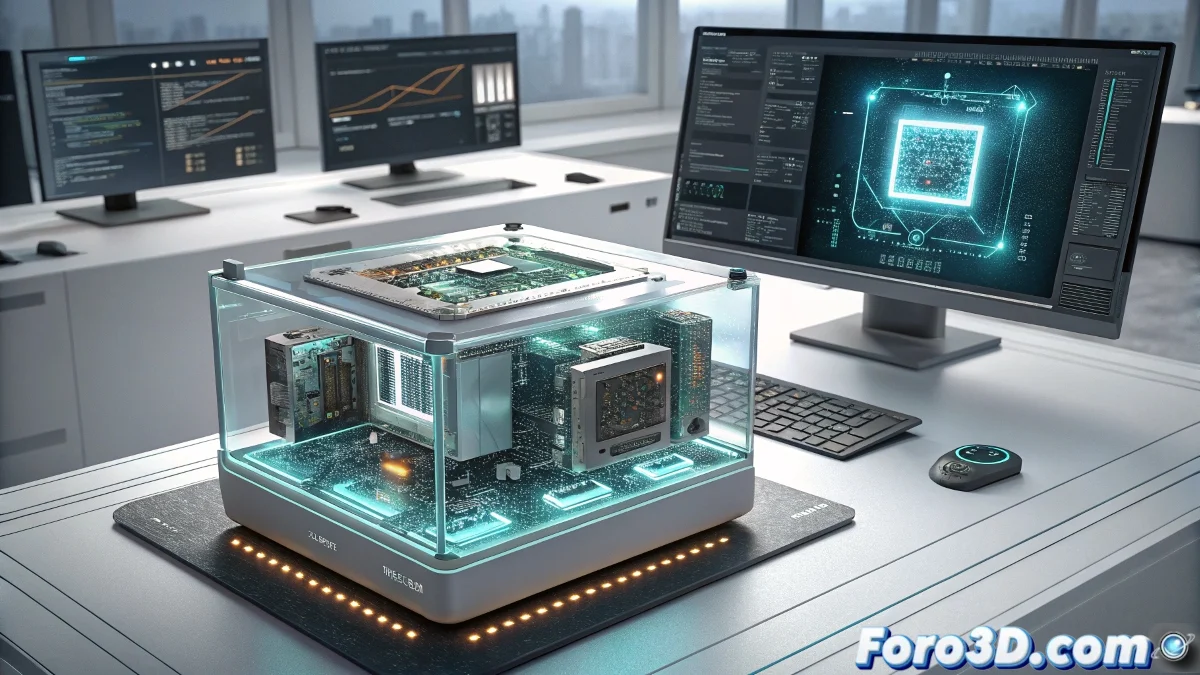
When Quantum Bits Knock on Your Personal Computer's Door
Quantum computing is leaving research laboratories to begin its inevitable journey towards everyday devices. Advances in qubit stability and miniaturization are positioning quantum technology as the next evolutionary frontier for PC hardware. What until recently seemed reserved for cryogenic supercomputers is showing signs of being integrable into systems we could have in our homes within a decade.
This transition does not mean the immediate replacement of traditional processors, but the creation of hybrid architectures where conventional CPUs and quantum units cooperate. Quantum bits are not better for all tasks, but for specific problems in optimization, machine learning, and molecular simulation they offer exponential accelerations. The key lies in identifying which problems to delegate to the quantum coprocessor and which to leave to traditional silicon. ⚛️
In the near future, your PC could have both a CPU and a QPU working in harmony
The Components of the Domestic Quantum Revolution
Quantum integration into PCs requires overcoming challenges that seemed insurmountable just a few years ago. The progress is tangible.
- Stabilized superconducting qubits that can operate at less extreme temperatures
- Error correction systems that compensate for inherent quantum fragility
- Standardized interfaces for communication between classical and quantum components
- Heterogeneous architectures that optimize which tasks each type of processor executes
Companies like IBM, Google, and specialized startups are already developing quantum processors that could be integrated as accelerator cards, similar to how current GPUs function.
Practical Applications for the End User
For PC users, quantum computing will not be just an abstract concept but a tool with concrete benefits.
- Rendering and simulation of materials and chemical reactions for 3D artists and designers
- Machine learning optimization with training of complex models in a fraction of the time
- Advanced cryptography for both creating secure systems and breaking existing ones
- Large dataset analysis finding patterns impossible to detect with classical methods
Gamers could experience virtual worlds with physics and artificial intelligence of currently unimaginable complexity, while content creators would have simulation tools today reserved for supercomputers.
The Path to Accessible Quantum Computing
Although the enthusiasm is understandable, mass integration into PCs faces significant obstacles that require time and investment.
The requirements for cryogenic cooling, sensitivity to electromagnetic interference, and the immaturity of software are barriers being aggressively addressed. The first implementations will likely come as external units connected via Thunderbolt or PCIe, evolving towards tighter integration as the technology matures. The quantum revolution for PCs will not be a big bang, but a gradual arrival. 💻
And if qubits do reach our desks, we might soon be restarting the computer not because of a blue screen, but because of an "unexpected wave function collapse"... although probably with the same annoyance 😉