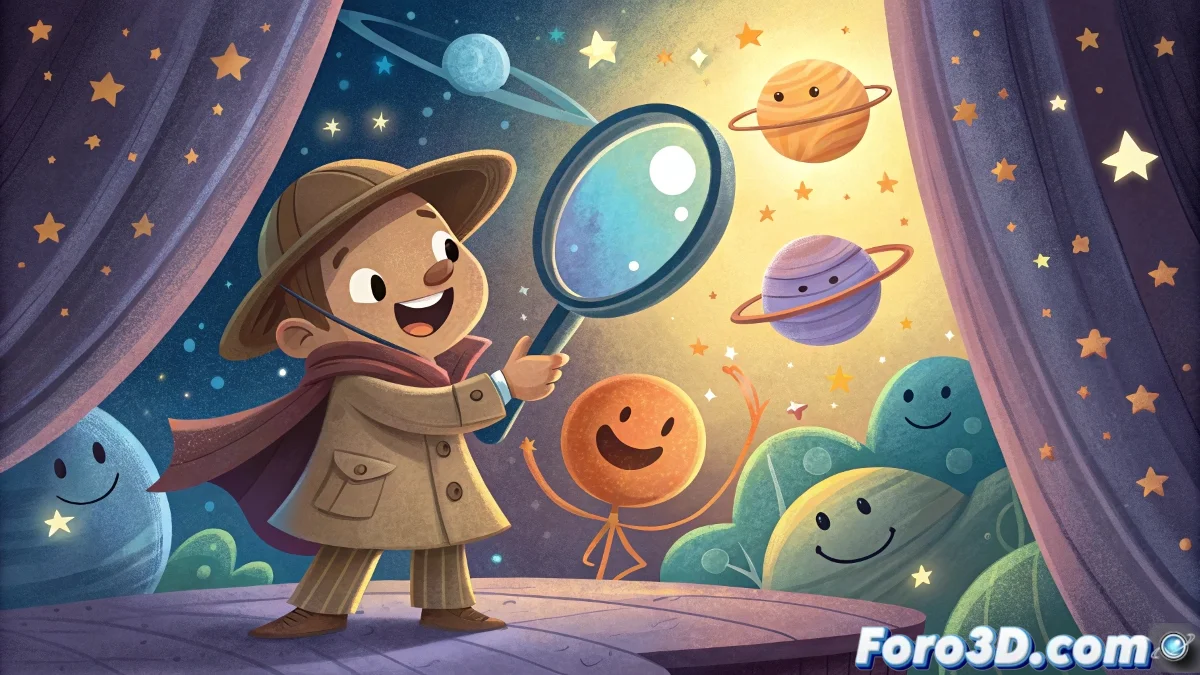
Quantum Algorithm Reveals Hidden Cosmic Secrets
The universe holds mysteries that defy direct observation, as if the most intriguing objects were participating in a cosmic game of hide-and-seek. Now, a scientific team has created an innovative algorithm based on quantum principles, acting as a detective with extraordinary abilities to locate those shy guests of the cosmos. This technique examines light patterns with an accuracy that surpasses conventional telescopes, exposing black holes, dark matter, and other phenomena that previously remained invisible in the stellar dance. 🔭
Mechanics of the Quantum Algorithm
The key lies in emulating the behavior of quantum particles, subatomic entities that can exist in multiple states at once. The algorithm processes astronomical data in a non-linear way, identifying subtle distortions in light that signal the presence of elusive objects. It is comparable to having special lenses that penetrate the effects of cosmic illumination, finding what was imperceptible even in the darkest regions of space. Researchers are excited, as this could unravel enigmas that have puzzled astronomers for decades. 💡
Key Aspects of its Functioning:- Simulates quantum superposition to analyze data from multiple angles simultaneously
- Detects minimal light variations caused by the gravity of hidden objects
- Integrates information from existing observatories without requiring new hardware
This approach transforms our ability to explore the cosmos, revealing what was always there but escaped our sight.
Future Perspectives and Applications
With this tool, astronomers will be able to map previously inaccessible areas of space, as if the universe suddenly decided to show its true face at an intergalactic festival. Uses are anticipated for investigating dark energy, locating elusive exoplanets, and tracking potentially hazardous asteroids. Most notably, this method can be adapted to current observatories, meaning we will soon have a cosmic archive filled with findings that will render academic textbooks obsolete at an accelerated pace. 🌌
Areas of Immediate Impact:- Detailed study of the universe's accelerated expansion through dark energy
- More efficient detection of extrasolar planets in habitable zones
- Improved monitoring of near-Earth objects to prevent risks
Final Reflection on the Discovery
It all began with an idea born in a moment of inspiration: treating space as a vast game of hide-and-seek. Now, the cosmos must seek more ingenious hiding places, because the celebration of discoveries has just begun. Who would have imagined that quantum rules, those oddities that even Einstein found puzzling, would become the ideal ally for deciphering the universe's secrets. The cosmos is probably reconsidering its concealment strategies, knowing that its most valuable treasures can no longer remain in the shadows. 🚀