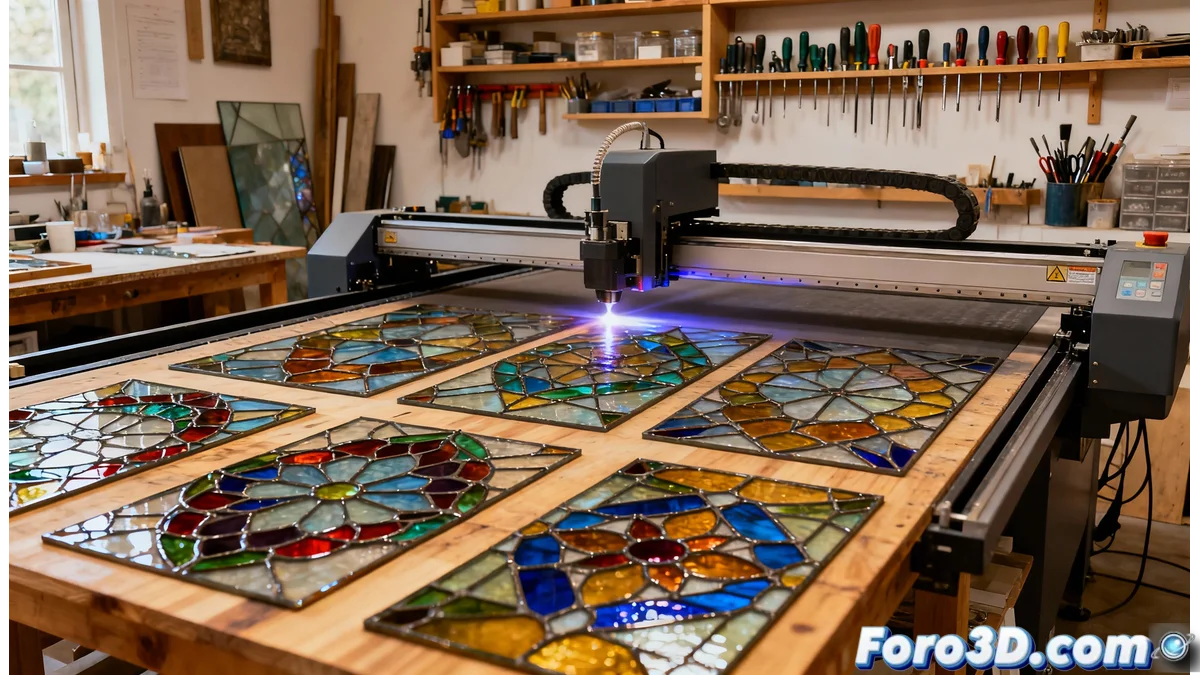
QCAD and LibreCAD for Artistic and Craft Patterns
The applications QCAD and LibreCAD stand out as fundamental solutions in the design of meticulous patterns for various creative expressions and crafts. These 2D CAD programs allow for the creation of exact templates intended for Tiffany-style stained glass, pyrography schemes, marquetry projects, and molds for cutting fabric or leather with laser equipment. The accuracy they provide ensures that every component fits perfectly, streamlining workflows that demand millimeter precision. 🎨
Benefits of CAD Software in Artistic Creations
By using QCAD or LibreCAD, creators and artisans can leverage advanced features such as organized layers, object snaps, and measurement tools to ensure their designs are uniform and replicable. This is vital in works like stained glass, where each glass section must be cut precisely, or in marquetry, where wood pieces must assemble without gaps. Additionally, the option to export in DXF or SVG formats facilitates seamless integration with laser cutters, improving productivity and minimizing manual errors.
Key Advantages in the Creative Process:- Absolute precision in measurements and adjustments for perfect fits
- Use of layers to manage colors, materials, and design stages
- Compatibility with cutting machines to automate production
The versatility of QCAD and LibreCAD transforms complex ideas into tangible patterns, from decorative art to functional components.
Workflow from Digital Sketch to Physical Piece
The process begins with an initial sketch in the software, where shapes and dimensions are outlined using drawing resources such as lines, arcs, and spline curves. Subsequently, details are refined, colors or textures are assigned in independent layers, and the scale is validated prior to printing or exporting. For stained glass, for example, it is possible to generate templates that incorporate numbers or location indications, while in pyrography, patterns are transferred to wood using decals or direct prints. The adaptability of these tools ensures that every project is customized according to specific requirements.
Essential Stages in Project Realization:- Initial design with drawing tools to define outlines and measurements
- Adjustment of elements in separate layers for organization and clarity
- Export to formats compatible with cutting machines or printing
Overcoming Common Obstacles in Digital Design
Sometimes, the main challenge does not lie in conceiving the pattern, but in understanding why equipment like laser cutters prefer DXF files over informal sketches, almost as if they had demanding preferences. Mastering these tools eliminates barriers, allowing a smooth transition from conceptualization to the materialization of artistic and craft works. The investment in learning QCAD or LibreCAD translates into efficiency and quality in final results. ✨