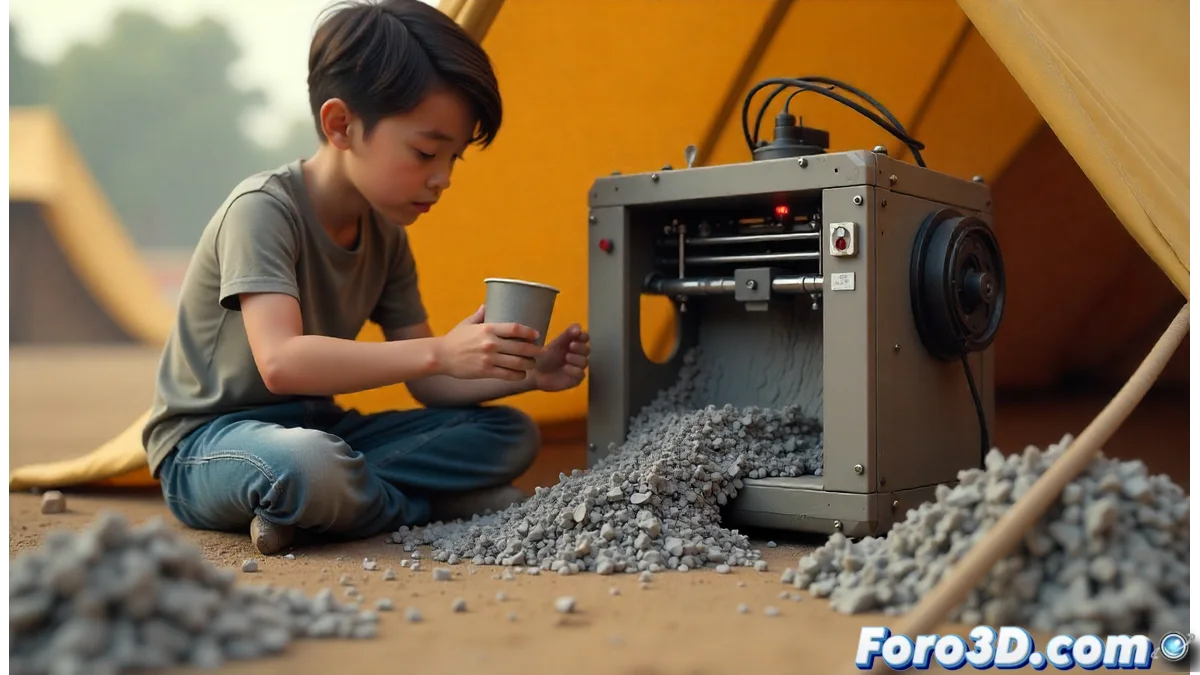
In a world dependent on digital technology, a visionary student has developed PulpMaker, a 3D printer that works completely without electricity and uses recycled paper pulp as manufacturing material. This invention could revolutionize humanitarian aid in disaster zones where basic infrastructure has collapsed. 🌍
The device employs a manually operated mechanical system that extrudes a mixture of recycled paper, water, and a natural binder to create three-dimensional objects. What seems simple in conception is extraordinarily sophisticated in execution, solving multiple logistical problems simultaneously.
The most advanced technology is the one that works when everything else fails
Appropriate engineering for extreme situations
The design of PulpMaker prioritizes simplicity and robustness above all else. Every component has been optimized to function in adverse conditions without requiring specialized maintenance or specific tools for operation.
Innovative technical features:
- manual pressure extrusion mechanism
- integrated mixing system without electrical parts
- modular assembly without complex hardware
- materials resistant to extreme weather conditions
Practical applications in humanitarian emergencies
The versatility of PulpMaker allows manufacturing everything from basic utensils to components for repairing critical infrastructure. In situations where transporting supplies is impossible, the ability to produce locally becomes a literal lifesaver.
Objects it can manufacture on site:
- containers for water and food
- medical supports and improvised splints
- components for repairing sanitation systems
- basic tools for emergency construction
Environmental and social impact
Beyond its utility in disasters, PulpMaker represents a truly sustainable technology model. By using waste paper as raw material and not requiring electrical energy, it demonstrates that innovation can be both powerful and respectful of the planet.
And so, while the industry seeks faster and more complex 3D printers, a student reminds us that real progress is sometimes not in making things more complicated, but in making them accessible to those who need them most. The beautiful paradox that the simplest technology can be the most transformative. 🌱