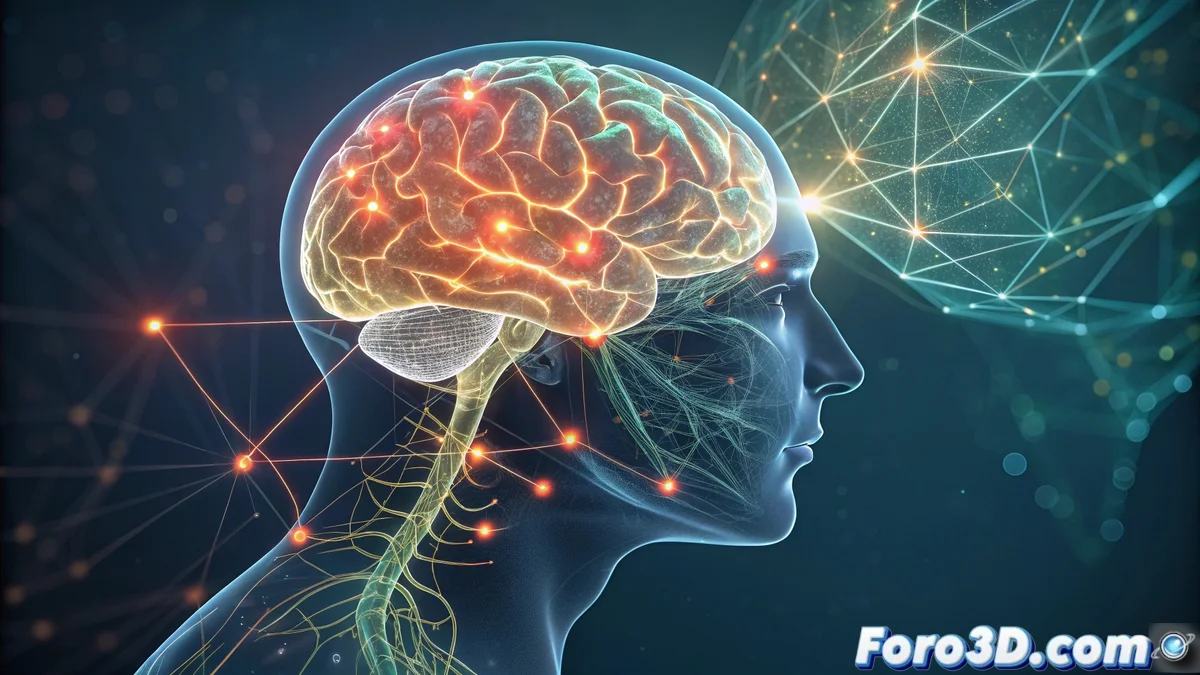
Psilocybin and Its Ability to Reconnect the Brain
Science is rediscovering what some ancestral cultures have known for centuries: certain psychedelic substances can profoundly alter our consciousness 🧠. Recent studies reveal that even a single dose of psilocybin, the active compound in hallucinogenic mushrooms, can induce lasting changes in brain activity. Neuroimaging shows that this substance dramatically increases connectivity between brain regions that normally communicate little, creating a kind of "neural hyperconnectivity" that could explain its therapeutic effects. It's as if the brain receives a temporary reset that allows it to form new pathways and patterns of thought.
Sometimes the brain needs to get lost to find itself again.
Neurochemical Mechanism of Action
Psilocybin is converted to psilocin in the body, where it potently activates 5-HT2A serotonin receptors distributed throughout the brain. This activation causes temporary but significant changes in neuronal activity, reducing activity in the Default Mode Network (regions associated with the ego and rigid thinking) while increasing communication between areas that normally function more isolatedly. The result is an intense subjective experience that many describe as an expansion of consciousness, and which clinical research suggests can have therapeutic effects lasting weeks or months after a single session. 💊
Promising Therapeutic Applications
Clinical research is showing extraordinary results in treating treatment-resistant depression, anxiety associated with terminal illnesses, and various addictions. The key seems to lie in psilocybin's ability to "soften" rigid and negative thought patterns, fostering brain plasticity that allows patients to process emotions and traumatic memories differently. Under medical supervision and in controlled settings, this substance is proving to be a powerful tool for mental disorders that do not respond to conventional treatments.
Visualizing Brain Reconnection in 3D
To understand and communicate these complex brain changes, neuroscientists use 3D visualizations of neural connectivity created with software like Blender, Houdini, or Unity. These representations show networks of nodes and connections where it is clear to see how a single dose of psilocybin can "reprogram" the neural network temporarily, dramatically increasing communication between distant regions. These visualizations are not only scientifically valuable but also artistically impressive, creating bridges between science and art. 🌐
The Future of Psychedelic Research
Although it is not yet a conventional treatment, psilocybin represents one of the most fascinating frontiers of modern psychiatry. Its ability to induce profound changes with a single dose opens up therapeutic possibilities that until recently seemed like science fiction. As research continues, 3D visualizations will remain crucial tools to help scientists, doctors, and patients understand how a substance can literally reconnect our most complex organ.
So the next time you see a visualization of neural networks, remember that sometimes the mind needs to get a little disordered to find a healthier order... and that science is beginning to understand why. 😉