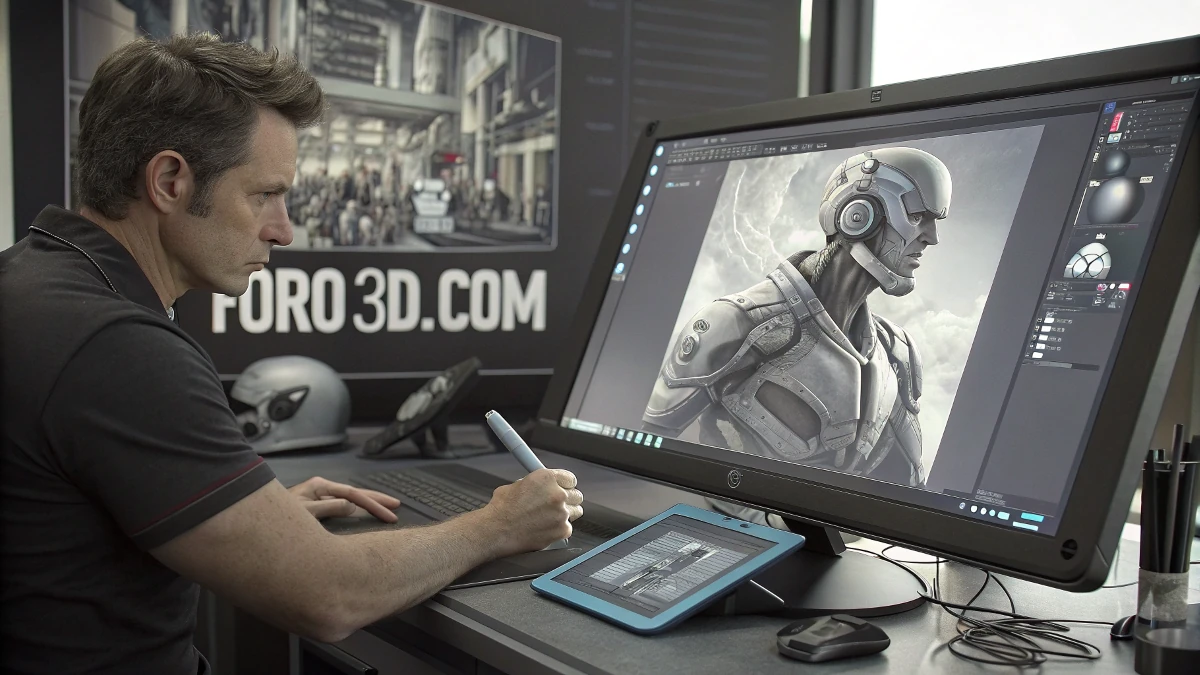
The sculpt mode in Blender has received a key optimization with the removal of the proxy system in brushes. This change has reduced memory usage and improved the speed of applying deformations, offering a much smoother and more efficient sculpting experience.
The Problem of the Proxy System in Previous Versions
In previous versions, Blender used a temporary storage system called proxy, where brush deformations accumulated before being applied to the mesh. Although this method aimed to improve precision, it had drawbacks:
- Excessive memory usage, especially in models with high vertex density.
- Delays in brush application due to multiple intermediate calculations.
- Negative impact on sculpting fluidity by requiring data storage and transfer in each iteration.
"Eliminating unnecessary processes in digital sculpting means more speed and precision in every stroke."
How the Proxy Affected Performance
The proxy system required each brush action to go through several stages before being reflected in the final mesh. This generated:
- Perceptible delays in models with high subdivisions.
- Higher system resource consumption due to unnecessary storage.
- Latency in executing symmetries and complex strokes.
A New Direct Writing System
To improve efficiency, temporary proxy storage has been eliminated. Now, brushes write deformations directly to the mesh in each iteration step, allowing:
- Latency reduction, making sculpting more natural.
- Greater brush responsiveness in high-resolution models.
- Lower memory load, optimizing the workflow.
Impact on Memory Management
Another key benefit of this optimization is the reduction in the size of BVH nodes by approximately 40%. This means:
- More efficient memory usage, allowing work with more complex models.
- Less load on the GPU, improving stability on less powerful hardware.
- A more stable workflow in prolonged sculpting sessions.
Improvement in Responsiveness
Thanks to these optimizations, artists now experience a faster response when applying brushes, allowing them to sculpt more intuitively and without interruptions. The latency reduction makes the sculpting experience in Blender comparable to that of specialized software.
A Step Toward the Future of 3D Modeling
The removal of the proxy system marks one of the most important optimizations in digital sculpting within Blender. It not only improves performance in the current version but also establishes a more efficient foundation for future advanced tools in handling high-resolution meshes.