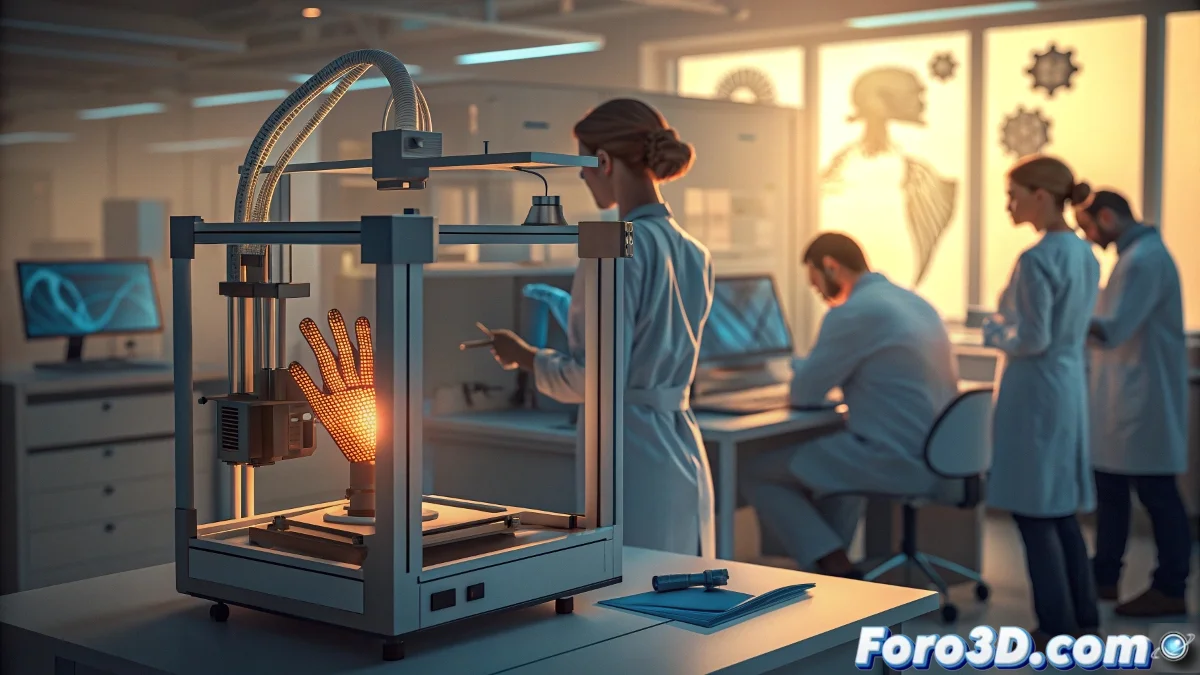
Proteor leads a revolution in 3D prosthetics through international humanitarian alliance
The French company Proteor, a recognized specialist in orthopedic solutions, has announced an unprecedented strategic collaboration with multiple Ukrainian and global entities to boost the development of prosthetic devices through 3D printing. This initiative arises as an urgent response to mobility needs in regions affected by armed conflicts, marking a milestone in the application of advanced technology for humanitarian purposes 🦾.
Technological integration for customized solutions
The project establishes a collaborative network that connects rehabilitation centers in Ukraine with international digital manufacturing laboratories. Using 3D scanners to capture each patient's anatomical features, parameterized designs are generated that automatically adapt to specific measurements, ensuring a perfect fit and superior comfort.
Key advantages of the implemented system:- 70% reduction in costs compared to traditional prosthetics
- Local production with basic 3D printing equipment
- Biocompatible materials that ensure patient safety
This methodology not only solves immediate mobility problems but also transfers technological knowledge to local communities
Transformative impact in humanitarian emergencies
Beyond the Ukrainian context, this model establishes a replicable paradigm for global catastrophe situations. Additive manufacturing allows prosthetic devices to be produced in hours instead of weeks, a crucial factor in emergency scenarios where every day counts ⏱️.
Innovative features of the project:- Joint clinical validation with European technical universities
- Compliance with international orthopedic quality standards
- Local training in digital manufacturing techniques
The future of accessible orthopedics
This humanitarian alliance demonstrates how 3D printing technology can transcend trivial applications to become a real tool for social transformation. By combining traditional medical expertise with digital innovation, a new chapter is being written in the history of modern orthopedics, where personalization and accessibility cease to be privileges to become fundamental rights 🌍.