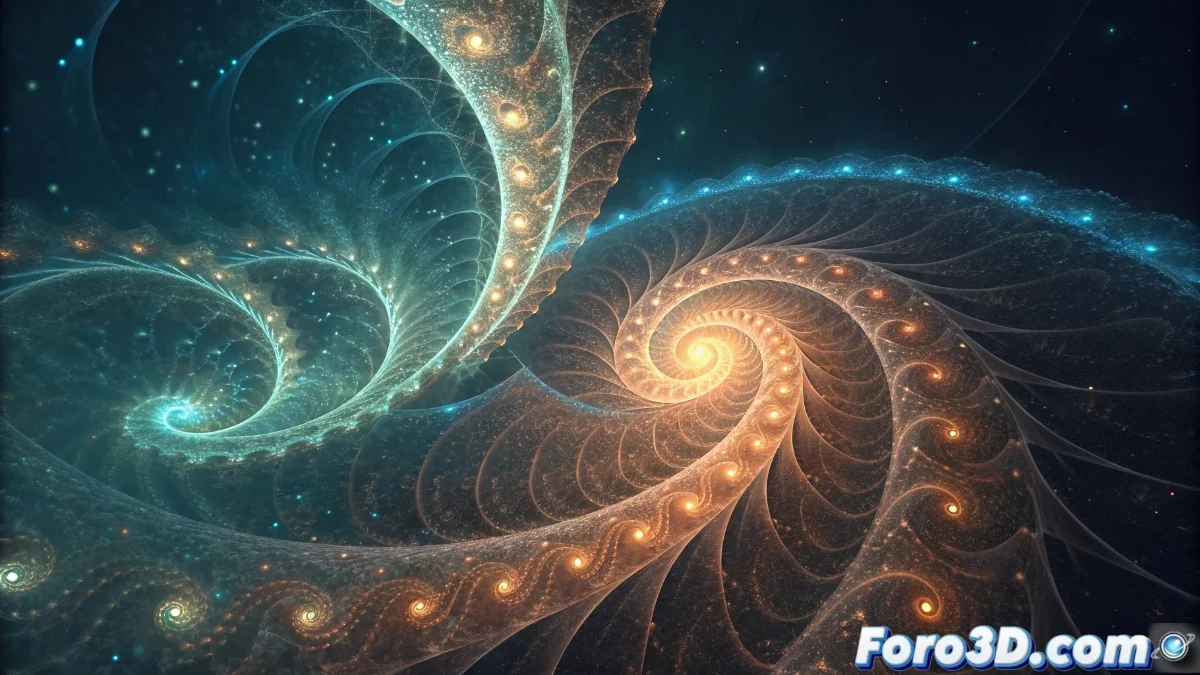
Narrative Procedural Animation: Algorithms That Tell Stories
Narrative procedural animation constitutes a fascinating fusion between algorithmic generation and visual storytelling, where seemingly random sequences emerge from sets of elementary mathematical rules. This methodology enables the creation of digital choreographies that unfold in an organic and autonomous manner, conveying emotions and building micro-narratives without the need for constant animator intervention 🎭.
Fundamental Mechanisms of Procedural Generation
The foundations of this technique are supported by systems such as cellular automata, where each unit follows basic rules in relation to its neighbors, generating global patterns of unpredictable complexity. By implementing these principles in characters or visual components, we obtain emergent behaviors where groups move with apparent intentionality or abstract shapes evolve while narrating purely visual stories. The true magic arises when we meticulously configure the initial parameters so that the system's evolution suggests conflicts, collaborations, or metamorphoses that emotionally connect with the observer.
Main Generative Systems:- Cellular Automata - Elements that interact with neighbors according to minimal rules
- Swarm Algorithms - Collective behaviors that simulate group intelligence
- Differential Equations - Mathematical models that guide complex evolutions
The creative paradox: the simpler the established rules, the more unpredictable and fascinating the generated narrative results will be.
Implementation in Contemporary Graphics Engines
Platforms like Unity and Unreal Engine integrate specialized tools for procedural animation through particle systems, computational shaders, and blueprint nodes that facilitate the design of these generative rules. Technical artists can develop simple decision trees that, when combined recursively, produce sophisticated organic movements where characters appear to make autonomous decisions. This approach proves especially useful in projects with budget or timeline constraints, since once the fundamental system is established, it generates unlimited variations of animated content 🚀.
Key Advantages in Production:- Resource Efficiency - Automatic generation of infinite variations
- Natural Organic Quality - Behaviors that avoid mechanical repetition
- Narrative Adaptability - Ability to respond to contextual changes
The Challenges of Controlled Emergence
The irony of this methodology lies in the fact that the more elementary the defined rules are, the more time will be consumed debugging unwanted emergent behaviors. Situations like characters that insist on repeatedly walking into walls or formations that accidentally spell out inconvenient words represent the humorous side of working with complex systems. This phenomenon underscores the importance of iterative design and creative supervision in procedural animation, where the balance between randomness and control defines the final narrative success 🎯.